 Pin
Pin There's something about the moment when you pull a sheet of golden sourdough cubes from the oven and the kitchen fills with that sharp, toasty aroma—it's when I realize those humble bread scraps are about to transform an entire bowl of soup. I discovered these croutons by accident, really, when I had day-old sourdough sitting on the counter and a pot of French onion soup simmering away, and I thought, why not make something more interesting than plain bread cubes? That decision changed how I approach this classic soup forever.
I made these for my neighbor one autumn evening when she brought over a thermos of her grandmother's French onion soup recipe, and we decided to elevate it together with fresh croutons. The moment she bit into one and her face lit up—that's when I knew this wasn't just a garnish, but the finishing touch that makes the whole dish feel intentional and special.
Ingredients
- Sourdough bread: Day-old works beautifully because it's already slightly dried out, which means it'll crisp up faster and more evenly in the oven without turning rock-hard on the outside while staying soft inside.
- Olive oil or melted butter: This is your binding agent, so don't skimp—it's what makes the seasoning stick and creates those golden, crispy edges everyone craves.
- Garlic clove: Fresh minced garlic infuses the entire crouton with warmth; garlic powder doesn't compare because you lose that sharp, bright edge.
- Sea salt and black pepper: These seem basic, but they're your foundation—taste as you toss to make sure the seasoning is bold enough to hold up against the soup's richness.
- Dried thyme or herbes de Provence: This optional addition whispers French kitchen sophistication into every bite, so I almost always include it.
- Gruyère or Emmental cheese: Choosing a cheese that melts smoothly and has some nuttiness means it won't overpower the sourdough's natural flavor—it's a supporting player, not a solo act.
Tired of Takeout? 🥡
Get 10 meals you can make faster than delivery arrives. Seriously.
One email. No spam. Unsubscribe anytime.
Instructions
- Heat your oven and prep your stage:
- Set the oven to 375°F and line a baking sheet with parchment paper so cleanup is effortless and nothing sticks. Getting this done first means you can move quickly once the bread is coated.
- Build your coating mixture:
- Whisk together the oil, minced garlic, salt, pepper, and herbs in a large bowl where there's plenty of room to toss. You want the garlic evenly distributed so every cube gets kissed by flavor.
- Coat the bread cubes thoroughly:
- Add the sourdough to the bowl and toss with a gentle hand—you want them coated but not crushed. Spend a full minute making sure nothing's forgotten in the bottom of the bowl.
- Spread in a single layer:
- Arrange the cubes on the baking sheet with a little space between each one so hot air can circulate and they toast evenly. Crowding them together is the enemy of crispiness.
- Toast until golden and crackling:
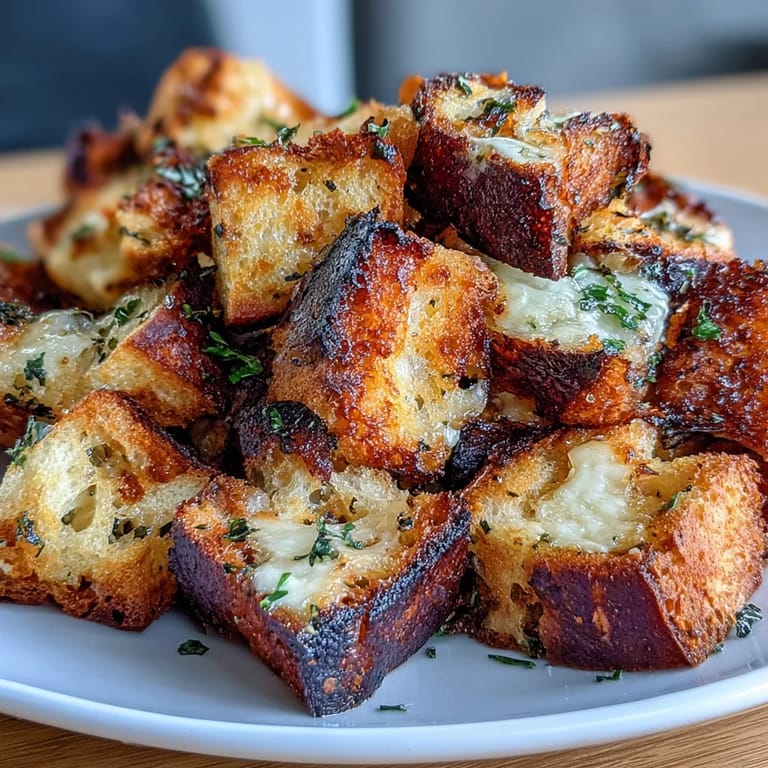
- Bake for 15-18 minutes, stirring halfway through so the underside gets its turn at the heat. You're looking for deep golden color and a sound like tiny glass beads when you shake the pan.
- Add cheese if you're feeling indulgent:
- Pull the hot sheet out, scatter cheese over the croutons, and return for just 2-3 minutes until it's melted and bubbly. Don't skip this step if you want that extra layer of richness.
- Cool before serving:
- Let them sit for a couple of minutes so they firm up and the cheese sets slightly. They'll continue to crisp as they cool.
 Pin
Pin There was a dinner party where someone asked for the recipe, and when I explained it was just bread, oil, and patience, they seemed almost disappointed—as if something this delicious must require more effort. But that's the quiet magic of it: simplicity done with intention tastes like you spent hours in the kitchen.
Why Day-Old Sourdough Matters
Fresh bread is soft and yielding, which means it steam-roasts in the oven rather than crisps. By the time day-old sourdough hits the heat, its crust is already set and the interior is slightly drier, so the moisture escapes evenly and you get that satisfying crunch that echoes when you bite into it. I learned this the hard way after buying a fresh loaf from the bakery and ending up with croutons that were more tender than crispy, teaching me to always check the date or plan a day ahead.
The Art of Even Toasting
Oven temperatures vary wildly, so what takes 15 minutes in one kitchen might take 20 in another—watch for color, not just time. The halfway stir is genuinely important because it forces you to check them anyway, and you'll notice which corners of the pan run hot, which edges brown fastest, and adjust the positioning if needed. This kind of attention is what separates mediocre croutons from ones that make people lean back in their chair and appreciate the moment.
Storage and Variations
Croutons made this way stay crispy in an airtight container for up to three days, which means you can prep them ahead when you're expecting company and focus on perfecting the soup instead. I've swapped Gruyère for Comté when that's what the cheese shop had, and the earthier flavor was wonderful—same approach, slightly different personality. If you want to experiment without losing the essence of the dish, here are some directions that work beautifully:
- Try rubbing the cut bread cubes with a halved garlic clove before tossing with oil for an even more pronounced garlic whisper.
- Substitute Emmental or Swiss cheese if Gruyère isn't available, since they all melt smoothly and won't overpower the sourdough's tang.
- Make them dairy-free by skipping the cheese and using only olive oil, letting the herbs and garlic carry all the flavor.
 Pin
Pin These croutons are proof that the smallest, simplest additions can completely transform how we experience a dish—that moment when something familiar tastes like you've just discovered it. Make them for yourself, make them for someone else, and watch how they disappear.
Recipe Q&A
- → What bread works best for these croutons?
Day-old sourdough bread cut into 1-inch cubes is ideal for achieving the perfect crunch and flavor.
- → Can I use butter instead of olive oil?
Yes, melted unsalted butter can be used to coat the bread cubes, offering a richer taste.
- → Is cheese necessary for the best flavor?
Cheese like Gruyère or Emmental is optional but adds a delightful melted richness atop the croutons.
- → How do I store leftover croutons?
Keep cooled croutons in an airtight container at room temperature for up to three days to maintain crispness.
- → Can I add herbs to enhance flavor?
Dried thyme or herbes de Provence add an aromatic touch and complement the garlic and seasoning well.