 Pin
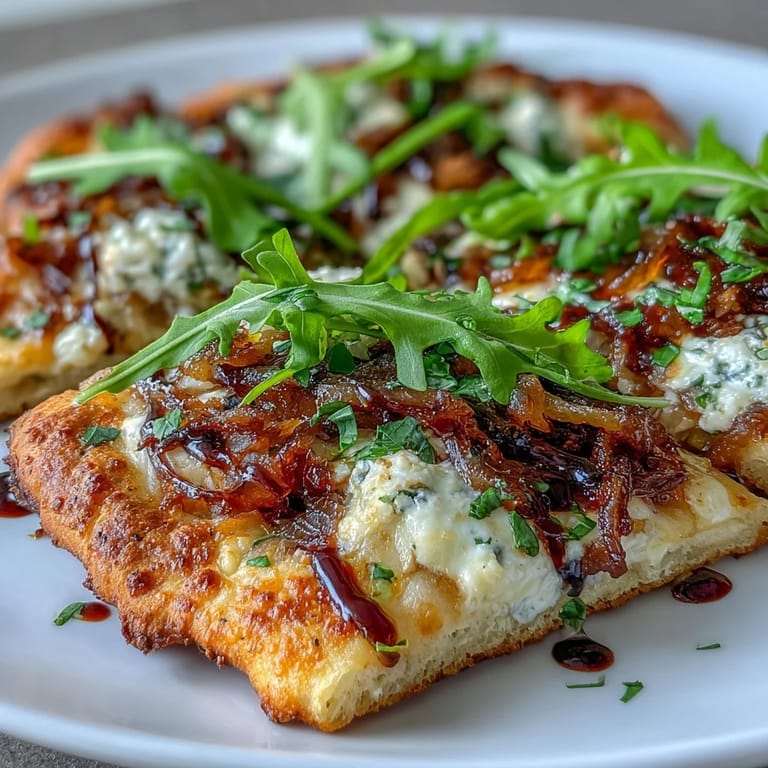
Pin My neighbor texted me a photo of her flatbread pizza one Saturday afternoon, and I couldn't stop staring at it—the way the arugula was piled on top, still somehow crisp, with that glossy balsamic drizzle catching the light. By evening I'd already caramelized my first batch of onions, filling the kitchen with this amber-sweet smell that made my roommate follow the scent like a cartoon character. That pizza became the thing I made whenever I wanted to feel like I'd actually tried in the kitchen without the stress of yeast or fancy technique.
I made this for a dinner party where I was supposed to be helping a friend, not cooking the whole appetizer course myself. She'd asked me to bring something simple and when I arrived with this warm, golden flatbread, still steaming on a wooden board, the whole room just went quiet for a moment before people started circling. By the end of the night someone had asked for the recipe three times and I realized I'd made something that tasted fancy but didn't require me to stress or apologize for any steps.
Ingredients
- 2 large flatbreads or naan: Shop-bought flatbread is your secret weapon here—it saves you from dealing with dough entirely and still gets crispy and charred on the edges.
- 2 large yellow onions, thinly sliced: Yellow onions have the sweetness you need; red onions can work but they're sharper and less caramel-like.
- 2 tbsp olive oil: Use a good quality olive oil you'd actually drink—it seasons the onions as they cook.
- 1/2 tsp kosher salt and 1/2 tsp sugar: The sugar isn't cheating; it helps the onions break down faster and deepens their caramelization.
- 1 tbsp balsamic vinegar: Add this only at the very end to deglaze the pan and keep that tangy punch alive.
- 1 cup shredded mozzarella cheese: Fresh mozzarella gets weepy; use the aged kind in the bag.
- 1/2 cup crumbled goat cheese or feta: This is where the personality comes in—the tanginess cuts through all that sweetness and keeps it from feeling one-dimensional.
- 2 cups fresh arugula: Don't add this until after baking or it wilts into nothing; cold peppery leaves are the whole point of the top layer.
- 2 tbsp balsamic glaze: The reduced, thicker version, not regular balsamic vinegar.
- Freshly cracked black pepper: Don't skip this—it's the final note that ties everything together.
Tired of Takeout? 🥡
Get 10 meals you can make faster than delivery arrives. Seriously.
One email. No spam. Unsubscribe anytime.
Instructions
- Get your oven ready:
- Preheat to 425°F. This high heat is what makes the flatbread crisp and keeps it from staying chewy in the middle.
- Start the caramelization:
- Heat your oil in a large skillet over medium heat, then add the sliced onions with salt and sugar. You'll hear them sizzle and soften immediately—this is the beginning, not the end. Stir every few minutes so they cook evenly and don't catch on the bottom.
- Wait for the magic:
- This takes 20-25 minutes and there's no rushing it. The onions will go from translucent to pale gold to a deep caramel color, and the whole time your kitchen smells like something's happening. About 2 minutes before you're done, pour in the balsamic vinegar and stir—you'll hear it sizzle and smell the acidity brighten everything.
- Assemble on the flatbread:
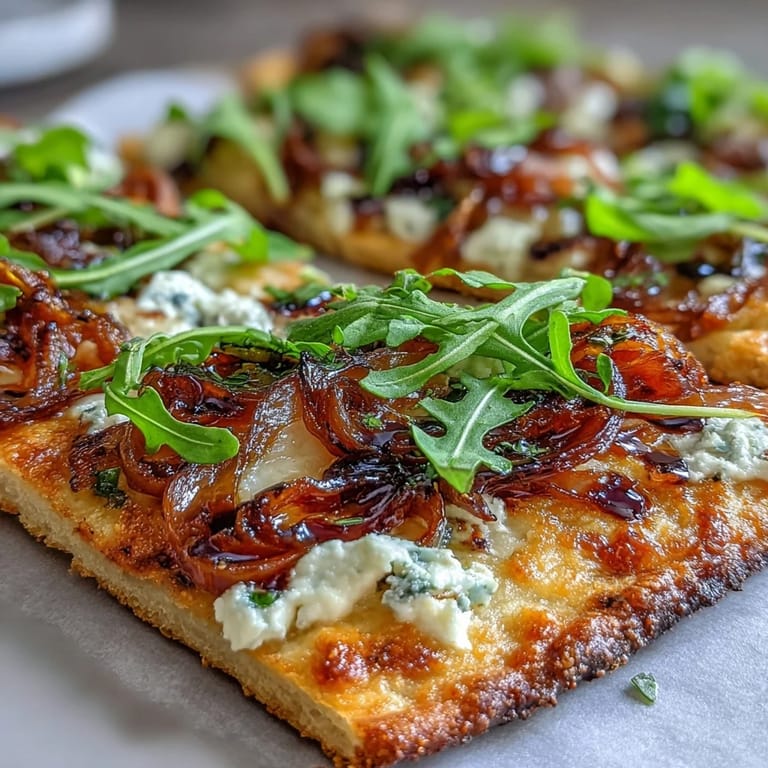
- Lay your flatbreads on a baking sheet and sprinkle mozzarella evenly across each one. Top with your caramelized onions, spreading them out so they're not all piled in one spot, then scatter the goat cheese on top. Don't oversaturate it—the goal is crispy bread, not a soggy mess.
- Let the oven do the work:
- Bake for 10-12 minutes until the cheese is melted and bubbly and the flatbread edges are just starting to char at the corners. The house will smell incredible—this is when you know you're almost there.
- The final flourish:
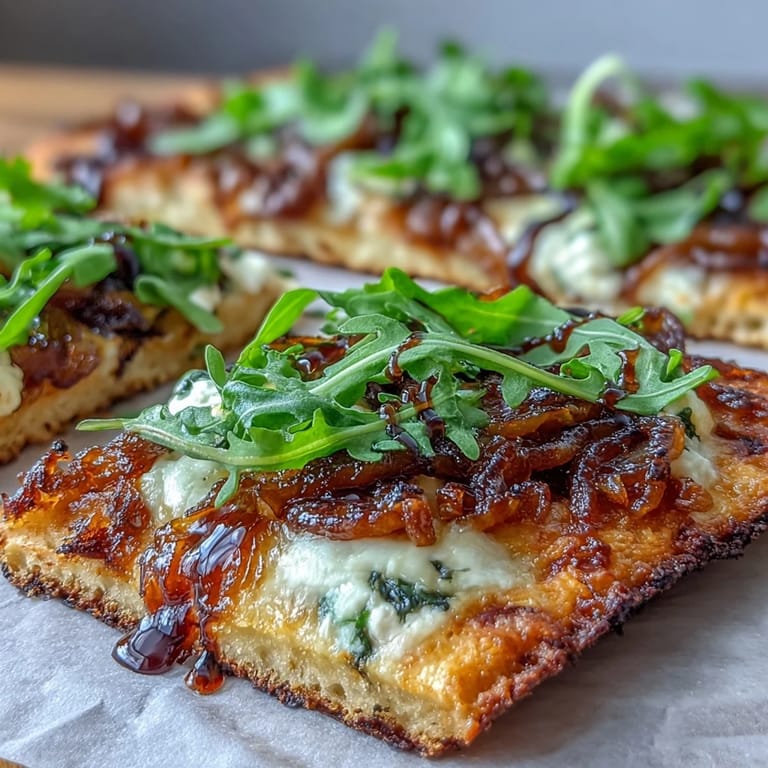
- Pull everything out and let it rest for 2 minutes. While it's still warm, pile the fresh arugula on top—the heat will slightly wilt it but it stays mostly crisp. Drizzle with balsamic glaze in thin strands and crack black pepper all over. Slice and serve while the cheese is still warm.
 Pin
Pin What struck me most was watching someone cut into this flatbread and pause—there was this moment where they seemed genuinely surprised that something so approachable could taste so deliberate. That's when I understood this pizza wasn't about being difficult or impressive; it was about understanding that good food comes down to a few things done well, each ingredient earning its place on the plate.
The Caramelization Method
Caramelizing onions is less mystical than it sounds and more about patience mixed with regular stirring. The key is letting them sit undisturbed for a minute or two so they make contact with the hot pan and start to brown, then giving them a good stir to redistribute the ones on top to the bottom. If they start smelling burnt instead of sweet, lower the heat slightly—you're looking for deep amber, not charred. Once you've done it once, you'll start recognizing that moment when they shift from cooked to truly caramelized, and you'll want to add these onions to everything.
Cheese Combinations Worth Trying
I've experimented with swapping the goat cheese for everything from ricotta to aged cheddar depending on my mood. The goat cheese brings this tangy brightness that's almost puckering against the sweet onions, but if you prefer something richer, crumbled feta works perfectly and adds a salty minerality instead. The mozzarella is non-negotiable though—it's the glue that holds everything together and melts into those little pockets of the flatbread.
When You Want to Personalize It
This flatbread is honestly a canvas, and I've never made it the same way twice once I understood how the basic elements work together. Sometimes I'll add thin slices of fresh pear before baking because the fruit plays beautifully against the onion sweetness and the creamy cheese. Other times I'll add a handful of crispy prosciutto or pancetta torn into pieces for textural contrast, or even a scatter of walnuts for crunch.
- Try adding thinly sliced pears or fresh figs in the last few minutes of baking—they'll warm through without losing their shape.
- A pinch of fresh thyme or rosemary sprinkled on top before baking brings a herbal note that elevates the whole thing.
- Don't overlook the possibility of drizzling truffle oil or infused olive oil over the top instead of regular balsamic for occasions when you feel fancy.
 Pin
Pin This dish taught me that the difference between everyday cooking and something that feels special often comes down to slowing down for one thing—in this case, actually letting the onions become what they're meant to be. It's the kind of pizza that makes people slow down their eating too, which might be the highest compliment a meal can get.