 Pin
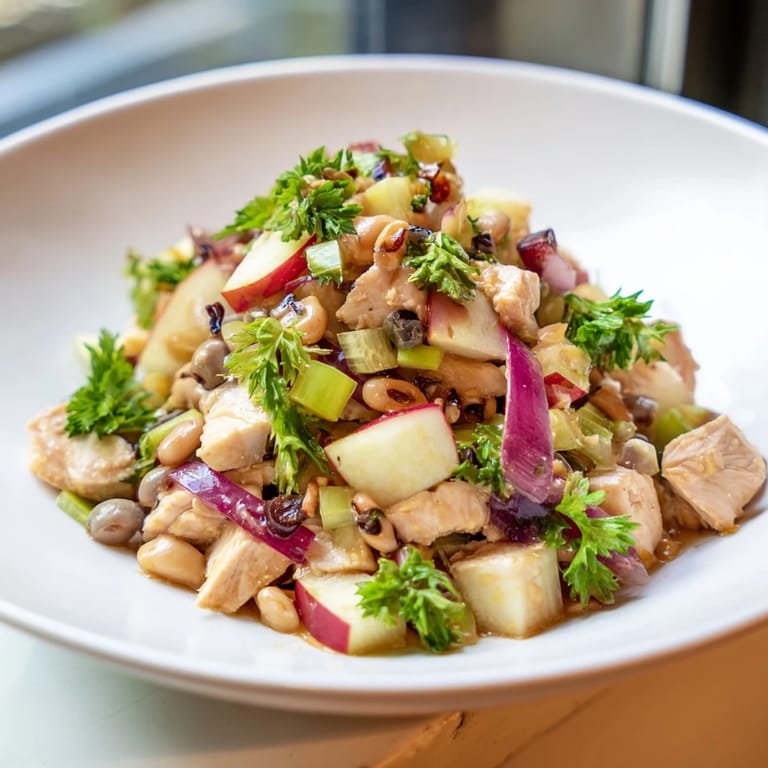
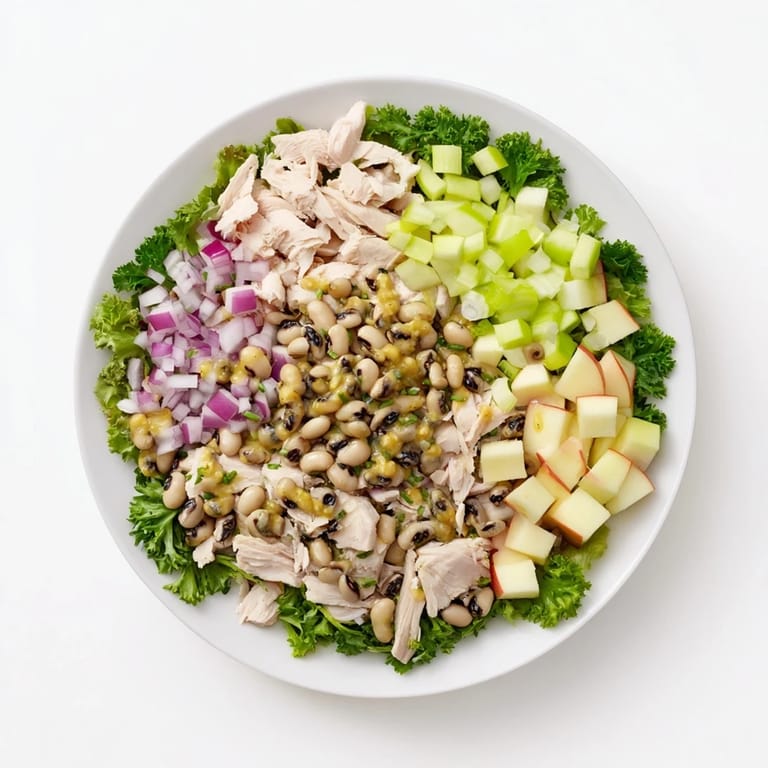
Pin New Year's morning, I stood in my kitchen watching steam rise from a pot of black-eyed peas, thinking about all the superstitions my grandmother used to whisper about—luck hiding in every ingredient. That's when I decided to build a salad around them, something bright and modern but still honoring that tradition. The first time I tossed together the crisp apples, tender chicken, and tangy honey-mustard dressing, I realized this wasn't just about fortune; it was about starting the year with something that actually tastes as good as it sounds.
I made this for a small dinner party on New Year's Eve, and something unexpected happened—my friend who usually avoids salads asked for seconds. She said it was the combination of textures and that the apples kept surprising her with little pops of sweetness. Watching people actually enjoy a salad, seeing them go back for more, that moment told me this recipe had staying power.
Ingredients
- Cooked chicken breast: Diced or shredded, this is your protein anchor—I prefer poaching it gently in broth for moisture, then chilling it before adding to the salad.
- Black-eyed peas: The heart of the luck, they add earthiness and substance; canned ones work beautifully if you rinse them well.
- Apples (Fuji or Honeycrisp): Their firmness means they won't turn mushy, and their natural sweetness plays perfectly against the mustard.
- Celery: Thinly sliced, it brings a clean, crisp note that keeps the salad from feeling heavy.
- Red onion: Thin slices add a gentle bite; if it feels too sharp, a quick soak in cold water mellows it out.
- Mixed salad greens: Choose sturdy ones like arugula or baby kale so they hold up to the dressing without wilting.
- Fresh parsley: Chopped, it adds a grassy freshness that brightens every bite.
- Olive oil: Good quality makes a difference in the dressing's final taste.
- Apple cider vinegar: It echoes the apples in the salad and creates a natural harmony.
- Dijon mustard: The star of the dressing, providing that creamy tang and body.
- Honey: Just enough to round out the sharpness and add subtle depth.
- Toasted pecans or walnuts: Optional but worth the small effort—they add warmth and crunch that feels indulgent.
- Feta cheese: Optional and can be omitted for dairy-free; if you use it, crumble it just before serving so it stays distinct and doesn't get lost in the greens.
Tired of Takeout? 🥡
Get 10 meals you can make faster than delivery arrives. Seriously.
One email. No spam. Unsubscribe anytime.
Instructions
- Build your dressing foundation:
- In a small bowl, whisk together the olive oil, apple cider vinegar, Dijon mustard, and honey until it looks creamy and emulsified. Season with salt and pepper, taste it, and adjust—your dressing should make you smile before it even touches the salad.
- Gather your main ingredients:
- In a large salad bowl, combine the cooked chicken, black-eyed peas, diced apples, sliced celery, red onion, and chopped parsley. At this stage, everything is in separate little pockets, waiting to become something unified.
- Introduce the greens:
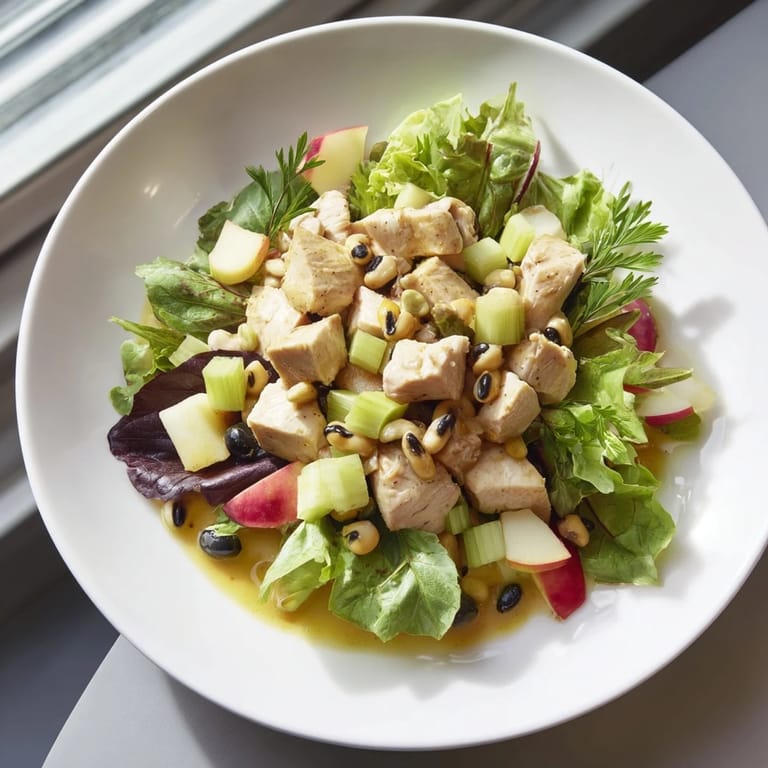
- Add your mixed salad greens to the bowl and toss gently—you're looking for everything to start knowing each other, not to crush the delicate leaves.
- Dress and toss:
- Drizzle the dressing over the salad and toss again until everything is evenly coated and glistening. This is where the magic happens, where all the individual flavors start to become one.
- Finish and serve:
- Sprinkle with toasted pecans or walnuts and crumbled feta if using, and serve immediately while everything is still crisp and bright.
 Pin
Pin There's something almost ceremonial about eating this salad on New Year's morning—it feels like you're making a quiet promise to yourself about how the year will go. Not because of superstition, but because you're starting with something nourishing and delicious, something that tastes like intention.
The Story Behind the Black-Eyed Peas
Black-eyed peas have been a New Year's tradition in the American South for generations, representing coins and the promise of prosperity. Pairing them with something as fresh and modern as a crisp apple salad honors that history while making it feel relevant to how we actually eat now. They're not just decoration or a nod to superstition; they genuinely add a creamy texture and earthy flavor that makes this salad more complete.
Why the Honey-Mustard Dressing Works
This dressing is built on a simple principle: balance. The Dijon mustard brings structure and sharpness, the honey rounds it out without being cloying, and the apple cider vinegar ties everything back to the apples in the salad. It's the kind of dressing that makes you want to scrape the bottom of the bowl, and that's how you know it's right.
How to Make This Recipe Your Own
This salad is a framework, not a strict rule—the beauty is that you can shift things based on what's in your kitchen or what you're hungry for. Swap the apples for pears if that's what you have, add pomegranate seeds for color and sweetness, or leave off the nuts if you're avoiding them. The core of the recipe stays true as long as you have that tender protein, those lucky black-eyed peas, and a dressing that tastes like it means something.
- If you want to make it vegetarian, double the black-eyed peas or add chickpeas for the same protein bump.
- A crisp Sauvignon Blanc or a light lager pairs beautifully if you're serving this with a drink.
- This salad is best eaten fresh, but you can absolutely prep all the components ahead and assemble it just before you eat.
 Pin
Pin This salad is my quiet way of saying here's to a year of good choices, good flavors, and the luck we create by showing up for ourselves. Make it, share it, and let it remind you that some of the best traditions are the ones we adapt to fit our lives.
Recipe Q&A
- → Can I substitute the chicken with a plant-based protein?
Yes, chickpeas or extra black-eyed peas work well as alternatives to maintain protein content and texture.
- → What apples work best for this dish?
Fuji and Honeycrisp apples add the ideal balance of sweetness and crunch.
- → Is it necessary to toast the nuts before adding?
Toasting pecans or walnuts enhances their flavor and adds a satisfying crunch.
- → Can this dish be made ahead of time?
Yes, prepare components separately and combine just before serving to keep textures fresh.
- → What wine pairing complements these flavors?
A crisp Sauvignon Blanc pairs beautifully with the fresh and tangy elements.