 Pin
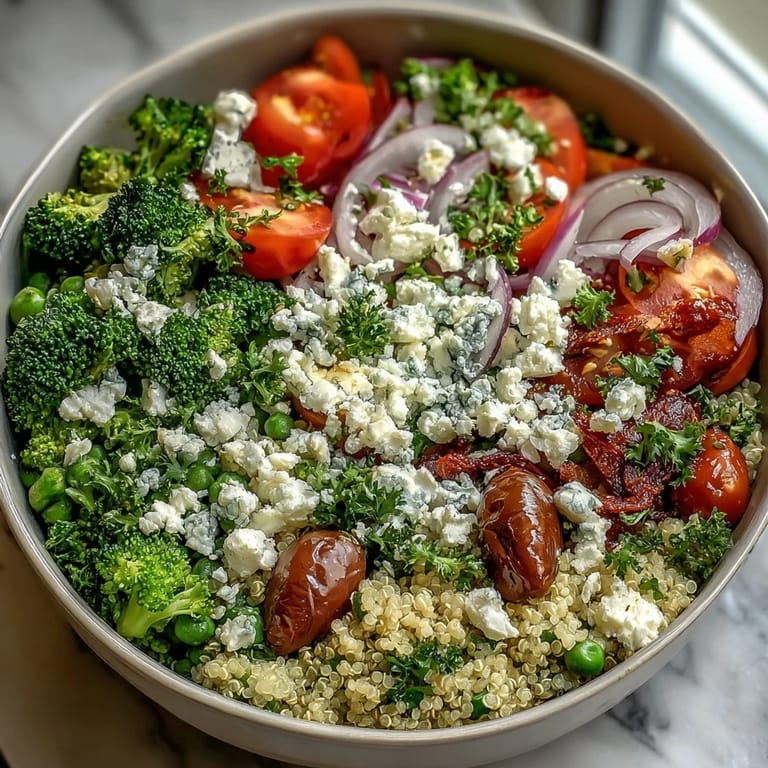
Pin There's something about a grain bowl that makes you feel like you've got your life together, even on the most chaotic Tuesday afternoon. I discovered this particular combination while standing in my kitchen on a rainy spring day, staring at a bag of quinoa and wondering what could possibly make it exciting. The answer arrived in the form of bright green broccoli, sweet peas, and a generous handful of crumbly feta that somehow transformed the whole thing into something I actually craved rather than merely tolerated. My partner walked in mid-chop and asked if I was making salad, and I had to laugh because this felt like so much more than that.
I've made this for book club more times than I can count, mostly because it's elegant enough to feel intentional but relaxed enough that I'm not stressed about timing. One evening, a friend with celiac disease actually teared up a little when I told her the quinoa was naturally gluten-free, and suddenly this simple bowl became something that meant she could eat what everyone else was eating. That moment stayed with me longer than any compliment about the flavor ever could.
Ingredients
- Quinoa (1 cup, rinsed): This grain has a nutty flavor and fluffy texture that becomes the foundation everything else rests on, plus it's packed with protein, making the whole bowl genuinely filling.
- Water or vegetable broth (2 cups): Using broth instead of plain water adds subtle depth, though honestly, water works perfectly fine on busy nights.
- Broccoli florets (2 cups): The slight char or tender crispness from steaming adds textural contrast and keeps your bowl from feeling like mush.
- Green peas (1 cup, frozen or fresh): Frozen peas are a secret weapon because they're picked at peak ripeness and honestly taste fresher than fresh peas that have been sitting around.
- Cherry tomatoes (1 cup, halved): These burst with sweetness and acidity, cutting through the richness of the feta and adding visual pop.
- Red onion (1 small, finely sliced): Raw red onion gives a sharp bite that wakes up your palate and keeps the bowl from tasting one-note.
- Feta cheese (3 oz, crumbled): The tanginess of feta is absolutely essential here; it's the reason this bowl tastes like more than the sum of its parts.
- Fresh parsley (2 tbsp, chopped): This isn't just garnish—it adds a grassy freshness that ties everything together.
- Extra-virgin olive oil (3 tbsp): The quality of your oil matters more in something this simple, so use something you actually enjoy tasting.
- Lemon juice (1 tbsp): Fresh lemon is non-negotiable; bottled juice never quite delivers the same brightness.
- Dijon mustard (1 tsp): This acts as an emulsifier and adds subtle complexity without making the dressing taste like mustard.
- Garlic clove (1 small, minced): One clove is enough to matter without overpowering; I learned this the hard way with my first version.
Tired of Takeout? 🥡
Get 10 meals you can make faster than delivery arrives. Seriously.
One email. No spam. Unsubscribe anytime.
Instructions
- Prepare your quinoa foundation:
- Rinse your quinoa under cold running water—this washes away the saponin coating that can taste slightly bitter. Combine it with your water or broth in a medium saucepan, bring to a rolling boil, then immediately lower the heat, cover, and let it simmer gently for exactly 15 minutes until the liquid is completely absorbed.
- Steam the broccoli until crisp-tender:
- Place your florets in a steamer basket over boiling water for 3 to 4 minutes, watching until they turn a brighter shade of green but still have a gentle snap when you bite into them. Transfer immediately to a bowl of ice water to stop the cooking process and preserve that vibrant color.
- Quick cook the peas:
- Frozen peas need just boiling water poured over them in a bowl for about 2 minutes, while fresh peas get a quick 1-minute blanch in salted water. Either way, drain them thoroughly so they don't make your finished bowl watery.
- Whisk your dressing with intention:
- In a small bowl, combine your olive oil, lemon juice, mustard, and minced garlic, whisking until the dressing emulsifies and turns slightly creamy. Taste it before you pour it on the bowl—add salt and pepper until it tastes bright but not aggressive.
- Combine all elements with a gentle hand:
- In a large mixing bowl, toss together your cooled quinoa, broccoli, peas, tomatoes, and red onion, then pour the dressing over and toss gently so nothing gets crushed. The goal is to coat everything evenly without turning your vegetables into mush.
- Assemble and finish:
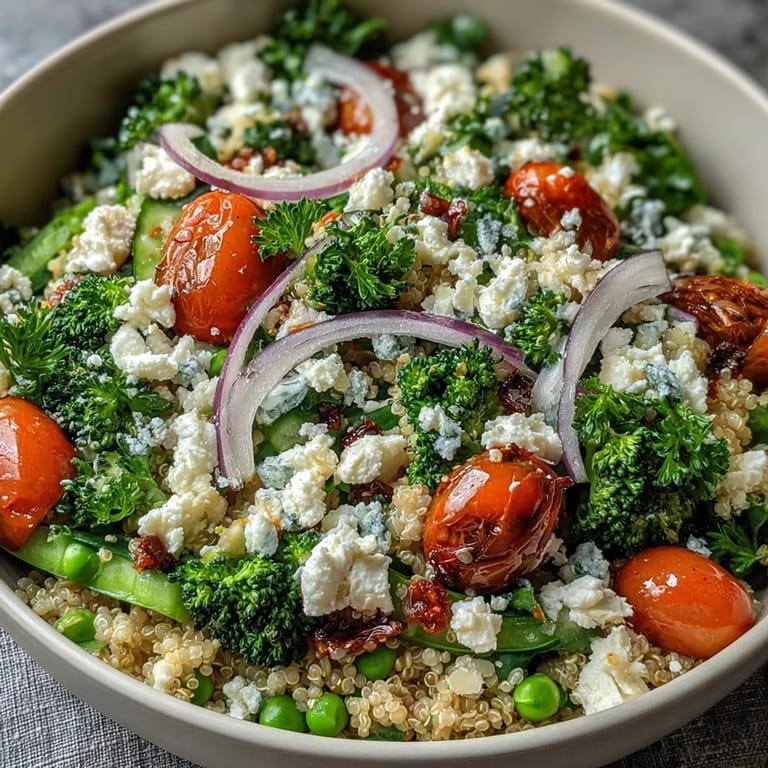
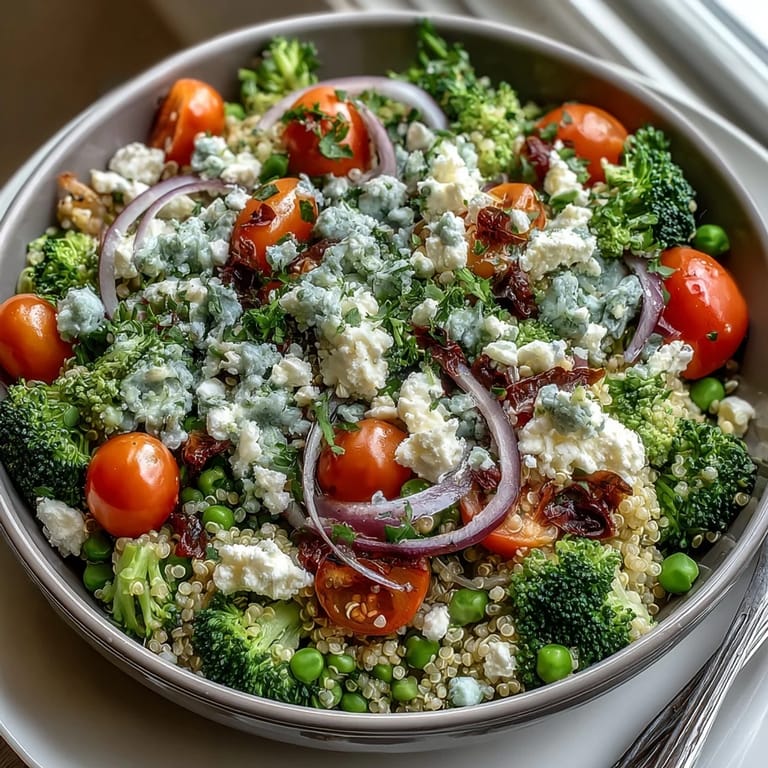
- Divide the mixture among your serving bowls, then crown each one with crumbled feta and a scatter of fresh parsley. Serve while the bowl still has some warmth to it, or chill it completely for a refreshing cold version.
 Pin
Pin What surprised me most about this bowl was how it became a vehicle for leftovers in the best possible way, transforming roasted vegetables or extra herbs into something that felt completely intentional. It's become the kind of recipe I make when I want to feel nourished without spending an hour in the kitchen, and somehow that quiet self-care aspect makes it taste better too.
Why This Bowl Works
The beauty of grain bowls lies in their balance of flavors and textures—nutty against bright, soft against crisp, creamy against sharp. Every component in this particular combination plays a specific role, and removing even one element shifts the entire experience. The quinoa becomes the canvas, the vegetables add personality, and the feta and dressing transform it into something genuinely craveable rather than virtuous.
Storage and Make-Ahead Magic
The beauty of this bowl is that it tastes even better on day two, once the flavors have had time to mingle and soften into each other. Keep the components separate until you're ready to eat—store the cooked quinoa in one container, the vegetables in another, and the dressing in a little jar—and assemble only what you need. This approach means you can have a fresh lunch ready in two minutes, and the feta won't get waterlogged by sitting in the dressing overnight.
Customization Without Losing the Magic
I've played with this bowl more times than I can count, and it's forgiving enough to welcome experiments while staying grounded in its essential character. Swap the feta for goat cheese if you want something creamier, or omit cheese entirely for a vegan version that stands firmly on its own merit. Add toasted nuts for crunch, throw in a soft-boiled egg for extra protein, or toss in whatever herbs you have growing on your windowsill—this bowl is a platform for your preferences, not a rigid formula.
- Pumpkin seeds or walnuts add a satisfying crunch that changes everything about how the bowl feels in your mouth.
- A perfectly soft-boiled egg can turn this into a more substantial dinner when you're actually hungry rather than just peckish.
- Fresh herbs like mint, dill, or cilantro can completely reinvent the flavor profile while keeping the structure intact.
 Pin
Pin This bowl has become my answer to the question of what makes a meal feel both nourishing and exciting, which is really all I want from any recipe. Make it once and you'll understand why it keeps appearing on my table, season after season.
Recipe Q&A
- → Can I use vegetable broth instead of water for cooking quinoa?
Yes, using vegetable broth adds extra flavor and depth to the quinoa, making the grain bowl more savory.
- → How do I prevent broccoli from becoming mushy?
Steam or blanch broccoli for 3–4 minutes until crisp-tender, then rinse under cold water to stop cooking and preserve its texture.
- → What alternatives can I use for feta cheese?
Goat cheese can be substituted for a similar tangy taste, or omitted entirely for a dairy-free option.
- → Can I prepare this grain bowl in advance?
Yes, you can assemble and refrigerate it for up to 2 days; just add the feta and parsley before serving for freshness.
- → What dressing ingredients enhance the flavor best?
A combination of extra-virgin olive oil, lemon juice, Dijon mustard, and minced garlic creates a bright, balanced dressing that complements the ingredients well.