 Pin
Pin There's something about early spring that makes you want to eat nothing but raw vegetables and bright greens. My neighbor knocked on my kitchen door one April morning with a basket of just-harvested salad leaves, and I realized I'd been cooking heavy winter foods for too long. That afternoon, standing at my cutting board with the windows open for the first time in months, I threw together this salad almost by instinct—mustard, honey, whatever vegetables looked perky in my crisper drawer. It became the thing I made constantly once the weather turned, a reset button between seasons.
I made this for a friend who was going through a rough time, someone who said she couldn't taste anything properly anymore. When she took her first bite, her eyes changed—suddenly there was brightness there again. She asked for the dressing recipe before she even finished eating, and I knew I'd made something that mattered.
Ingredients
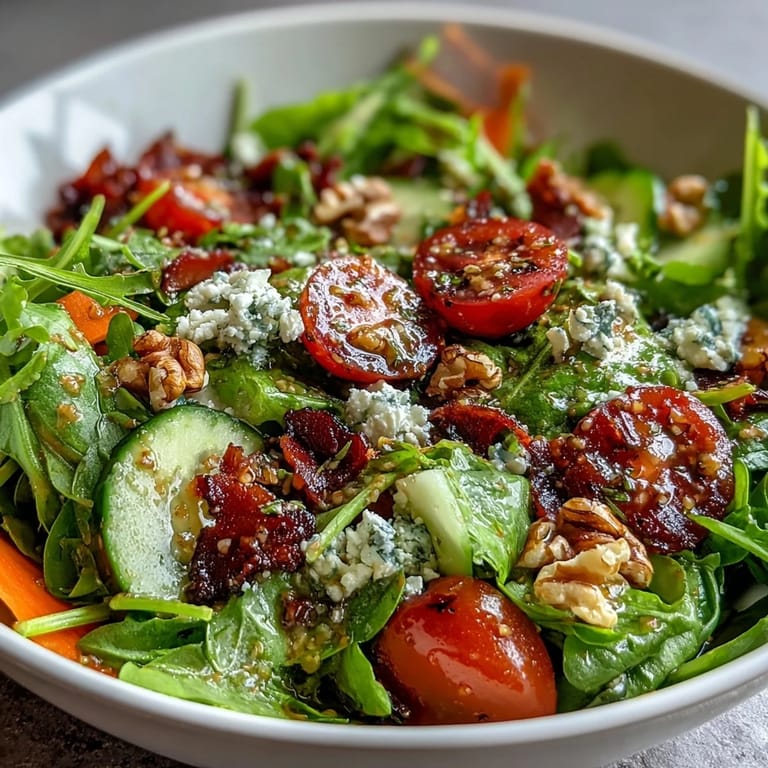
- Spring greens mix (120 g / 4 cups): The foundation of everything—look for a blend that includes arugula for peppery notes, baby spinach for earthiness, and mâche for delicate sweetness.
- Cucumber (1 small, thinly sliced): Slice it paper-thin so it stays crisp; thick slices turn watery and dilute the dressing.
- Cherry tomatoes (100 g / 1 cup, halved): Choose ones with visible seeds and deep color, as pale tomatoes taste like nothing but water.
- Radish (1 small, thinly sliced): This is your crunch element and your peppery kick—don't skip it even if you think you don't like radishes.
- Carrot (1 small, julienned or grated): Raw carrot brings sweetness that plays beautifully against the mustard, and the bright orange feels like edible spring.
- Toasted walnuts or pecans (30 g / ¼ cup, optional): Toast them yourself in a dry pan for two minutes—the difference between forgettable and absolutely essential.
- Crumbled feta cheese (40 g / ¼ cup, optional): Quality feta makes this; the salty, tangy depth transforms a simple salad into something worth remembering.
- Dijon mustard (2 tbsp): Buy the good kind from a glass jar—it has body and complexity that powdery versions lack.
- Honey (2 tbsp): Just a touch to soften the mustard's edge and create that perfect sweet-savory balance.
- Extra-virgin olive oil (3 tbsp): This is your emulsifier and flavor carrier, so don't use the cheap stuff.
- Apple cider or white wine vinegar (1 tbsp): Apple cider adds a slight fruity warmth; white wine vinegar stays more neutral—choose based on mood.
- Sea salt (½ tsp) and black pepper (¼ tsp): Season the dressing generously before it touches the greens.
Tired of Takeout? 🥡
Get 10 meals you can make faster than delivery arrives. Seriously.
One email. No spam. Unsubscribe anytime.
Instructions
- Build your dressing:
- Whisk mustard and honey together in a small bowl until the honey dissolves into the mustard's color. This takes about thirty seconds of actual whisking, and it matters—you want them completely married before the oil goes in. Add the oil in a slow drizzle while whisking constantly, then whisk in the vinegar and season to taste.
- Prepare the greens:
- Spin or pat your greens dry so they're not wet when the dressing hits them. Slice your cucumber thin, halve the tomatoes, slice the radish, and grate or julienne the carrot—lay everything on a cutting board for a moment and just look at the colors you've gathered.
- Combine with intention:
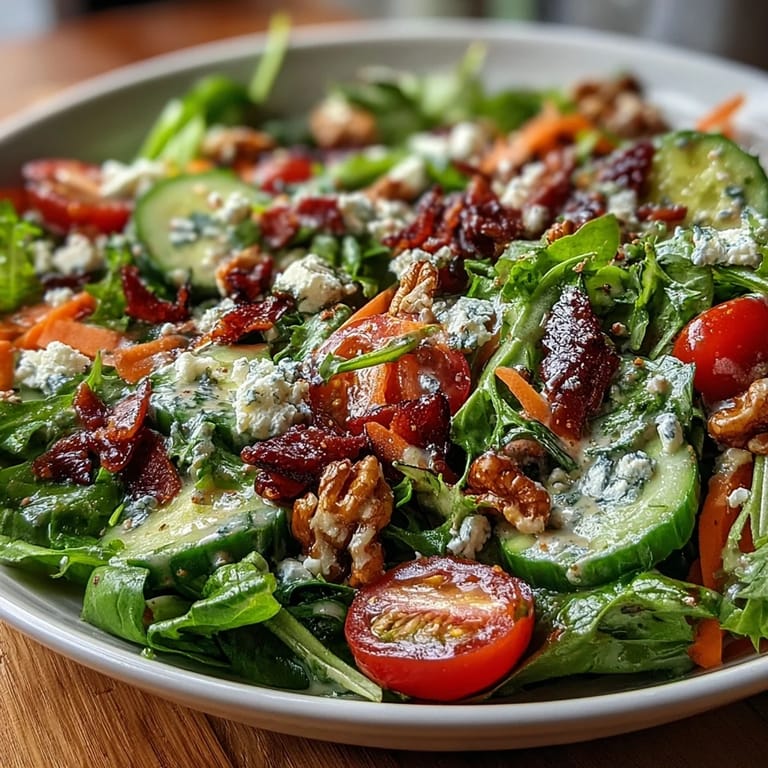
- Put the greens in your largest bowl, then arrange the cucumber, tomatoes, radish, and carrot on top without tossing yet. This moment before dressing is when you decide if it looks balanced to you, if you want to add more of anything. Pour the dressing over everything, then use your hands or two forks to toss gently until every leaf glistens.
- Finish with restraint:
- If you're using nuts and feta, sprinkle them over just before serving so they don't soften from sitting in dressing. Taste a bite and adjust the salt—salads need more seasoning than you think they do.
 Pin
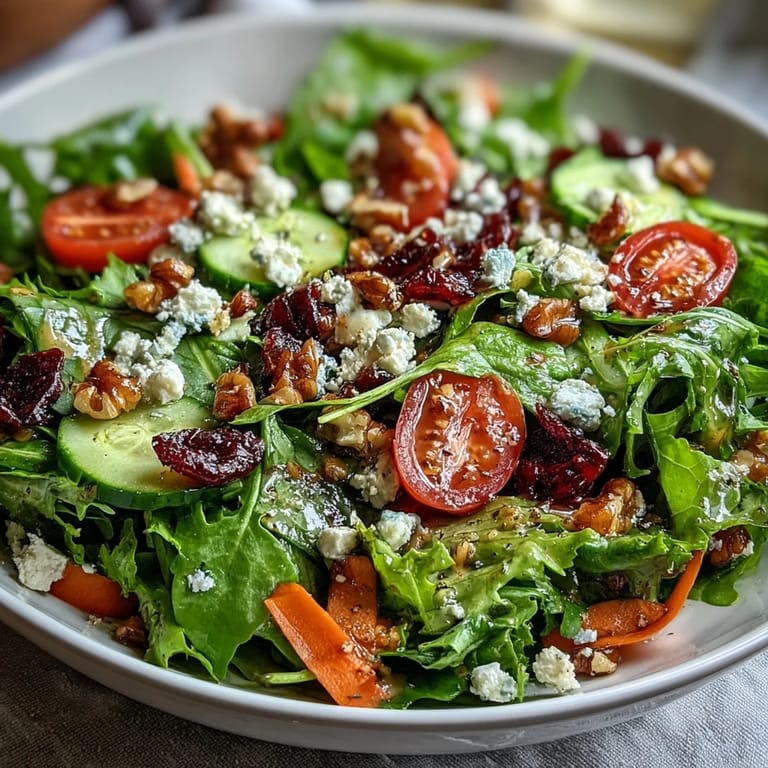
Pin My daughter once told me this was the only salad she'd actually choose to eat, which meant more to me than she probably realized. There's something about the combination of textures and that particular balance of sweet and sharp that makes people who usually push lettuce to the side actually engage with it.
The Science of a Good Dressing
What makes this dressing work is the interplay between acid and fat and sweetness. The mustard provides emulsifying power, which means the oil and vinegar actually stay together instead of separating immediately, creating something with body instead of something you just pour off. The honey isn't just sweetness—it rounds out the mustard's sharp edges and adds a subtle richness. I learned this by accident after making dozens of dressings that either broke apart on the plate or tasted aggressively one-note, and suddenly one day it clicked.
Seasonality and Substitutions
Spring greens are ideal when they're actually in season, roughly March through May depending on where you live, but honestly you can make this year-round with whatever tender greens your market has. In summer, add corn kernels and snap peas; in autumn, throw in thinly sliced apples or pears; in winter, use hearty baby kale and roasted beets if you want something with more substance. The dressing stays the same, which is one reason this recipe became my go-to—it's flexible enough to meet the seasons while staying fundamentally itself.
Making It Your Own
This salad thrives on personalization—it's a template more than a rigid formula. The beauty is that you can build it depending on what's in your kitchen and what you're hungry for. Some days I make it as written; other days I add chickpeas for protein or grilled chicken if I'm feeling more substantial, swap out the radish for thinly sliced fennel, or use sunflower seeds instead of walnuts because that's what I have.
- For a vegan version, use maple syrup instead of honey and skip the feta—it loses nothing and gains a deeper, more caramel-like flavor in the dressing.
- The dressing is excellent on grain bowls, roasted vegetables, or even grilled fish, so make extra if you want.
- If you're making this ahead for a picnic or lunch box, keep the dressing in a separate jar and dress it right before eating.
 Pin
Pin This salad has become my answer to so many kitchen moments—when I need something fast, when someone unexpected shows up for lunch, when I want to eat something that tastes like vitality. It's proof that the simplest things, made with attention and good ingredients, can be the most satisfying.
Recipe Q&A
- → What types of greens work best in this salad?
A mix of tender greens like arugula, baby spinach, and mâche offers the best flavor and texture balance.
- → Can I substitute honey in the dressing?
Yes, maple syrup works well as a vegan-friendly alternative to honey without sacrificing sweetness.
- → How can I add protein to this dish?
Adding sliced grilled chicken or cooked chickpeas boosts protein while complementing the fresh ingredients.
- → What is the best way to toast nuts for this salad?
Toast walnuts or pecans lightly in a dry pan over medium heat until fragrant and golden, then cool before adding.
- → What wines pair well with this combination?
A crisp Sauvignon Blanc or a light rosé enhances the salad’s fresh and tangy flavors.