 Pin
Pin I'll never forget the dinner party where I first attempted to recreate the yin and yang symbol on a serving board. A friend had just returned from studying in Bali, and we were gathered around her kitchen island discussing balance and harmony in all things—including food. That evening, I realized that the most beautiful dishes aren't always complicated; sometimes they're about arranging what you love into something that tells a story. This Yin and Yang Balance Board became my love letter to that moment, and now whenever I make it, I'm transported back to that kitchen filled with laughter and good conversation.
The first time I served this to a group of eight people, I watched something magical happen. Everyone paused before eating, pulled out their phones to photograph it, and then I heard someone say, 'This is too beautiful to eat.' But of course, they did eat it—and the conversation that followed was about how the flavors danced between sweet, salty, creamy, and dark. That's when I knew this board had become more than just food; it was an experience.
Ingredients
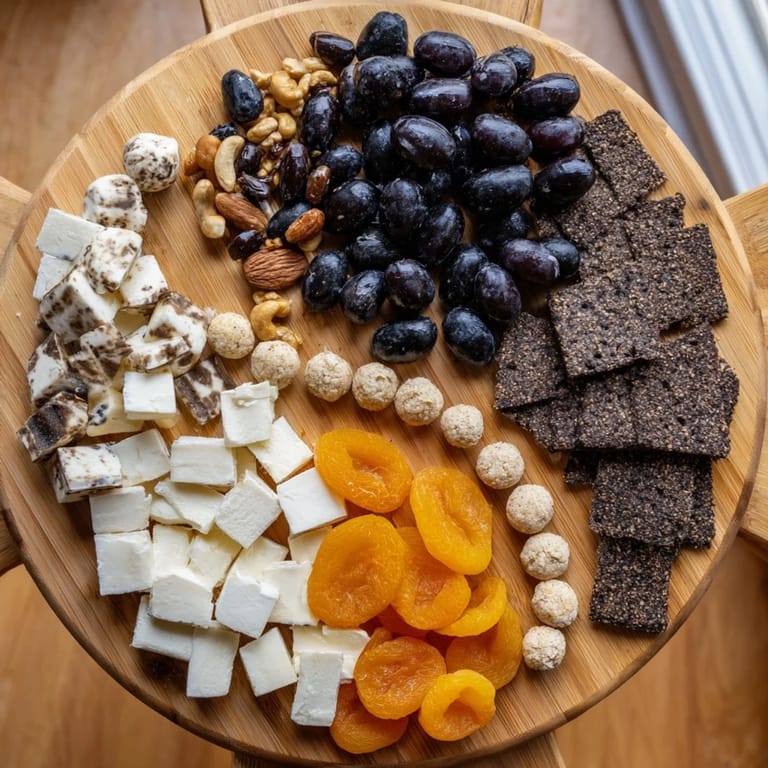
- Black olives, pitted: These are the grounding element of your dark side—they bring a salty, briny depth that anchors the whole board and prevents it from feeling too sweet or precious.
- Dark rye crackers: Choose ones with visible seeds if you can find them; the earthiness complements the olives beautifully and gives guests something substantial to build their bites on.
- Aged balsamic-glazed mushrooms: This is my secret weapon for adding umami and sophistication—if you can't find them pre-made, simply pan-sear sliced mushrooms with a splash of balsamic vinegar and let them cool.
- Black grapes or blackberries: These provide a jewel-like pop of natural sweetness that surprises people who expect the dark side to be entirely savory.
- Dark chocolate squares: Use 70% cacao or higher—it should taste like real chocolate, not sugar, and it creates an unexpected bridge between sweet and savory.
- White cheese: Goat cheese brings tanginess, brie offers creamy luxury, and mozzarella keeps things fresh and light—choose based on what speaks to your palate.
- Rice crackers or water crackers: These should be delicate and neutral so they don't overpower the subtle flavors of the light side; they're the canvas, not the masterpiece.
- Raw cashews or blanched almonds: Nuts add that essential textural contrast and a buttery richness that makes people go back for more.
- Dried apricots or white grapes: The apricots add a gorgeous golden color and concentrated sweetness, while white grapes keep things light and juicy.
- Honey: A light drizzle brings the whole light side together like a finishing touch—use sparingly, just enough to suggest luxury without overwhelming.
Tired of Takeout? 🥡
Get 10 meals you can make faster than delivery arrives. Seriously.
One email. No spam. Unsubscribe anytime.
Instructions
- Start with your canvas:
- Place your large round board on a clean work surface where you have room to move around it. This is your stage, so make sure it's stable and that you're comfortable standing and working around it from all angles.
- Mark your division gently:
- Use a small bowl or circular cutter as a guide and lightly trace an S-shaped curve down the center—think of it like the meditation symbol itself, not a harsh line. This is just a whisper of guidance for where your darks and lights will live.
- Build the dark side with intention:
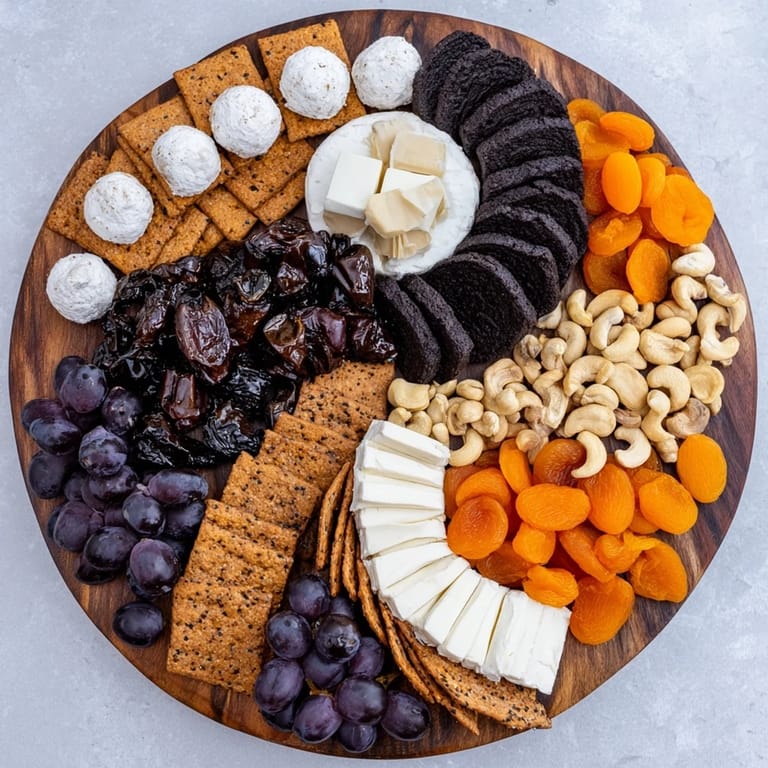
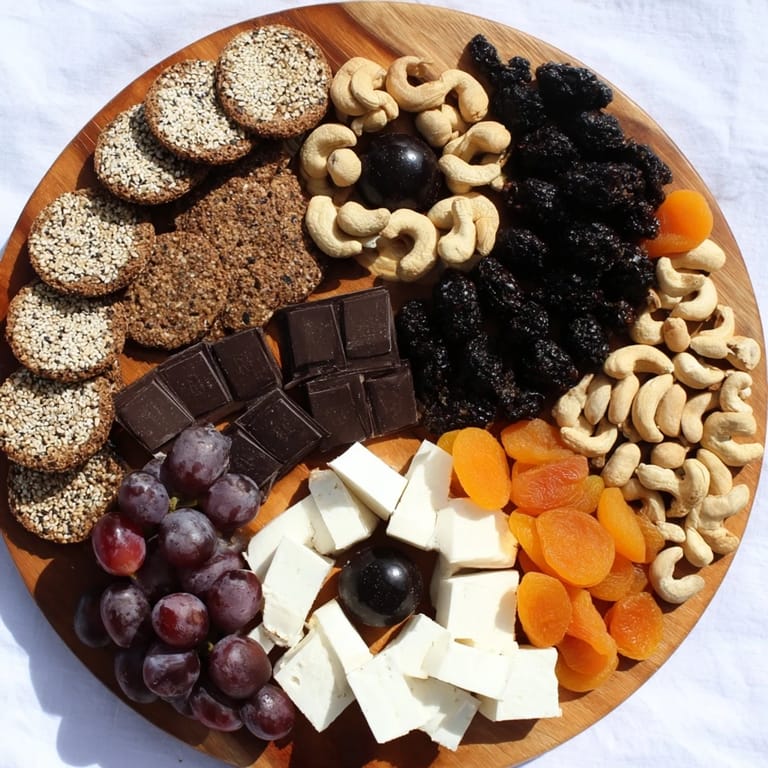
- Start placing your black olives in clusters, then tuck in the dark rye crackers at angles so they catch the light. Layer in your balsamic mushrooms, letting their glossy surfaces reflect what little light hits them. Scatter the black grapes or blackberries like precious gems, and finish with small dark chocolate squares arranged with intention—not randomly scattered, but placed as if each one matters.
- Create balance on the light side:
- Arrange your white cheese slices or cubes with similar care—some standing upright, others lying flat to show their creamy texture. Position rice crackers to echo the angles of the dark side's rye crackers. Pile the cashews or almonds in a small cluster for visual interest, then arrange your dried apricots or white grapes with the same reverence you gave to the dark side. A light drizzle of honey comes last, creating threads of amber that tie everything together.
- Add the finishing touch of symbol:
- Place a small round cheese ball or dark olive in the center of the light side's curve, and mirror it with a light element in the dark side. This completes the yin and yang symbol and shows that within darkness lives light, and within light lives darkness—balance in all things.
- Serve with grace:
- Bring your board to the table and watch people pause. Encourage them to take a little from each side, to experience the full conversation of flavors, to understand that the magic is in the combination, not the isolation.
 Pin
Pin I remember my grandmother watching me arrange one of these boards for the first time, and she said something I've never forgotten: 'You're teaching people that balance isn't about equal parts—it's about understanding that different things can create harmony.' That moment shifted how I see food, and how I see life. Every board I make now is a small meditation on that truth.
The Philosophy Behind the Presentation
This board works because it speaks to something deeply human—our hunger for balance and our appreciation for things that are beautiful to look at. In our overstimulated world, when people gather around a table, they're often looking for a moment to slow down and be present. This arrangement gives them permission to do that. The visual harmony makes people more mindful about what they're eating, and somehow, everything tastes better when you've paused to admire it first.
Variations and Personal Interpretations
The beauty of a balance board is that it's endlessly adaptable. I've made versions that reflect the seasons—using fresh berries in summer, roasted vegetables in autumn, and citrus in winter. I've created vegan versions using cashew cheese and plant-based dark chocolate. I've even made dessert versions with dark chocolate truffles on one side and white chocolate on the other. The symbol remains the same; the ingredients become a conversation with what's available and what your guests love.
Pairing and Serving Suggestions
This board is happiest when surrounded by good conversation and the right beverages. The original notes suggested sparkling white wine or light red, and those pairings are absolutely right—the effervescence of champagne elevates the whole experience, while a light Pinot Noir brings warmth without overwhelming the delicate balance. I've also served it with herbal teas, kombucha, or even sparkling water with fresh lemon for non-alcoholic gatherings, and each pairing creates a different mood.
- For a dinner party, arrange this board first so it's the first thing guests see when they arrive—it sets the tone for an evening of thoughtfulness and beauty.
- If you're bringing this to a potluck, transport the dark and light sides in separate containers and assemble it on site—it takes just five minutes and arrives looking fresh and intentional.
- Keep a small squeeze bottle of honey nearby so guests can add more drizzle to their bites if they wish—giving people agency over their experience always makes food taste better.
 Pin
Pin Every time I create one of these boards, I'm reminded that food is about so much more than nourishment—it's about creating moments of beauty and connection. I hope this recipe becomes a ritual in your kitchen too, a way to transform an ordinary gathering into something memorable.
Recipe Q&A
- → What ingredients create the dark side's unique flavor?
The dark side features black olives, dark rye crackers, aged balsamic mushrooms, black grapes or blackberries, and rich dark chocolate, delivering bold, earthy, and slightly sweet notes.
- → Which cheeses work best on the light side?
Soft white cheeses like goat cheese, brie, or mozzarella provide creamy texture and mild tang that complement crisp crackers and nuts.
- → How is the yin and yang pattern achieved on the platter?
A round board with an S-shaped curve divides dark and light elements, arranged symmetrically to mimic the classic yin and yang symbol, including small cheese balls or olives as dots.
- → Can the platter accommodate dietary preferences?
Yes, cheeses and crackers can be substituted to suit dietary needs, and nuts or honey can be omitted as desired.
- → What drinks pair well with this platter?
Light sparkling white wines or light red wines enhance the varied textures and balanced flavors featured on the board.