 Pin
Pin The first time I hand-rolled sushi at home, I was convinced I'd need a formal lesson and all the fancy equipment. My roommate casually tossed me a half-sheet of nori one evening and said, "Just wrap it like a cone." Ten minutes later, I was holding something that actually looked like food, and I haven't looked back. There's something freeing about abandoning the neat little rectangles and just letting your hands shape the roll exactly how you want it.
I made these for a dinner party once and watched my guests abandon their chopsticks, pick up the hand rolls, and immediately relax. There's something about eating with your hands that turns a meal into a moment—suddenly everyone's laughing, dipping, experimenting with how much wasabi they can handle. That night, I realized sushi doesn't have to be precious or formal to feel special.
Ingredients
- Sushi rice (1 cup): Short-grain Japanese rice is essential here—it has the starch needed to become slightly sticky and hold everything together, but don't rinse away every speck of starch or your rolls will fall apart.
- Water (1 1/4 cups): The exact ratio matters more than you'd think; too little and the rice stays hard, too much and you'll have mush.
- Rice vinegar (2 tbsp): This is what transforms plain rice into something with personality—it adds a subtle tang that makes your mouth water for another bite.
- Sugar (1 tbsp) and salt (1/2 tsp): These dissolve into the vinegar and sweeten the rice just enough to balance the savory fillings without tasting dessert-like.
- Avocado (1 ripe): A barely-ripe avocado will slice cleanly; one day too soft and it'll turn to mush in your hand, so choose carefully and use it the day you buy it.
- Cucumber (1/2 English): English cucumbers have fewer seeds and thinner skin, so julienne them lengthwise for texture that actually contrasts with the soft rice.
- Crab meat (120 g): Real crab tastes noticeably different from imitation, but imitation works fine if that's what's in your budget—just skip the mayo if you want to taste the crab's own flavor.
- Nori sheets (4, halved): Look for the roasted kind with that deep green-black color; it should smell like the ocean and be crispy when you buy it, which means it was dried properly.
- Soy sauce, pickled ginger, wasabi: These aren't just condiments—they're the little flavor wake-up calls that make each bite interesting.
Tired of Takeout? 🥡
Get 10 meals you can make faster than delivery arrives. Seriously.
One email. No spam. Unsubscribe anytime.
Instructions
- Rinse and drain the rice:
- Hold the rice under cold running water and stir it gently with your fingers until the water runs almost clear. This removes excess starch but leaves enough to make the rice sticky. You'll feel the grains becoming smoother as you work.
- Cook low and slow:
- Bring your water and rice to a boil, then immediately turn the heat down to the lowest setting, cover the pot, and forget about it for 15 minutes. The steam does all the work; peeking under the lid just lets the heat escape.
- Make the vinegar seasoning:
- While the rice rests, whisk together the rice vinegar, sugar, and salt in a small bowl until the sugar completely dissolves. This liquid is what separates sushi rice from regular rice, so don't skip it or shortcut it.
- Season the rice gently:
- Transfer the cooked rice to a large bowl and drizzle the vinegar mixture over it in stages, folding gently with a rice paddle or wooden spoon. Use a cutting motion rather than stirring to coat each grain without smashing it. The rice will glisten as you work.
- Cool to room temperature:
- Spread the rice on a clean kitchen towel or large plate so air can circulate around it. This takes about 10 minutes and is crucial—warm rice will make the nori soggy and the fillings will slide around.
- Prep your fillings:
- Slice the avocado lengthwise, remove the pit, and use a spoon to scoop the flesh onto a cutting board, then slice it into thin lengthwise strips. Julienne the cucumber into matchstick-sized pieces, and if you're using imitation crab, shred it finely; real crab can stay in slightly larger pieces.
- Build your hand roll:
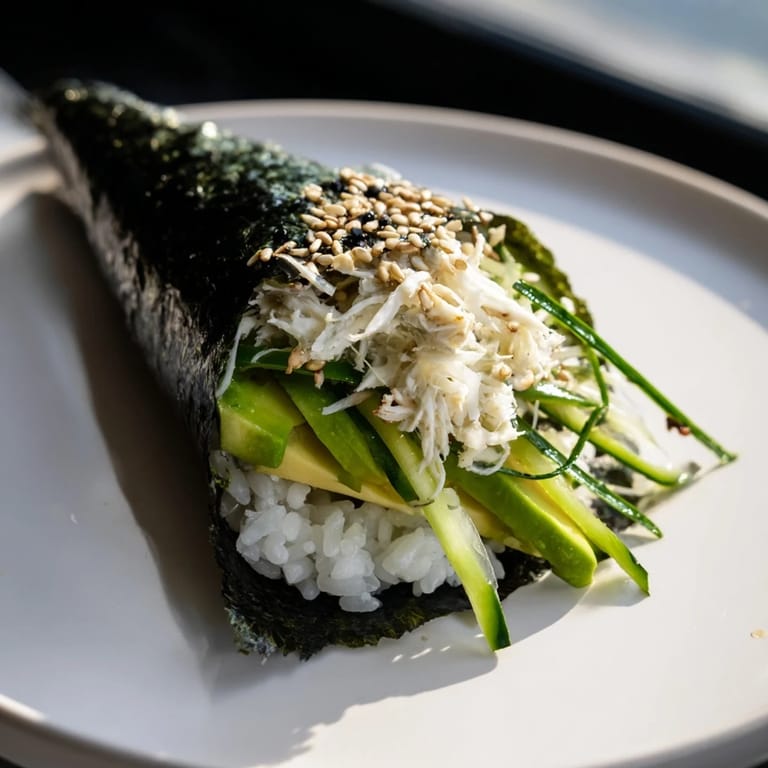
- Place a half-sheet of nori shiny side down in your palm or on a mat. Spread about 2 to 3 tablespoons of cooled rice diagonally across one corner, leaving a clear triangle at the bottom. The rice should be thin enough that you can still see the nori through it slightly.
- Layer the fillings:
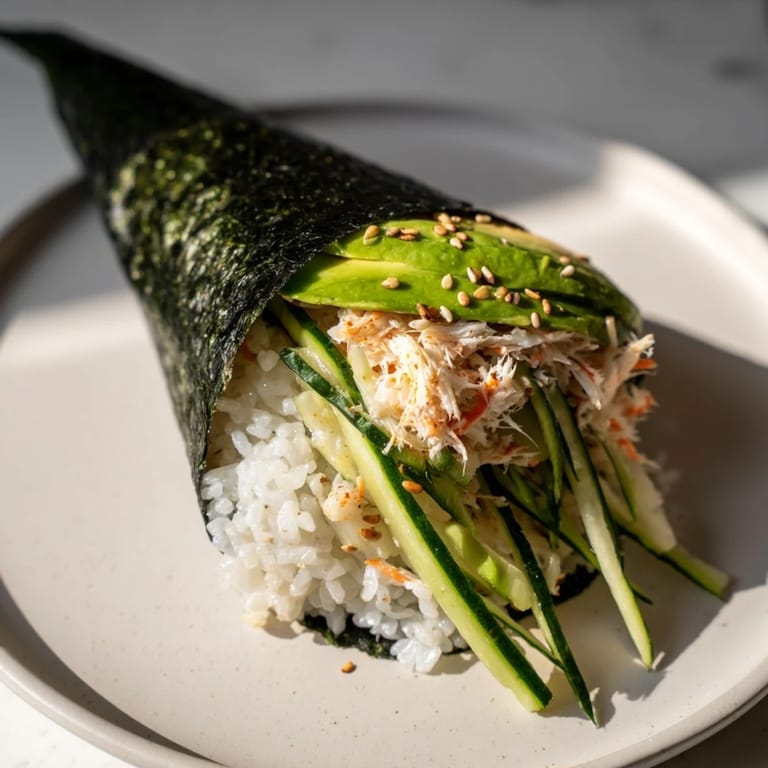
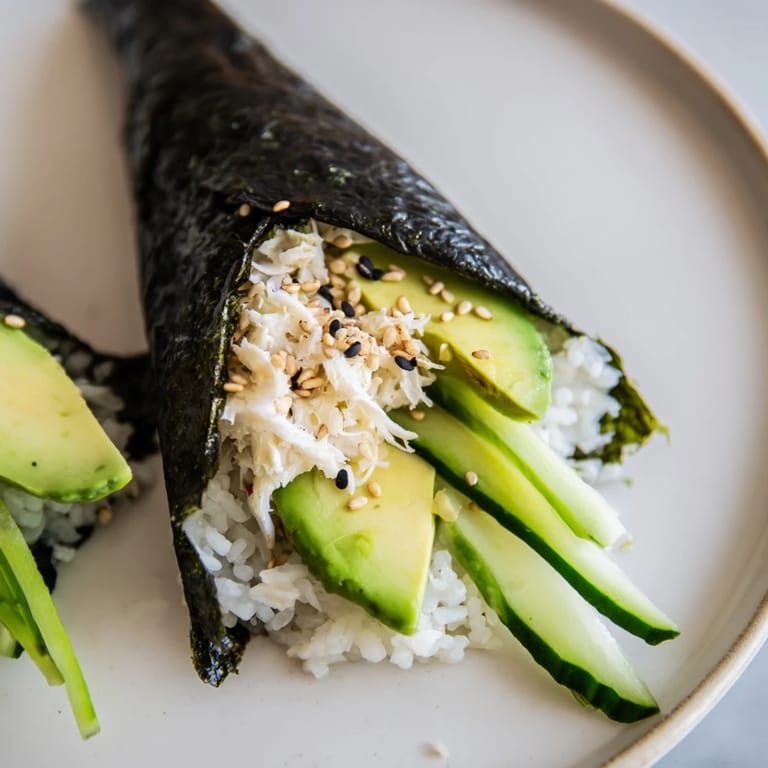
- Arrange a few avocado slices, a small handful of cucumber, and a bit of crab on top of the rice, staying in that same corner. Sprinkle sesame seeds if you like the nutty flavor they add.
- Roll and seal:
- Start folding the rice-covered corner toward the opposite corner to create a cone shape, rolling tightly as you go. When you reach the edge, use a few grains of rice as glue to seal the seam—it'll stick once the rice presses against the nori. If your hands feel sticky, rinse them in cool water between rolls.
- Serve immediately:
- Arrange the hand rolls on a plate with small bowls of soy sauce, pickled ginger, and wasabi. The magic is eating them right away while the nori is still crisp and everything is at its peak freshness.
 Pin
Pin I'll never forget the afternoon I made these with my niece, who was visiting from out of state. She'd never had sushi before, and watching her tentatively take that first bite, then immediately reach for another, made the whole meal feel less like cooking and more like sharing something I actually cared about. That's when I understood why sushi hand rolls have stuck around for centuries—they're simple enough to make together, but they taste like you've done something intentional.
Why Rice Temperature Changes Everything
The biggest mistake I made early on was trying to speed up the process by using warm rice straight off the stove. The nori turned limp within seconds, and the whole roll felt mushy instead of crisp. I learned that the cooling step isn't wasted time—it's the difference between a roll that tastes fresh and one that tastes like it's been sitting. Now I always prepare my fillings while the rice cools, so everything comes together at exactly the right moment with no waiting.
Building Flavor Into the Rice Itself
A lot of people think sushi rice is just regular rice, but that vinegar mixture is where the whole thing finds its character. The sugar rounds out the vinegar's sharpness, and the salt brings everything into focus. I once made a batch without the sugar to cut calories, and it tasted so aggressively sour that I had to start over. Now I respect the formula—not because recipes are sacred, but because these three ingredients in balance create something genuinely delicious that you can't replicate by just dumping in plain vinegar.
Customization Without Losing the Spirit
The beauty of hand rolls is that they adapt to what's in your kitchen and what you're craving. I've made them with smoked salmon on weeks when the crab looked past its prime, and with pickled red onion when a friend mentioned she loved the sharpness. The nori and rice stay constant, but the fillings are yours to play with.
- Shrimp, cooked and halved lengthwise, brings a firmer texture and a slightly sweet flavor that's fantastic with a touch of sriracha mixed into mayo.
- Thin slices of cucumber can be swapped for carrot ribbons, avocado for creamy mango, or crab for finely shredded roasted chicken if you want pescatarian flexibility.
- A tiny dab of wasabi stirred into the mayo goes directly on the fillings for controlled heat, rather than relying on the condiment bowl where intensity is unpredictable.
 Pin
Pin Hand rolls remind me that some of the best meals don't require perfect technique or hours in the kitchen. They just require paying attention and enjoying the process, which honestly might be the most important ingredient of all.
Recipe Q&A
- → How should sushi rice be prepared for hand rolls?
Rinse the sushi rice until water runs clear, then simmer with water covered for 15 minutes, let it stand, and fold in a mixture of rice vinegar, sugar, and salt for flavor and texture.
- → Can I substitute crab in the rolls?
Yes, cooked shrimp or smoked salmon can replace crab for varied flavors and textures.
- → What is the best way to roll these hand rolls tightly?
Place a half-sheet of nori shiny side down, spread rice diagonally on one corner, layer fillings, then roll starting from the corner with rice while sealing the edge with a few grains of rice.
- → Are there optional ingredients to enhance flavor?
Adding mayonnaise mixed with crab creates creaminess, and toasted sesame seeds can be sprinkled for a nutty crunch.
- → How should these rolls be served?
Serve immediately with accompaniments such as soy sauce, pickled ginger, and wasabi to complement the flavors.
- → What allergens are present in these hand rolls?
They contain fish/shellfish from crab, eggs from mayonnaise, and soy in the soy sauce; substitutes can be used for allergies.