 Pin
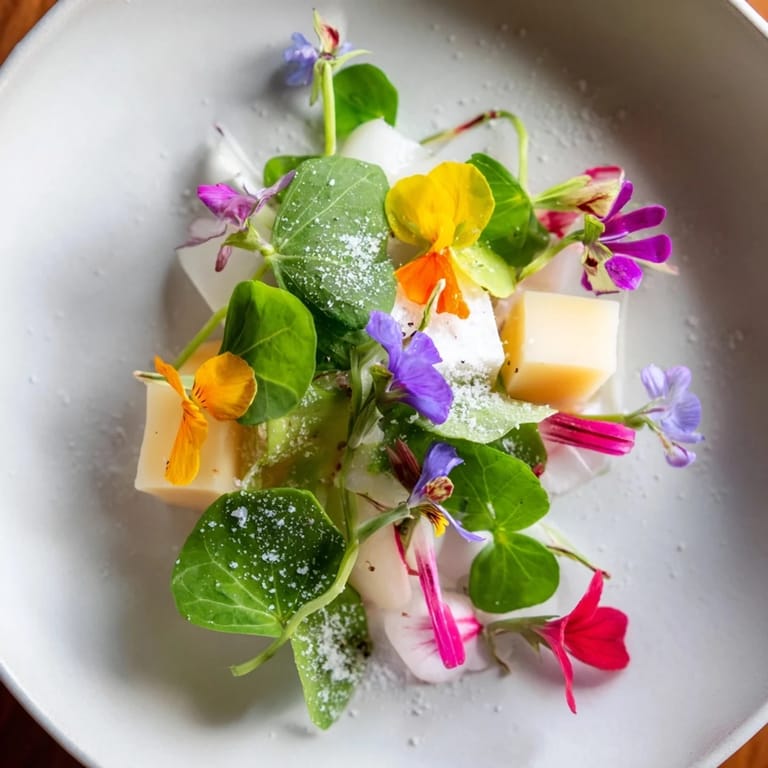
Pin I discovered this dish at a farmer's market on a late spring afternoon when a vendor casually arranged cheese samples among a scatter of edible flowers on a wooden board. The way the blooms drew your eye away from the cheese, only to surprise you when you found it nestled underneath, felt like a gentle game. I recreated that moment at home, and now it's become my favorite way to start an evening with friends.
The first time I served this to my book club, everyone hesitated before touching it—the platter was too beautiful to disturb. Then someone picked a flower, nibbled underneath it, and found the goat cheese. The table suddenly erupted in activity, everyone foraging with their hands and laughing. It transformed what could have been a formal appetizer into something joyful and communal.
Ingredients
- Aged cheddar, 100 g cubes: Look for a sharp, crystalline cheddar with real bite—the saltiness plays beautifully against sweet flowers.
- Goat cheese, 100 g cubes: Creamy and tangy, it anchors the board with richness while staying light.
- Gruyère, 100 g cubes: Its subtle nuttiness adds complexity without overwhelming the delicate flowers.
- Microgreens, 75 g: Pea shoots bring sweetness, radish greens add peppery snap—mix them for textural interest.
- Edible flowers, 1 cup: Nasturtiums taste peppery, pansies are mild and slightly sweet, borage brings a cucumber note; choose a mix for flavor variety.
- Extra virgin olive oil, 1 tbsp: Optional but worth it for a subtle fruity finish that softens the cheese.
- Flaky sea salt and freshly ground black pepper: These finish the dish with brightness and subtle heat.
Tired of Takeout? 🥡
Get 10 meals you can make faster than delivery arrives. Seriously.
One email. No spam. Unsubscribe anytime.
Instructions
- Set the stage:
- Arrange your three cheeses across the board or platter in loose clusters, leaving pockets of empty space where the garden will grow. Think of it as creating a landscape that invites planting rather than a crowded arrangement.
- Plant the greens:
- Scatter microgreens generously so they cascade and layer, partially covering the cheese. Don't be precious—let them tumble and create shadows that hide the cheese treasures beneath.
- Tuck in the flowers:
- Nestle edible flowers among the microgreens, mixing colors and varieties so the platter feels like a living garden. The flowers should look natural, as if they've just bloomed among the greens.
- Add delicate touch:
- Drizzle olive oil if using—a light hand here prevents the microgreens from wilting while adding a subtle sheen.
- Season and serve:
- Finish with a whisper of flaky salt and a grind of black pepper, then place small tongs nearby or simply invite guests to use their hands to explore.
 Pin
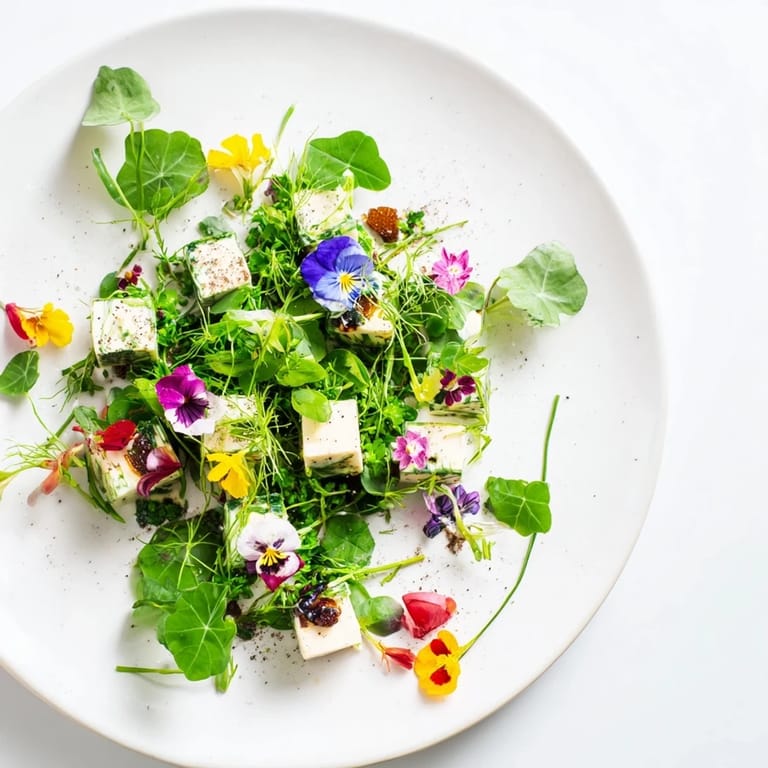
Pin There's something about watching someone taste this dish for the first time that reminds me why I cook. The surprise of finding cool, creamy cheese beneath soft greens and paper-thin petals, followed by the burst of flavor—it's a moment of genuine delight that goes beyond hunger.
Choosing Your Cheeses Wisely
The three cheeses I've chosen offer a flavor journey, but this board is your canvas. I've experimented with Manchego for earthiness, feta for brightness, and even smoked gouda for depth. The key is choosing cheeses with distinct personalities so each bite feels different. When you find a combination that sings, you'll know—it's the one you'll make again.
The Art of Edible Flowers
Not all flowers are created equal in the kitchen. I learned this the hard way by assuming peonies would taste lovely—they didn't. Now I stick to flowers with character: nasturtiums bring peppery notes, calendula adds subtle pepperiness, violets are delicate and mild, and borage flowers taste faintly of cucumber. Each one changes the personality of the board.
Timing and Presentation Magic
Assemble this no more than two hours before serving so the flowers stay crisp and the microgreens don't begin to wilt. The beauty of this dish is its freshness—it's a snapshot of the garden frozen on a board. If you're making it for a longer gathering, prep components separately and arrange moments before guests arrive.
- Chill your serving board in the freezer for fifteen minutes before arranging to keep the cheese from sweating.
- Prep microgreens and flowers first, then add cheese last so it stays firm and defined.
- Keep extra flowers and greens nearby to refresh the board as guests forage through it.
 Pin
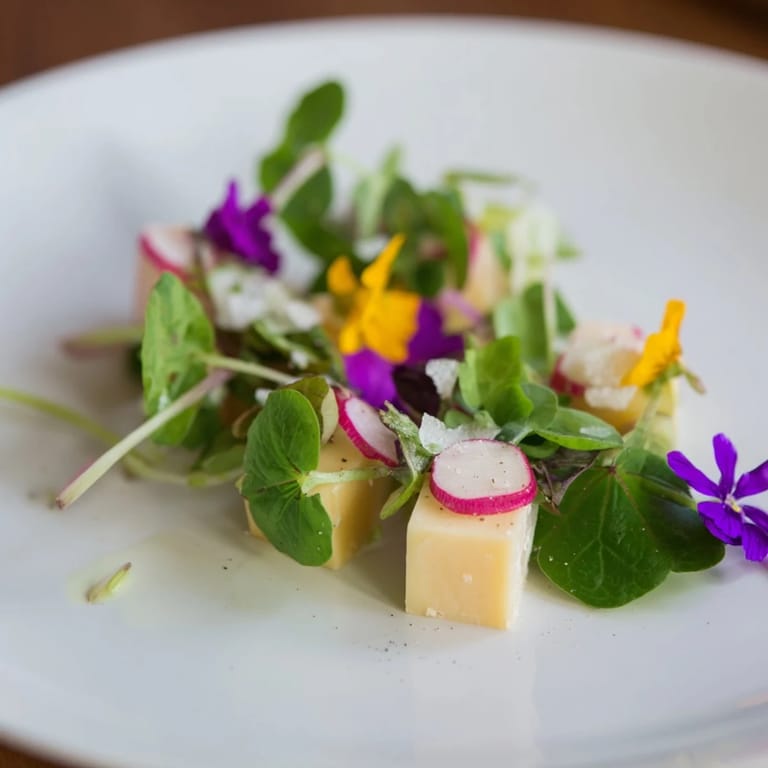
Pin This recipe is really about creating an experience rather than just feeding people. When you serve something that invites guests to play, to search, and to discover, you've done something that goes beyond appetizers.
Recipe Q&A
- → What types of cheese work best with this dish?
Aged cheddar, goat cheese, and Gruyère provide a balanced mix of sharpness and creaminess that complements the fresh greens and flowers.
- → Can I substitute the edible flowers?
Yes, choose pesticide-free edible flowers such as nasturtiums, pansies, or violets to maintain both flavor and visual appeal.
- → How should I serve this appetizer?
Arrange cheese cubes on a large serving board, scatter microgreens and flowers on top, season lightly, and serve immediately for best freshness.
- → Is it necessary to use olive oil in this preparation?
Olive oil is optional but adds a subtle richness that enhances the dish’s flavors without overpowering the delicate ingredients.
- → What drinks pair well with this starter?
Crisp white wine or sparkling rosé complements the creamy cheeses and fresh greens perfectly, adding a refreshing contrast.