 Pin
Pin There's something about the moment you slice into a ripe pineapple and the kitchen fills with that bright, tropical sweetness that just shifts your mood. I was testing recipes one afternoon when I remembered a dinner party where someone brought pineapple fried rice served in the shell, and honestly, it was the presentation that got everyone talking first—but the food won them over completely. That combination of caramelized edges on cashews, the slight tang of curry, and those unexpected bursts of sweetness from the fruit made me realize this wasn't just showstopping plating; it was genuinely delicious.
I made this for my sister's casual dinner party, and watching her face when I carried out the pineapple halves was worth every minute of prep—but what surprised me most was how quickly everyone went back for seconds. One guest asked if it was complicated, and I realized the beauty of this dish is that it looks far more intricate than it actually is; you're just doing what you'd normally do with fried rice, except the vessel itself becomes part of the magic.
Ingredients
- Large ripe pineapple: This is your edible serving dish and flavor anchor—pick one that feels heavy for its size and smells sweet at the base, which means it's at peak ripeness and less likely to be fibrous.
- Cooked jasmine rice (day-old): This is non-negotiable; fresh rice absorbs moisture and turns mushy, but yesterday's rice has already dried out just enough to get those light, separate grains every good fried rice needs.
- Vegetable oil: Use something neutral with a high smoke point like canola or peanut oil so you're not tasting the oil itself, just the food.
- Onion and garlic: These are your aromatic foundation—the moment they hit hot oil is when the whole dish begins to smell like Thailand.
- Carrot and red bell pepper: The carrot brings a subtle sweetness that echoes the pineapple, while the pepper adds brightness and color without overpowering anything.
- Eggs: They add richness and protein, scrambled in right before the rice so they break into small, golden pieces throughout.
- Frozen peas: These thaw in the residual heat and add a pop of tenderness without requiring any extra cooking step.
- Unsalted roasted cashews: Their buttery texture and slight sweetness are essential—buy them unsalted so you control the seasoning in the final dish.
- Diced pineapple flesh: Reserve this from what you hollow out; it should be fresh and chunky so you get those bright bursts of flavor.
- Scallions: These go in at the very end so they stay crisp and bright, never wilted.
- Raisins or golden sultanas: Optional, but they add a chewy sweetness that balances the savory elements beautifully.
- Soy sauce: Use tamari if you need gluten-free; it's the backbone of your savory profile.
- Fish sauce: Skip it for vegetarian, but if you use it, just a tablespoon gives that umami depth that makes people wonder what the secret ingredient is.
- Curry powder: A teaspoon is enough to add warmth without making this curry-forward; it's a whisper, not a shout.
- White pepper: Milder than black pepper with a slightly floral note that complements the pineapple rather than competing with it.
- Sugar: A tiny pinch rounds out the savory-sweet balance and lets all the flavors speak together.
- Fresh cilantro and lime wedges: Cilantro adds herbaceous freshness, and lime brightens everything right at the end—don't skip these finishing touches.
Tired of Takeout? 🥡
Get 10 meals you can make faster than delivery arrives. Seriously.
One email. No spam. Unsubscribe anytime.
Instructions
- Hollow your canvas:
- Slice the pineapple lengthwise, keeping those green leaves intact for presentation. Using a sharp knife or a grapefruit spoon, carefully carve the flesh away from the shell, leaving about a half-inch of fruit attached so the shell stays sturdy and doesn't collapse when you fill it. Dice out 1/2 cup of the fresh flesh for cooking and set aside; the rest can be used in smoothies or frozen for later.
- Get your heat ready:
- Heat vegetable oil in a wok or large skillet over medium-high heat until it's shimmering—this usually takes about a minute. Add minced garlic and finely diced onion, stirring constantly until the kitchen smells absolutely incredible, which happens in about 30 seconds.
- Build your vegetable base:
- Toss in the carrot and bell pepper, stirring frequently for 2 to 3 minutes until they start to soften but still have a slight firmness. You want them cooked through but not limp; they should have a gentle resistance when you press them with your spatula.
- Scramble your protein (if using):
- Push the vegetables to the outer edges of your wok, creating a small empty space in the center. Pour in your beaten eggs and let them sit for just a few seconds before scrambling them gently—they'll continue cooking in the residual heat even after you stop moving them around.
- Introduce the rice:
- Add all the cooked day-old rice, breaking up any clumps with your spatula as you go. Work methodically so every grain gets coated with oil and starts to warm through; this takes about 1 to 2 minutes.
- Bring everything together:
- Stir in the peas, diced pineapple chunks, cashews, and raisins if you're using them. Add the soy sauce, fish sauce, curry powder, white pepper, sugar, and salt, stirring constantly for another 2 to 3 minutes until the rice is heated through and every element is evenly distributed. The kitchen should smell savory and slightly sweet at the same time.
- Finish with brightness:
- Turn off the heat and toss in your sliced scallions, stirring just enough to distribute them. Their freshness should come through without any cooking down.
- Present your masterpiece:
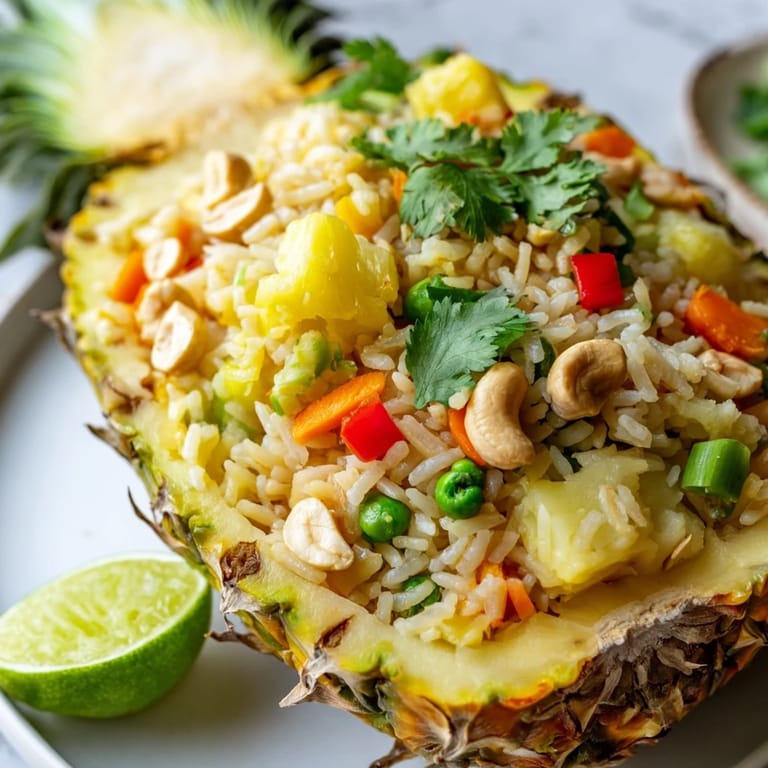
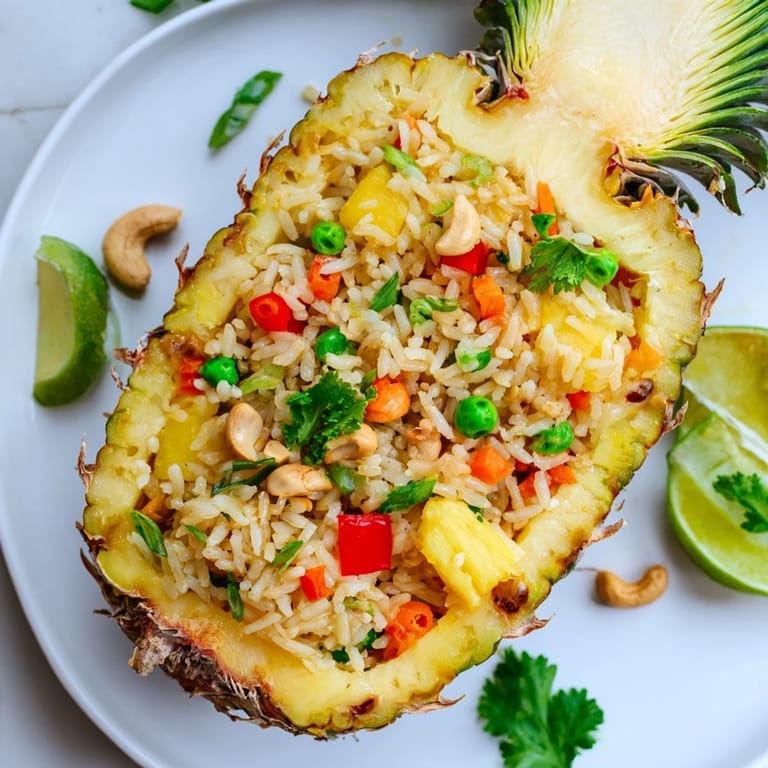
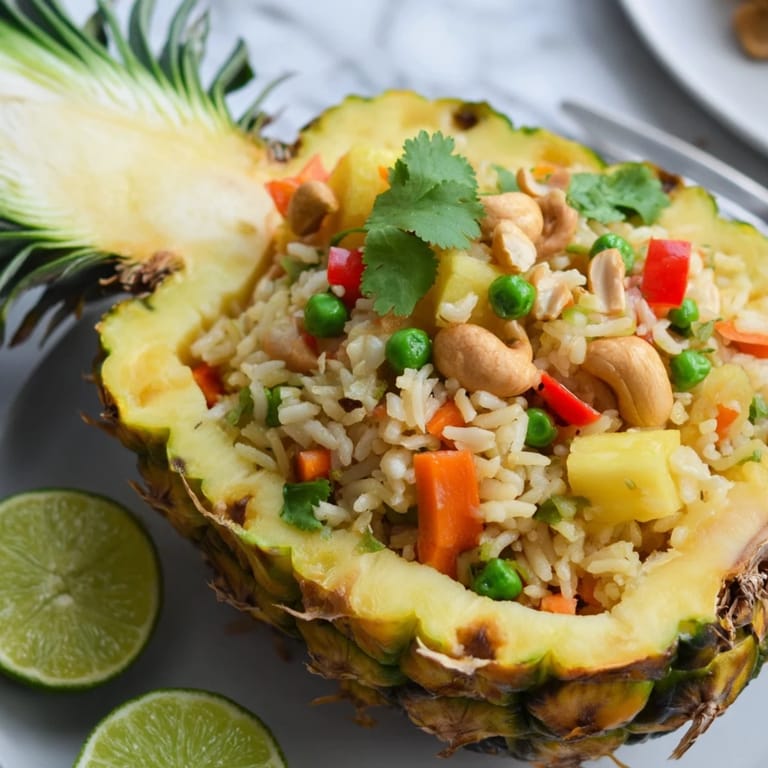
- Spoon the warm fried rice into the hollowed pineapple halves, mounding it gently. Shower with fresh cilantro leaves and set lime wedges alongside for guests to squeeze as they eat.
 Pin
Pin The most memorable version of this dish for me wasn't at a dinner party but on a random Thursday when I made it for myself and sat at the kitchen counter with a cold drink, just tasting and adjusting as I went. There was something freeing about cooking only for the pleasure of it, not for an audience, and somehow that's when the dish became more than just food—it became a little moment of care for myself.
Why This Works as a Vegetarian Showstopper
The beauty of pineapple fried rice is that it never needed meat to be satisfying. The combination of cashews for crunch and richness, eggs for protein if you want them, and that natural sweetness from both the rice-cooked pineapple and the fresh fruit chunks create layers of flavor and texture that make you forget you're eating something meatless. The visual presentation is so striking that people's first impression is of elegance, not compromise, and by the time they taste it, they're too busy enjoying the balance of sweet and savory to question what's not on the plate.
Adapting for Different Diets and Preferences
This recipe is a blank canvas once you understand the core technique. Going fully vegan means skipping the eggs and fish sauce—add extra soy sauce for depth instead, and you've lost nothing. Wanting to add protein? Cooked shrimp goes in beautifully with the peas, or chunks of rotisserie chicken, or even cubed crispy tofu if you're keeping it plant-based but want more substance. You can swap frozen peas for broccoli or snap peas, use regular raisins if you don't have sultanas, or skip nuts entirely if allergies are a concern and replace them with more vegetables or seeds. The structure remains solid no matter what you change.
Flavor Balance and the Finishing Touch
The secret to this dish is understanding that you're not trying to make curry; you're making something more subtle. The curry powder should be felt as a warm note in the background, not tasted directly, and the fish sauce—if you use it—adds umami without fishiness. The fresh cilantro and lime wedges at the end are absolutely crucial; they cut through the richness and remind your palate that this is still, at its heart, a fresh and bright dish.
- Always taste as you season, adding soy sauce and salt gradually because every brand has slightly different sodium levels and the pineapple itself contributes sweetness.
- Squeeze fresh lime over your bite right before eating; it completely transforms the flavor profile in the best way.
- Serve this immediately while the rice is still warm and the pineapple shell is at room temperature—that temperature contrast is part of the charm.
 Pin
Pin This dish transformed from a beautiful presentation trick into something I genuinely make because I crave it, shell and all. It's become my answer when someone asks what I'm making for dinner on a night I want to feel like I'm treating myself.
Recipe Q&A
- → Can I use fresh pineapple or canned pineapple?
Fresh pineapple is preferred for its juiciness and firm texture, especially when used as a serving shell. Canned pineapple is softer and may not hold shape well.
- → How can I make this dish vegan?
Omit the eggs and fish sauce, and substitute soy sauce or tamari for flavor. Adding tofu can enhance protein content.
- → What type of rice is best for this dish?
Day-old jasmine rice works best as it is drier and separates easily, preventing mushiness in the stir-fry.
- → Can I add protein to this dish?
Yes, cooked shrimp, chicken, or tofu can be added during the stir-fry process to boost protein and flavor.
- → How do I achieve the authentic Thai flavor?
Using ingredients like fish sauce, curry powder, soy sauce, and fresh cilantro will impart traditional Thai notes to the dish.
- → Is this dish gluten-free?
It can be made gluten-free by using tamari instead of regular soy sauce, and checking that other ingredients contain no gluten.