 Pin
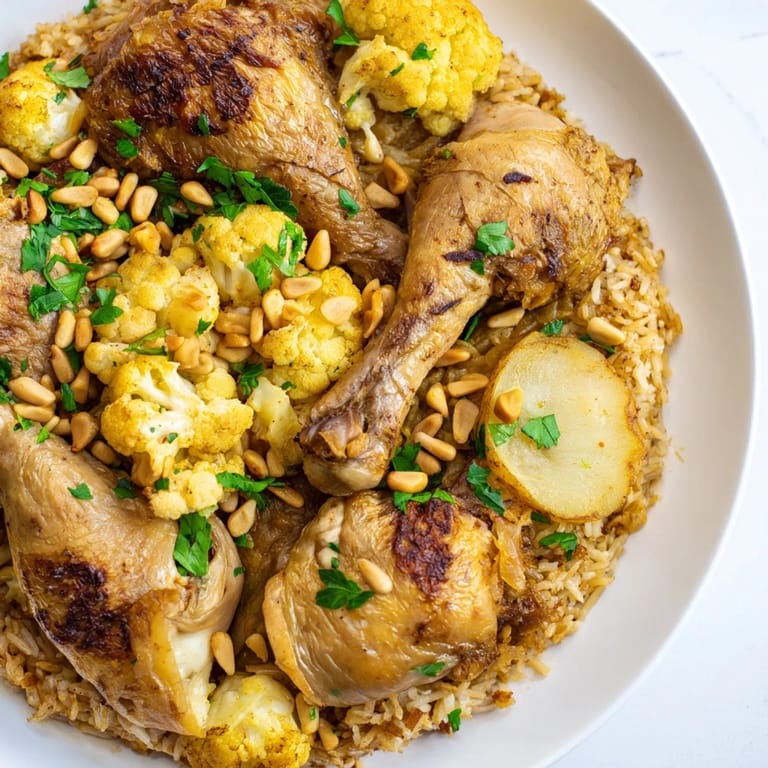
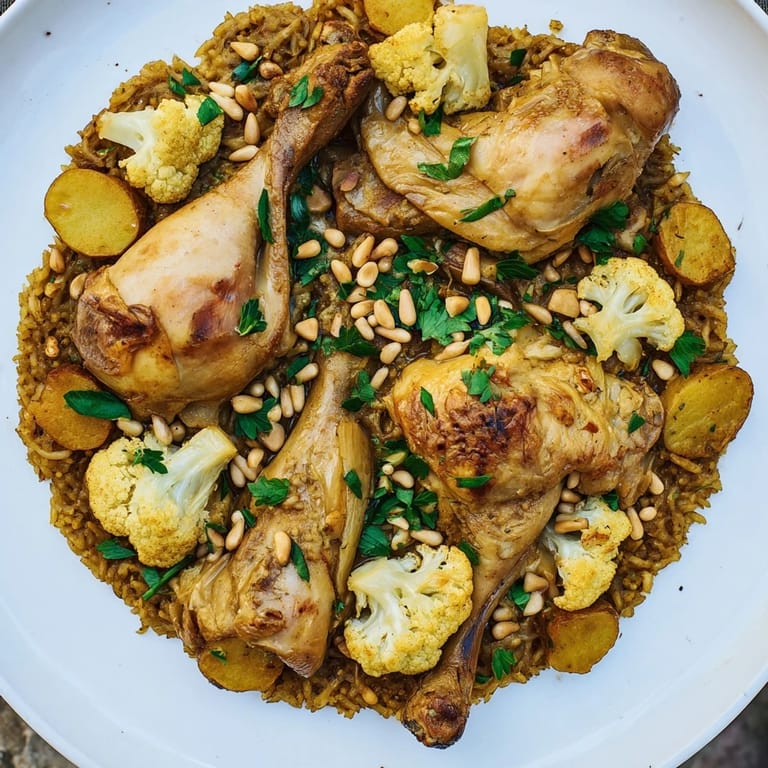
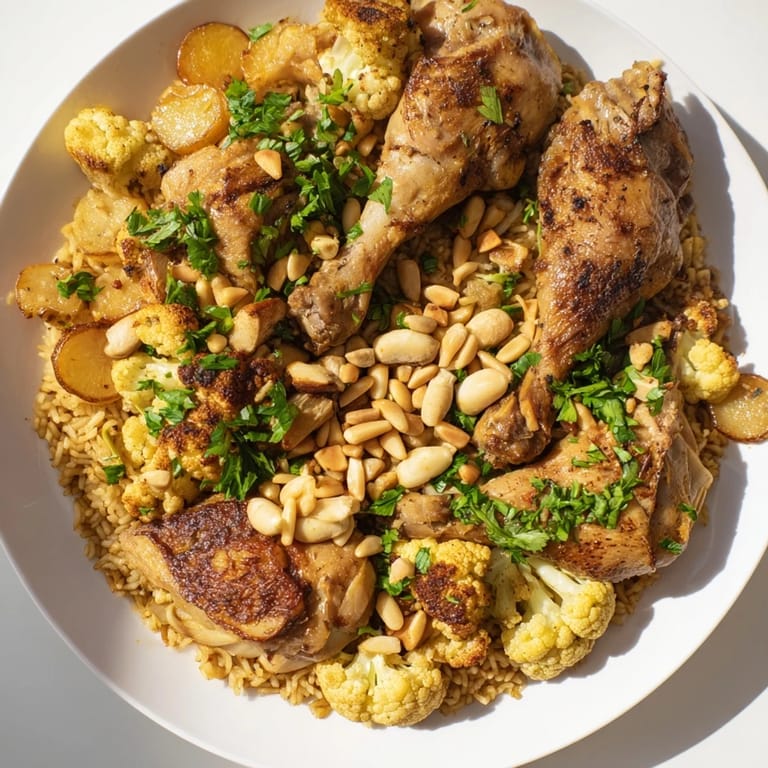
Pin The first time I watched my neighbor flip maklouba onto a platter, I was absolutely mesmerized. The pot came down hard against the ceramic dish, and when she lifted it away, this golden, fragrant mountain of rice emerged perfectly intact, crowned with crispy cauliflower and chicken. I realized then that maklouba isn't just dinner—it's theater, tradition, and confidence all on one plate. Every element has its place, and when you get it right, the drama of that inversion makes everyone stop and stare.
I made this for my sister's dinner party last spring, and I'll never forget the silence right before I inverted the pot. Everyone had gone quiet, watching. When that golden rice tower landed perfectly on the platter, the whole table erupted. It wasn't just applause for the dish—it felt like they were celebrating something bigger, something that connected to every family dinner they'd ever had.
Ingredients
- Bone-in chicken pieces (1.2 kg): Dark meat stays juicy through the long cook, and bones flavor the entire dish from within.
- Basmati rice (2 cups): Soaking it for thirty minutes prevents mushiness and keeps each grain separate and fluffy.
- Cauliflower (1 large head): Fry these until they're dark golden—that caramelization becomes the flavor anchor of the whole dish.
- Potatoes (2 medium, sliced thin): They cradle the rice and act as the foundation that keeps everything from shifting.
- Large onion (1): Sauté it until it disappears into the oil and spices; it becomes the aromatic backbone.
- Cumin, coriander, cinnamon, turmeric, allspice, cardamom (as listed): This isn't a quick shake of spice; layer them into hot oil and let them bloom for exactly one minute so they release their full warmth.
- Chicken stock or water (5 cups): Stock tastes richer, but water works fine and lets the spices shine through.
- Pine nuts or almonds (¼ cup, toasted): Scatter them on top for contrast and crunch against the soft rice.
Tired of Takeout? 🥡
Get 10 meals you can make faster than delivery arrives. Seriously.
One email. No spam. Unsubscribe anytime.
Instructions
- Soak the rice:
- Rinse your basmati rice under cold water until the water runs clear, then soak it in cold water with salt for thirty minutes. This extra step stops the rice from turning mushy when it steams on top of the chicken.
- Sear the chicken:
- Heat olive oil in your pot until you can feel the heat radiating off it. Season chicken with salt and pepper, then lay it in the oil—listen for that sizzle. Brown it hard on all sides until the skin is golden and pulls away easily from the bone, about six minutes total.
- Build the spice base:
- In the same pot, add sliced onion and cook until it turns translucent and soft. This is where the magic happens—add all your spices and stir them constantly for one full minute. You'll smell the cumin wake up, the cardamom open. Return the chicken, pour in your stock, and let it come to a boil, then lower the heat and simmer gently for twenty minutes.
- Fry the vegetables:
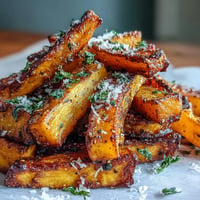
- While the chicken cooks, heat vegetable oil in a separate deep pan until a potato slice sizzles immediately when it touches the surface. Fry your cauliflower and potatoes in batches until they're deep golden—don't crowd the pan. Drain them on paper towels where they'll crisp up more.
- Layer everything:
- Pour those reserved broth into a heavy pot. Start with the fried potato slices as your base layer, then arrange the tender chicken pieces on top, scatter the cauliflower over that, and finally top with your drained rice. Press down very gently to settle everything without crushing it.
- Add liquid and steam:
- Pour enough reserved broth over the rice to just cover it—about four to five cups. Place the pot over medium heat and watch the edges. When you see liquid bubbling at the very edge of the rice, reduce the heat all the way down to low, cover the pot tightly with a lid, and step away. Cook for thirty-five to forty minutes without peeking.
- Rest before flipping:
- Turn off the heat and let the pot sit undisturbed for ten to fifteen minutes. This resting time lets everything settle and the rice finishes absorbing any remaining moisture.
- The dramatic flip:
- Remove the lid. Place your largest serving platter upside down right on top of the pot. Take a breath, then flip the whole thing quickly and confidently—hesitation is your only real enemy here. Lift the pot away slowly and you'll reveal that perfect golden dome.
 Pin
Pin My grandmother told me that maklouba teaches patience in two different ways. First, you wait while it steams and becomes itself. Then you have to trust your hands enough to flip it. She said that moment before you lift the pot away is when you're really making the dish—not with your hands, but with your willingness to let it work.
Why This Dish Matters
Maklouba means upside-down in Arabic, and that name tells you everything about this dish's personality. It's meant to surprise, to transform, to show up differently than you'd expect. The same ingredients treated differently create an entirely different experience than if you'd just mixed them together in a bowl. That's the whole philosophy of the dish—perspective changes everything.
The Spice Blend Is Everything
I used to think cinnamon in a savory rice dish sounded strange until I tasted what those warm spices actually do when they bloom in hot oil. They don't make the dish sweet—they make it complex and slightly mysterious. The cinnamon sits in the background, the cardamom adds an almost floral note, and the turmeric ties everything together with earthiness. If you're tempted to skip any of these spices, resist that urge.
Making It Your Own
I've made this with eggplant instead of some cauliflower, and I've cooked it for vegetarian friends by skipping the chicken and using vegetable stock instead. The structure stays exactly the same, the drama of the flip still happens, and somehow it tastes just as complete. The foundation is strong enough to support your own tweaks once you've mastered the original.
- Eggplant or carrot slices fry beautifully and add their own sweetness to the layers.
- A pinch of saffron steeped in warm broth before pouring adds luxury without changing the technique.
- Serve alongside yogurt or a bright tomato and cucumber salad to cut through the richness.
 Pin
Pin When you set this down in front of people, you're not just serving dinner. You're giving them a moment of anticipation, a reveal, a little bit of theater. That's what maklouba has always been about, and it's why it deserves your time.
Recipe Q&A
- → What is the best rice to use?
Basmati rice is ideal for its fragrance and ability to remain fluffy during the slow cooking process.
- → How do you achieve the layered effect?
By frying vegetables separately first and then layering potatoes, chicken, cauliflower, and rice in the pot before cooking and inverting off heat.
- → Can this dish be made vegetarian?
Yes, simply omit the chicken and use vegetable broth instead, adding additional vegetables for depth.
- → What spices are commonly used?
A blend including cumin, coriander, cinnamon, turmeric, allspice, cardamom, and bay leaves provides the dish’s distinctive fragrance.
- → How long should it rest after cooking?
Allow the dish to rest covered off heat for 10-15 minutes before inverting to ensure proper set layering.
- → What garnishes complement this dish?
Toasted pine nuts or almonds and fresh parsley add both texture and brightness to the finished dish.