 Pin
Pin I first encountered a Moroccan tile mosaic platter at a small riad in Marrakech, where a gracious host arranged dozens of jewel-toned bowls across an enormous brass table. Each bowl held something different—a silky dip, briny olives, roasted nuts—and the whole display looked like edible art. I spent that evening moving from bowl to bowl, discovering new flavor combinations with each bite, and realized that some of the best meals aren't about a single dish, but about the joy of exploring many small, perfect bites together.
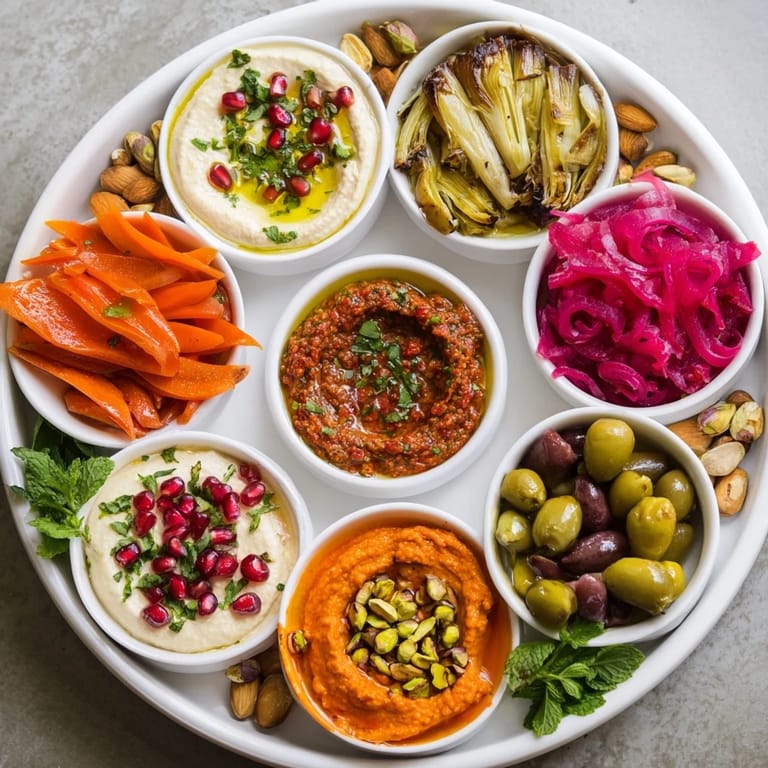
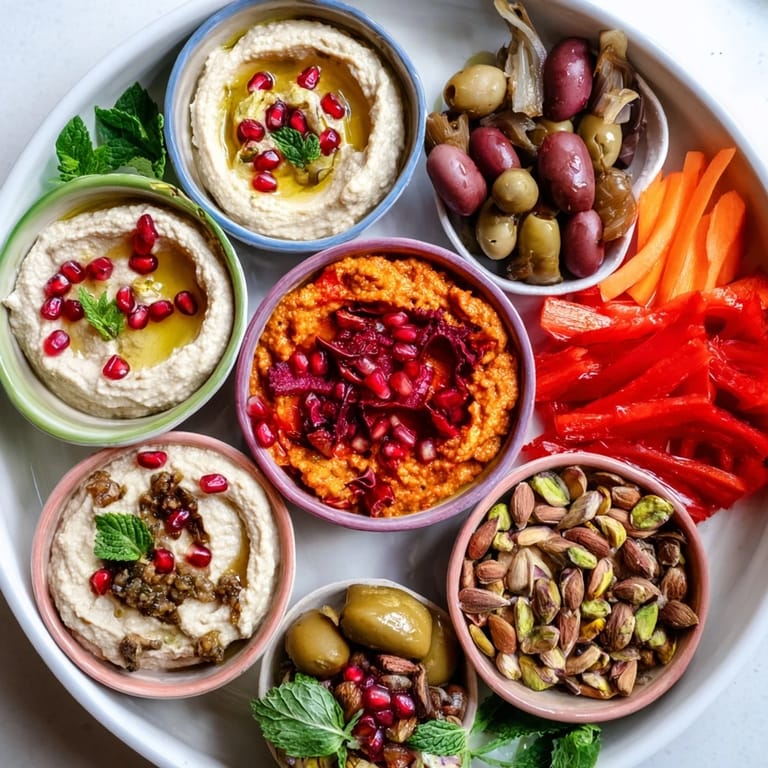
I made this platter for the first time when my sister came to visit from out of town, and I wanted her to feel like we were sitting in that same riad together. The moment she walked into the dining room and saw the arrangement of bowls with their layers of color—the red muhammara, the pale hummus, the jewel-toned olives—I watched her face light up exactly the way mine had in Morocco. We ended up spending three hours at that table, talking and tasting, and she asked for the recipe before she left. That's when I knew this wasn't just food; it was a way to share an experience.
Ingredients
- Classic hummus: This is your creamy anchor—buy it good quality or make your own because it's the base guests return to. A good hummus should feel like velvet on your tongue.
- Baba ganoush: The smoky, mysterious one that people often overlook until they taste it. Roast your eggplant until it's completely collapsed if you're making it fresh.
- Muhammara: This red pepper and walnut dip is sweet and complex—it's the jewel of the platter and worth finding a proper recipe for, or buying from a good source.
- Labneh or Greek yogurt: Drizzle it with olive oil and zaatar, and it becomes something special. The zaatar adds that lemony, herbaceous note that feels distinctly Moroccan.
- Roasted red peppers: Sweet and silky, they taste like summer even in winter. Use quality jarred ones or roast your own.
- Marinated artichoke hearts: Look for ones packed in good olive oil, not the watery kind. They taste like you put effort in.
- Moroccan carrot salad: Shredded carrots mixed with lemon juice, cumin, and parsley. The lemon keeps them bright and the cumin whispers of spice.
- Preserved lemon slices: This is the ingredient that makes people ask 'what is that?' Use sparingly because they're intensely salty and floral in the best way.
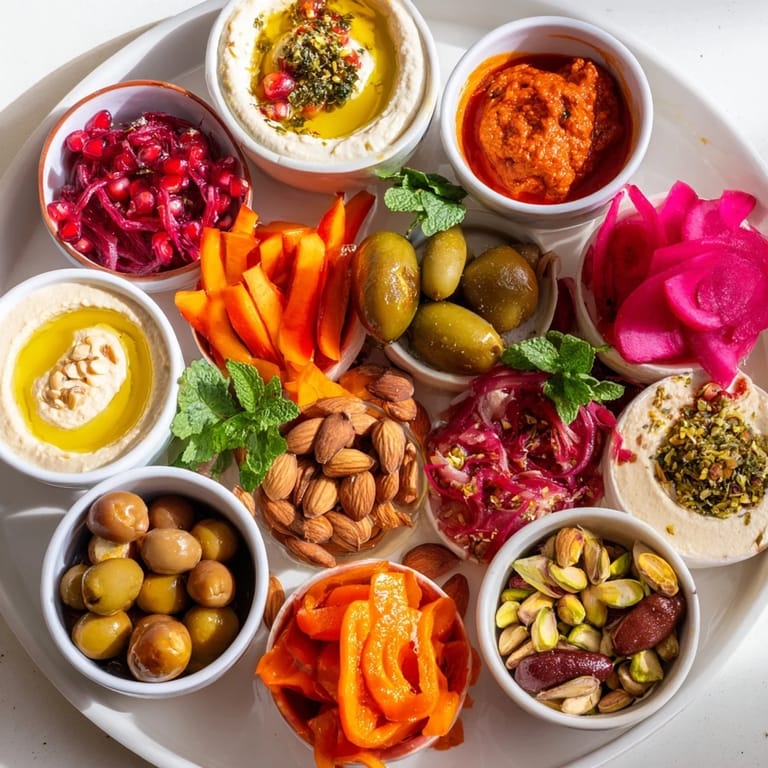
- Mixed Moroccan olives: Choose a mix of sizes and colors—green, black, cracked, whole. This variety is what makes it look like a mosaic.
- Quick-pickled red onions: Sharp and beautiful, they add acidity and cut through the richness of the dips. Make these yourself just before serving if you can.
- Cornichons or baby gherkins: Tiny, crunchy, and briny. They're the palate cleanser everyone reaches for.
- Roasted almonds: Unsalted so they don't compete with all the other flavors. If you toast them yourself, you control how deep and toasty they become.
- Pistachios: Shelled so they're easy to grab. Their pale green color adds visual depth to the platter.
- Toasted sesame seeds: A tiny handful adds nuttiness and crunch. Toast them yourself if you have the time—the difference is real.
- Baguette: Slice and toast it until it's crispy but still has a bit of give. It should support the dips without crumbling.
- Mini pita breads: Warm them so they're soft and pliable. Quartered pita is easier to handle than whole pieces.
- Pomegranate seeds: These tiny rubies add tartness, crunch, and that pop of color that makes the platter sing.
- Fresh mint: Moroccan mint is preferred, but any fresh mint adds that cooling, herbaceous note.
- Cilantro: Bright and herbal, it ties the whole platter together flavor-wise.
- Sumac: A tart, lemony spice that you sprinkle at the very end. It's the seasoning that makes people ask what that special something is.
- Extra virgin olive oil: Good enough to drizzle and taste on its own. This is what brings all the colors to life visually and adds richness to the dips.
Tired of Takeout? 🥡
Get 10 meals you can make faster than delivery arrives. Seriously.
One email. No spam. Unsubscribe anytime.
Instructions
- Prepare your dips and spreads first:
- If you're not making them from scratch, spoon each dip into its own small colorful bowl or ramekin. Let them come to room temperature—cold dips don't taste as rich. If you're making them fresh, do this the morning of or the day before. This is your foundation, and it sets the mood for everything else.
- Arrange your marinated vegetables:
- Give the roasted red peppers their own bowl, the artichoke hearts another, the carrot salad a third. You're building a grid right now, and each bowl should feel like its own little destination on the table.
- Set out the pickles and olives:
- Use small spoons in each bowl so guests can serve themselves. The olives especially should be piled high and loose so they look abundant and inviting. Let people see the mix of colors.
- Toast your bread:
- Slice your baguette on a slight diagonal and toast it until it's golden and crispy. Warm your pita breads gently in the oven, then cut them into quarters. Do this close to serving time so everything is still warm.
- Create your mosaic:
- This is the magic part. On your largest serving tray or wooden board, arrange all your bowls in a tight, colorful pattern—as if you're creating an actual mosaic. Don't leave gaps that look empty; fill spaces between bowls with handfuls of fresh herbs, pomegranate seeds, and extra nuts. The abundance is part of the beauty. Step back and look at your work. Does it make you smile?
- Final touches:
- Drizzle good olive oil over your dips and the marinated vegetables. Sprinkle sumac over a few spots for that final pop of color and flavor. Place warm bread and crackers nearby where guests can easily reach them, but not mixed in with the bowls—they deserve their own space.
- Serve with intention:
- Bring it to the table and watch people's faces. Encourage them to mix flavors—hummus with carrot salad, muhammara with a pickled red onion, labneh with fresh herbs. There's no wrong way to do this. That's the whole point.
 Pin
Pin What I love most about this platter is watching it disappear. Not because people are rushing to finish—they're not. It's because they're lingering, reaching for combinations, discovering favorites, and slowly, over conversation and laughter, the bowls empty. That's when you know you've created something that brought people together, not just fed them. The platter becomes less about the food and more about the time spent around it.
The Story Behind Each Element
Every component of this platter comes from somewhere specific in Moroccan and Mediterranean culture. The dips represent the soul of the cuisine—hummus and baba ganoush are beloved across the region, but muhammara is particularly Syrian and Lebanese, a reminder that these flavors bleed across borders and belong to many traditions. The marinated vegetables are how people preserve summer flavors to enjoy year-round. The olives are harvested from trees that have stood for centuries. The preserved lemons are a technique so fundamental to Moroccan cooking that the country exports them worldwide. When you arrange these things together, you're not just making a platter; you're telling the story of an entire region and its approach to eating, which is generous, communal, and built on the idea that more is better than less.
How to Make This Your Own
The beauty of this platter is that it invites creativity. You can swap vegetables with whatever is seasonal—grilled zucchini in summer, roasted beets in fall. You can add dried fruits like apricots or dates, which feel very Moroccan. If you want to make it more substantial, add grilled halloumi cheese (which gets golden and crispy) or slices of good sausage like merguez. You can include other dips like tzatziki, beet hummus, or even a simple olive tapenade. The rule isn't strict; the spirit is invitation. Make it reflect what you love and what your guests will enjoy.
Serving and Pairing Suggestions
This platter is perfect on its own as an appetizer that stretches into a meal, or it's the opening act before a main course. Pair it with Moroccan mint tea if you want to stay true to tradition—the sweet tea and the salty, briny platter balance each other beautifully. If you're serving wine, choose something crisp and white, something with enough acidity to cut through the richness of the dips without overwhelming the delicate flavors. A dry rosé works wonderfully too. The key is pairing something that refreshes your palate between bites, because with this much flavor on one table, you want to stay sharp and present for each taste.
- Make all components ahead except bread; toast bread within an hour of serving
- Use small spoons in the dips so they stay clean and guests feel invited to dig in
- Arrange your platter on a board or tray large enough that people can reach without hovering over each other
 Pin
Pin This platter is my favorite way to feed people because it asks nothing of them except to show up and enjoy. There's no pressure to finish everything, no sense of a 'right way' to eat. It's just abundance, color, and flavor, arranged with care and meant to be experienced slowly.
Recipe Q&A
- → What dips are included in the mosaic platter?
The platter includes hummus, baba ganoush, muhammara, and labneh drizzled with olive oil and zaatar.
- → Can the platter accommodate dietary preferences?
Yes, it can be made vegetarian and gluten-free by choosing gluten-free crackers and plant-based yogurt alternatives.
- → How are the vegetables prepared for the platter?
Vegetables are marinated or pickled, including roasted red peppers, artichoke hearts, carrot salad, preserved lemon slices, and pickled red onions.
- → What types of nuts and seeds are used?
Roasted almonds, pistachios, and toasted sesame seeds add crunch and flavor to the assortment.
- → How should the platter be served?
Arrange all components in small colorful bowls on a large tray, topping with fresh herbs, pomegranate seeds, and drizzling extra virgin olive oil before serving.
- → Are there suggestions for customizing the mosaic platter?
Yes, add grilled halloumi or merguez for a non-vegetarian option, and complement with Moroccan mint tea or crisp white wine.