 Pin
Pin I first created Monarch Butterfly Wings on a whim when my sister was hosting a garden party and asked for something that would make guests actually pause before eating. I'd been thinking about monarch butterflies—how they migrate thousands of miles, these delicate creatures with wings like stained glass. That afternoon in the kitchen, arranging orange and black vegetables on a platter, I realized I could translate that wonder into food. When my sister's guests walked in and saw it, the whole room lit up. That's when I knew this wasn't just an appetizer—it was a conversation starter, a moment of joy before the first bite.
I remember my seven-year-old nephew standing in front of the butterfly platter at a family gathering, completely mesmerized. He asked if it was real, if the wings would flutter. His mom had to gently guide him toward the cucumber body to show him how to pick pieces, and he carefully selected a black olive and a piece of roasted sweet potato together, like he was following the wing pattern. That's when I realized this recipe does something special—it makes food feel alive, gives it narrative and beauty before taste ever enters the picture.
Ingredients
- Sweet potato, thinly sliced and roasted: This is your warm, earthy orange anchor. Roasting brings out natural sweetness and makes the slices slightly pliable, which matters when you're layering them. I learned to slice them thin and roast at 400°F for about 15 minutes—thick slices stay too rigid.
- Carrot rounds: Raw carrots stay crisp and bright orange, giving textural contrast to the roasted sweet potato. The thin rounds are easy to grab and arrange without shifting other pieces around.
- Orange bell pepper strips: These add a fresh, slightly sweet crunch and their vibrant color brightens the entire design. They're the most forgiving ingredient—they won't wilt or brown no matter how long they sit.
- Cheddar cheese, cubed: Not just for flavor, though that sharp tang is essential. The cube size matters—they're substantial enough to feel like part of the structure, not afterthoughts scattered between vegetables.
- Black olives, pitted and halved: These are your deepest black, almost like little jewels against the orange. Pitting them beforehand is worth the minute it takes—it's safer for guests and easier to arrange.
- Black grapes, halved: They add softness and juiciness to the black sections, and something about their round shape feels intentional in the wing pattern, like spots on butterfly wings naturally have.
- Black sesame or rice crackers: This is where you add texture and an unexpected savory element. They're sturdy enough to hold up on the platter and provide something to bite into besides vegetables.
- Balsamic glaze: A light drizzle highlights the wing pattern and adds sophisticated depth. Don't overdo it—you want to suggest the design, not drown it.
- Cucumber, sliced lengthwise: This is the butterfly's body and backbone of your entire arrangement. Slice it lengthwise into sticks so they create a clear central line. The mild flavor makes it almost invisible, so all attention goes to the wings.
- Cream cheese, softened: This becomes your adhesive for structural spots and your white accent dots along the black edges. Softening it matters because cold cream cheese is hard to dot with grace.
- Fresh dill or microgreens: These crown the butterfly's head as antennae, adding height and that final touch of intention. They're optional but honestly transform it from beautiful platter to recognizable creature.
Tired of Takeout? 🥡
Get 10 meals you can make faster than delivery arrives. Seriously.
One email. No spam. Unsubscribe anytime.
Instructions
- Prepare your canvas:
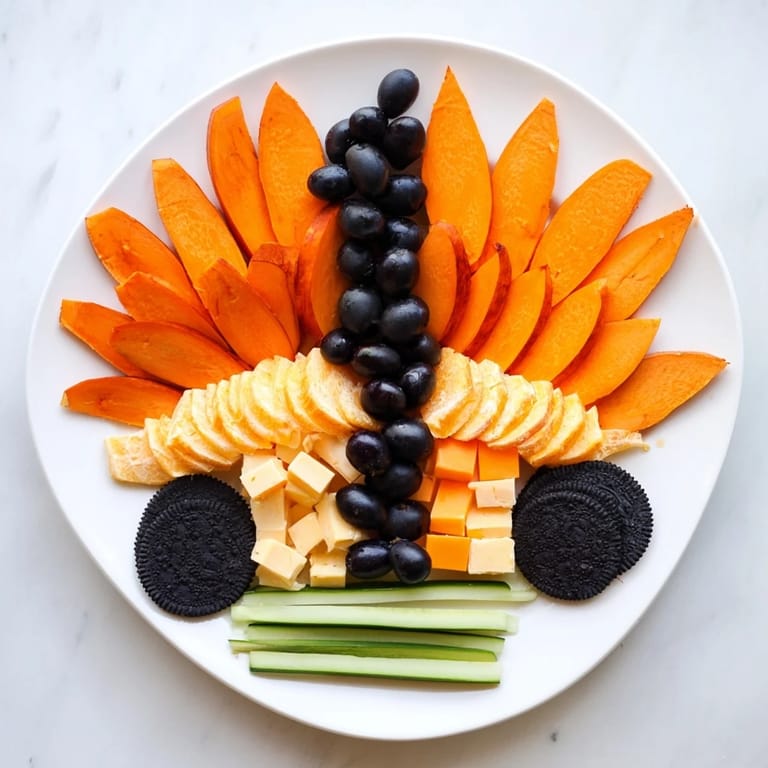
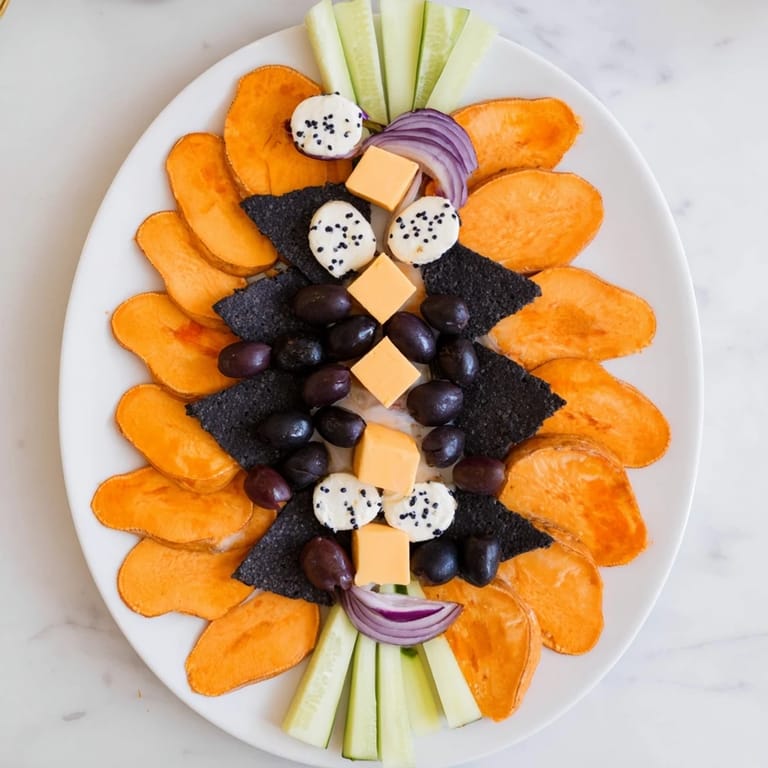
- Before anything else, lay out your ingredients on a large rectangular or oval platter—think landscape orientation. You're going to build this from the center out, so have your cucumber sticks ready at the center of the platter. They should run the length of the platter like a spine. This is your anchor. Once the cucumber is down, everything else builds from this line.
- Create the orange wings:
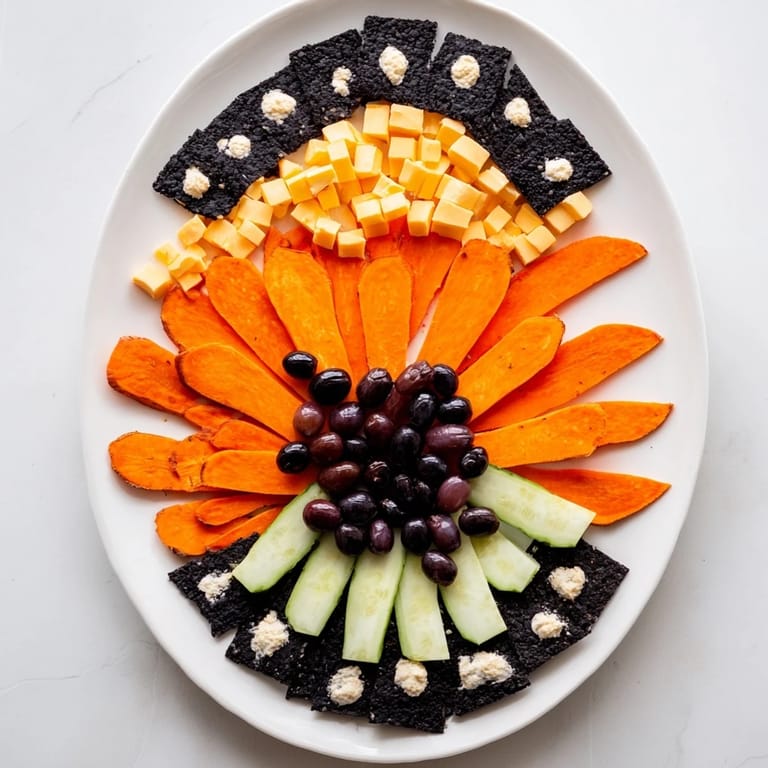
- Take your roasted sweet potato slices, carrot rounds, and orange bell pepper strips, and begin arranging them in a symmetrical fan pattern on both sides of the cucumber. Think about mirroring—what you place on the left should have a partner on the right. The roasted sweet potato should form the thicker, inner wing sections, with the carrot and pepper creating the outer edges. This is where patience becomes part of the ingredient list. Step back every few pieces to see how it's reading as a whole.
- Fill in with black elements:
- Now take your black olives and black grapes and nestle them into the spaces between your orange elements. They should follow the contours of the wings, clustering denser at the outer edges where monarch wings are darkest. The black sesame crackers can be tucked in like accent marks. You're essentially painting a wing pattern with two colors, so think about balance and visual weight.
- Add the white spots:
- Dip a small spoon into your softened cream cheese and add small, deliberate dots along the black edges of the wings—this mimics the white spots that real monarch wings have. These aren't random; they should feel like they belong to the pattern. A few dots in the center of black sections work too, adding sophistication and intentionality.
- Dress it with glaze:
- A very light drizzle of balsamic glaze over the wings adds dimension and helps highlight the pattern you've created. Don't glaze the entire platter—just strategic lines that make the eye follow the wing design. Think of it as underlining the most beautiful parts.
- Crown with antennae:
- Finally, at the top of your cucumber body, arrange dill fronds or microgreens to form antennae. These should feel almost whimsical, reaching upward, giving the whole creation a sense of life and personality.
- Serve and invite:
- Place it in the center of your table and step back. Let people appreciate it before they approach. When they do start eating, encourage them to mix colors in each bite—orange and black together, the way it was designed.
 Pin
Pin There was a moment at a dinner party when an older guest, someone who'd never been particularly sentimental about food, leaned over and told me this platter reminded her of her grandmother's garden. She talked about finding monarch caterpillars on milkweed plants and watching them transform. Food that makes people remember their own stories, their own moments—that's when I understood why I kept coming back to this recipe. It's about connection, not just arrangement.
The Art of Arrangement
Butterfly Wing platters teach you something about visual composition that applies to everything you cook—proportion, balance, and knowing when to step back. The most beautiful versions I've made aren't the ones where every piece is perfectly identical, but where the overall feeling is harmonious. Start with loose placement, then make small adjustments. The platter should feel like it was casually composed by someone who understands beauty, not assembled with military precision. That ease of aesthetic is harder to achieve than perfection, but it's what makes people want to eat it and photograph it.
Customizing Your Colors
While monarch black and orange are stunning, this recipe is really a template for color thinking. You can shift the entire palette—roasted butternut squash instead of sweet potato, orange cherry tomatoes for brightness, purple carrot or beet slices for a jewel-toned variation. Add red elements and you've got a different butterfly entirely. The magic isn't locked into specific ingredients; it's in the principle of working with color contrast and symmetry. Once you understand that, you can make versions that surprise you.
Why This Works Every Time
This recipe succeeds because it removes guesswork from the equation. There's no cooking to time, no temperatures to monitor, no waiting for things to chill or rise. The only variable is your arrangement, and that's the point—you get to own the creation completely. It's vegetarian and gluten-free without requiring special substitutions for most of the ingredients. It works for eight people or eighty. It's a reminder that the most impressive dishes sometimes aren't complex; they're thoughtful.
- Make sure your vegetables are completely dry before arranging them, especially if you're roasting the sweet potato—moisture makes everything slip and slide
- Prep everything first and lay it out in small bowls before you touch the platter, so you're not scrambling for a carrot while your hands are sticky with cream cheese
- If you're making this hours ahead, cover it loosely with plastic wrap to keep dust and kitchen air off it, but remove it well before guests arrive so the arrangement stays pristine
 Pin
Pin This recipe lives in that beautiful space where presentation and eating are inseparable. It's a reminder that food is about all our senses, including the ones we often overlook when we're busy cooking. Make this for people you want to surprise, and watch what happens when beauty arrives at the table before hunger does.
Recipe Q&A
- → How do I create the butterfly wing pattern?
Arrange sliced orange vegetables on both sides of the cucumber center in a fanned, symmetrical pattern, then fill spaces with black olives, grapes, and crackers to mimic wing edges.
- → Can I substitute the cheddar cheese?
Yes, firm cheeses like gouda or mozzarella cubes work well as alternatives and complement the platter's textures.
- → What is the purpose of the cream cheese dots?
Cream cheese adds small white spots along the edges of the black elements, enhancing the authenticity of the monarch wing design.
- → Are there ways to add more color contrast?
Incorporate thin slices of purple carrot or beet for added visual depth and vibrant color contrasts on the platter.
- → How should this platter be served?
Serve immediately to maintain freshness and texture, allowing guests to build their own bite-sized combinations from the colorful display.
- → What pairs well as beverages with this platter?
Crisp white wines or sparkling water with a citrus twist complement the fresh and savory flavors beautifully.