 Pin
Pin There's something about the first bite of tabbouleh that stops you mid-conversation. I discovered it years ago at a small family gathering, where my neighbor brought a ceramic bowl of this vibrant green salad that seemed to glow on the table. The herb-to-grain ratio was so generous, so unapologetically green, that it felt almost rebellious compared to the heavier dishes surrounding it. One forkful and I understood why it's been a staple across the Levant for generations. Now whenever I make it, that same bright freshness fills my kitchen, and I'm reminded why simplicity, when done right, needs no apologies.
I made this for a potluck last summer and watched people return to the bowl again and again, heaping it onto their plates with a smile. Someone asked if it was difficult to make, and I realized that the hardest part was simply chopping enough parsley. That moment taught me that food doesn't need to be complicated to be memorable.
Ingredients
- Fine bulgur wheat: The backbone of tabbouleh, this pre-cooked cracked wheat absorbs the dressing beautifully and gives the salad its signature texture. I learned to use fine bulgur rather than medium because it softens perfectly with just hot water and doesn't need cooking.
- Boiling water: This quick-soaks the bulgur in minutes, releasing its nutty flavor and preparing it to soak up the bright dressing.
- Flat-leaf parsley: This is where tabbouleh gets its character, not a garnish but the star, chopped generously so you taste herbaceous freshness in every bite. Curly parsley will make the salad mushy and bland by comparison.
- Fresh mint: The cooling counterpoint to the sharp lemon, it brings a whisper of sweetness that balances everything.
- Spring onions: These add a gentle bite and sweetness that keeps the salad from feeling one-dimensional.
- Tomatoes: Seeding them removes excess moisture that would make the salad soggy, a small step that makes a real difference.
- Cucumber: Choose firm ones and dice them just before serving so they stay crisp instead of softening into the dressing.
- Extra-virgin olive oil: Don't skimp here; good oil makes the dressing silky and brings its own flavor to the table.
- Freshly squeezed lemon juice: Bottled lemon juice tastes harsh by comparison; fresh juice is brighter and the dressing tastes like sunshine.
- Fine sea salt and freshly ground black pepper: Season generously because the fresh herbs can absorb flavor; taste as you go and adjust to your preference.
Tired of Takeout? 🥡
Get 10 meals you can make faster than delivery arrives. Seriously.
One email. No spam. Unsubscribe anytime.
Instructions
- Prepare the bulgur:
- Pour boiling water over the fine bulgur in a bowl, cover it, and let it steam for 10–15 minutes until the grains are tender and have absorbed the water. Fluff it gently with a fork to separate the grains; this step is where tabbouleh starts tasting fresh rather than mushy.
- Chop your herbs and vegetables:
- Wash and finely chop the parsley and mint, slice the spring onions thin, and dice your seeded tomatoes and cucumber. Work quickly so the herbs stay bright and the vegetables don't begin to release their juice.
- Combine the salad:
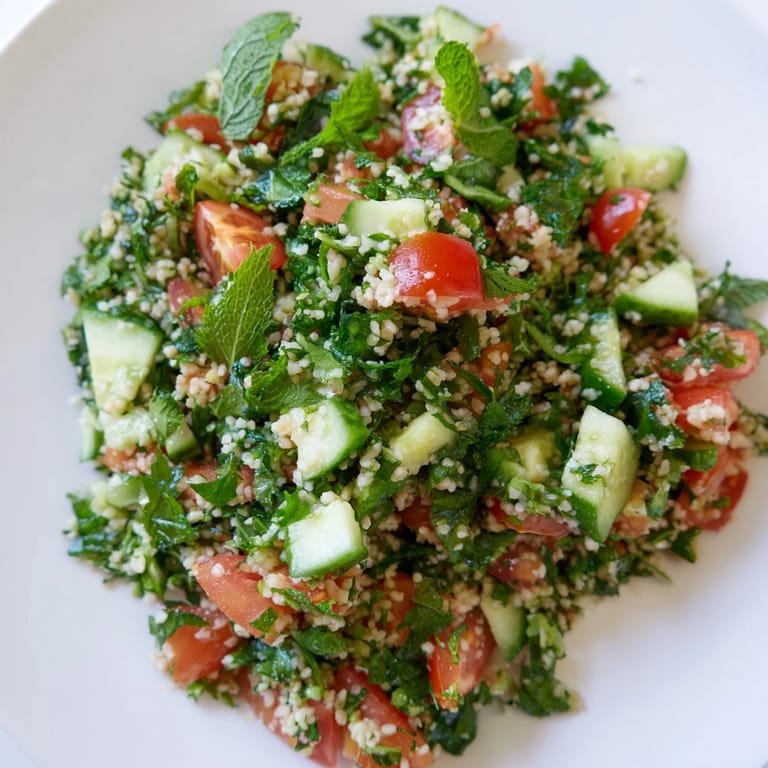
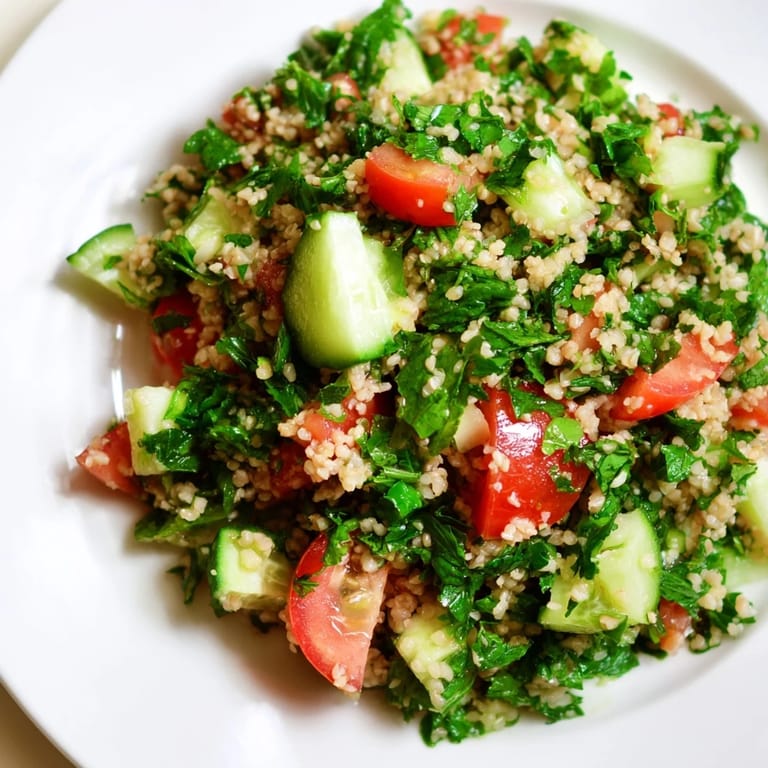
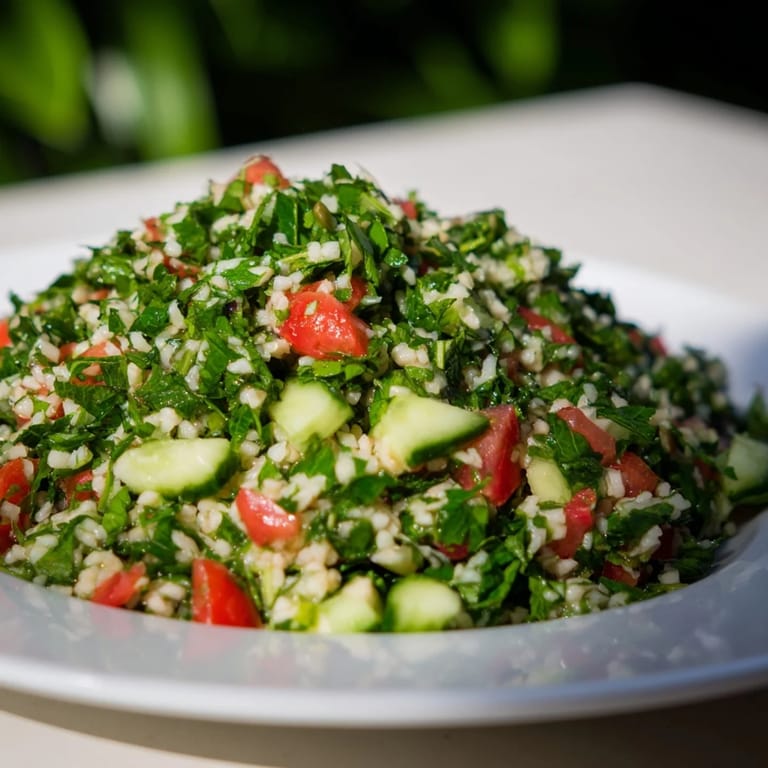
- Toss the chopped parsley, mint, spring onions, tomatoes, and cucumber together in a large bowl, then add your cooled bulgur. The mix should look almost overwhelmingly green, with the bulgur and vegetables scattered throughout.
- Make the dressing:
- Whisk together the olive oil, lemon juice, salt, and pepper in a small bowl until everything is emulsified and balanced. Taste it straight from the whisk to make sure the lemon is bright and the salt isn't harsh.
- Bring it together:
- Pour the dressing over the salad and toss gently but thoroughly, making sure the dressing coats everything evenly. The salad should glisten, not swim; if it looks wet, you've added too much dressing.
- Taste and adjust:
- Give it a final taste, adding more lemon juice if it needs brightness, more salt if it feels flat, or a pinch more black pepper if you want more bite. This is where your instinct matters more than the recipe.
 Pin
Pin Years ago, an older woman from Lebanon watched me make this and gently corrected my technique without making me feel foolish. She showed me how to chop the parsley so it was fine enough to dissolve slightly into the dressing, and suddenly the salad tasted less like chopped vegetables and more like an herb experience. That moment of patient teaching reminded me why recipes passed down through families matter so much.
Why Fresh Herbs Matter More Than Anything Else
In tabbouleh, there's nowhere to hide, no cream sauce or heavy dressing to mask tired ingredients. The parsley is the main event, and using flat-leaf parsley that's been chopped finely makes all the difference between a salad that tastes alive and one that tastes like an afterthought. When I buy parsley, I look for bunches that smell vibrant and have no brown spots, and I use them within a day or two for the best flavor.
Storage and Serving
Tabbouleh is best enjoyed fresh, ideally served within a few hours of assembly, but it keeps well in the refrigerator for up to two days if you store the dressing separately and combine everything just before serving. This makes it oddly perfect for meal prep, since you can chop everything in advance and assemble it fresh when you're ready to eat. The flavors are completely different if you let it chill for an hour before serving; the herbs release more of their essential oils and the bulgur absorbs more of the citrus brightness.
Playing with the Formula
While tabbouleh is traditional as written, I've learned that it's also forgiving enough for experimentation. Try adding pomegranate seeds for tartness and texture, or swap in cooked quinoa if you're avoiding gluten, or add a handful of toasted walnuts if you want more richness. The core idea remains the same: bright herbs, fresh vegetables, and a dressing that brings everything together harmoniously.
- For a protein-forward dinner, toss this salad with chickpeas or crumbled feta right before serving.
- If you're making this for a crowd, you can double or triple the recipe and keep the components separate until serving time.
- On hot summer days, chill your serving bowls in the refrigerator so the salad stays cold and refreshing even after a few minutes on the table.
 Pin
Pin Making tabbouleh is one of those small kitchen acts that never gets old, where you're left with herb-stained fingers and the bright smell of lemon hanging in the air. It's the kind of salad that reminds you why simple, honest food is worth making and worth sharing.
Recipe Q&A
- → What grain is used in this salad?
Fine bulgur wheat is soaked in boiling water until tender, providing a chewy texture and nutty flavor.
- → Can I replace bulgur for gluten-free diets?
Yes, cooked quinoa is an excellent gluten-free alternative that maintains the salad's texture and flavor balance.
- → Which herbs enhance the freshness?
Flat-leaf parsley and fresh mint are finely chopped to deliver vibrant, herbaceous notes essential to the salad's character.
- → How is the dressing prepared?
A simple mixture of extra-virgin olive oil, freshly squeezed lemon juice, sea salt, and black pepper is whisked together to create a zesty dressing.
- → What is the best way to serve this salad?
Serve chilled or at room temperature, ideal as a light dish on its own or alongside grilled meats, falafel, or Mediterranean dishes.
- → How long can it be stored?
For optimal freshness, store the salad in the refrigerator and consume within two days.