 Pin
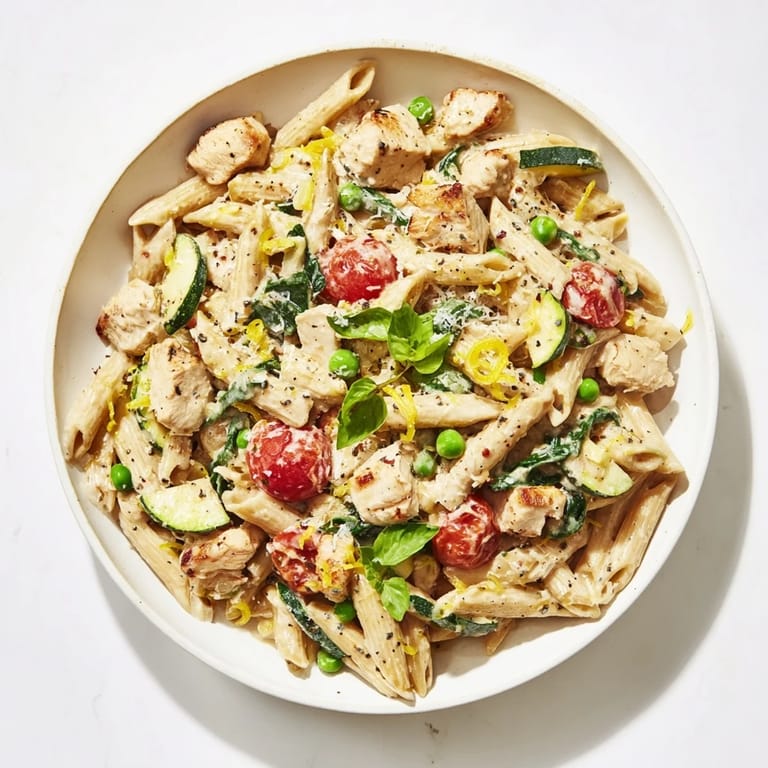
Pin There's something magical about that moment when you open your fridge and realize you've got a collection of half-empty containers and forgotten vegetables that somehow need rescuing. I discovered this pasta while staring at exactly that situation—a lonely chicken breast, a handful of cherry tomatoes going soft, some cream I'd opened three days ago. Instead of ordering takeout, I decided to play with proportions: five vegetables, four pantry essentials, three cheeses, two garnishes, one finishing touch. What emerged was this wonderfully flexible dish that tastes intentional, not improvised.
I made this for my sister after she'd had a rough week, and watching her face soften with that first bite—the way the lemon zest cut through the richness—reminded me why I cook. She asked for the recipe immediately, then texted me three days later saying she'd already made it twice, each time with different vegetables. That's when I knew this wasn't just a cleanup dish; it was something that actually belonged in rotation.
Ingredients
- Chicken breast: Dicing it yourself means it stays tender and cooks evenly; if you're short on time, rotisserie chicken works beautifully and actually adds more flavor.
- Dried pasta: Penne or fusilli catch the sauce better than smooth pasta, but use what you have—even spaghetti works in a pinch.
- Cherry tomatoes: They add natural sweetness and burst into the sauce, but regular diced tomatoes are just as valid if that's what's in your pantry.
- Frozen peas: They thaw gently in the warm sauce and add a subtle sweetness that balances the acidity.
- Bell pepper: The first vegetable in the pan; it sweetens and softens, creating a flavor foundation.
- Zucchini: Sliced thin so it doesn't waterlog the dish; it adds volume without heaviness.
- Spinach: Wilts down dramatically, so don't be shy with the amount—it adds iron and a gentle earthiness.
- Olive oil: Two tablespoons is enough to build flavor without making it heavy; good quality oil makes a real difference here.
- Garlic: Minced fine so it distributes evenly; burnt garlic will ruin the entire dish, so keep the heat honest.
- Dried Italian herbs: A shortcut that actually works; they rehydrate in the sauce and bloom into the cream.
- Canned tomatoes: The backbone of the sauce—don't skip this even if you have fresh tomatoes on hand.
- Parmesan cheese: Use the wedge and grate it yourself if you can; pre-grated versions have anti-caking agents that affect the sauce texture.
- Mozzarella: It melts smoothly into the cream, creating that luxurious binding quality.
- Heavy cream: It tames the acidity and creates a silky sauce that coats every piece of pasta.
- Fresh basil: Torn by hand right before serving so it stays bright green and aromatic.
- Lemon zest: The final secret—it cuts through richness and makes everything taste intentional.
Tired of Takeout? 🥡
Get 10 meals you can make faster than delivery arrives. Seriously.
One email. No spam. Unsubscribe anytime.
Instructions
- Start the pasta:
- Bring a large pot of salted water to a rolling boil and cook your pasta to al dente; it should have a slight firmness to the bite, not mushy. Reserve that pasta water before draining—it's your secret weapon for loosening the sauce later.
- Brown the chicken:
- Heat olive oil in a large skillet until it shimmers, then add the diced chicken and let it sit for a minute before stirring—this creates golden edges and keeps it tender inside. Season aggressively with salt and pepper, remove to a plate, and don't wash the skillet.
- Build the flavor base:
- In that same skillet with all the browned bits still clinging to the bottom, add minced garlic and diced bell pepper; the garlic should smell incredible within 30 seconds. Stir constantly and don't let it brown—this is about fragrance, not color.
- Layer in the vegetables:
- Add cherry tomatoes, zucchini, and Italian herbs, then let them soften for 3-4 minutes; you'll notice the tomatoes start to collapse and release their juice. Everything should look softer but not mushy.
- Simmer the sauce:
- Pour in the canned tomatoes with their juice, add the frozen peas and spinach, and let everything bubble gently for 3-4 minutes; the spinach will wilt completely and the sauce will smell warm and herbal. Taste here—this is your moment to add more salt if needed.
- Bring it together:
- Lower the heat, return the chicken to the skillet, then slowly pour in the heavy cream while stirring gently. Scatter in half the Parmesan and mozzarella, stirring until the cheese melts and the whole thing becomes silky and cohesive.
- Marry the pasta:
- Add the drained pasta to the skillet and toss everything together; if it looks thick, splash in some of that reserved pasta water and keep stirring until the sauce coats every piece without drowning it. This is where the dish comes together.
- Taste and finish:
- Adjust the salt and pepper, tear fresh basil directly over the top, grate the remaining cheese over each plate, crack black pepper over it, and finish with lemon zest that you grate right before serving.
 Pin
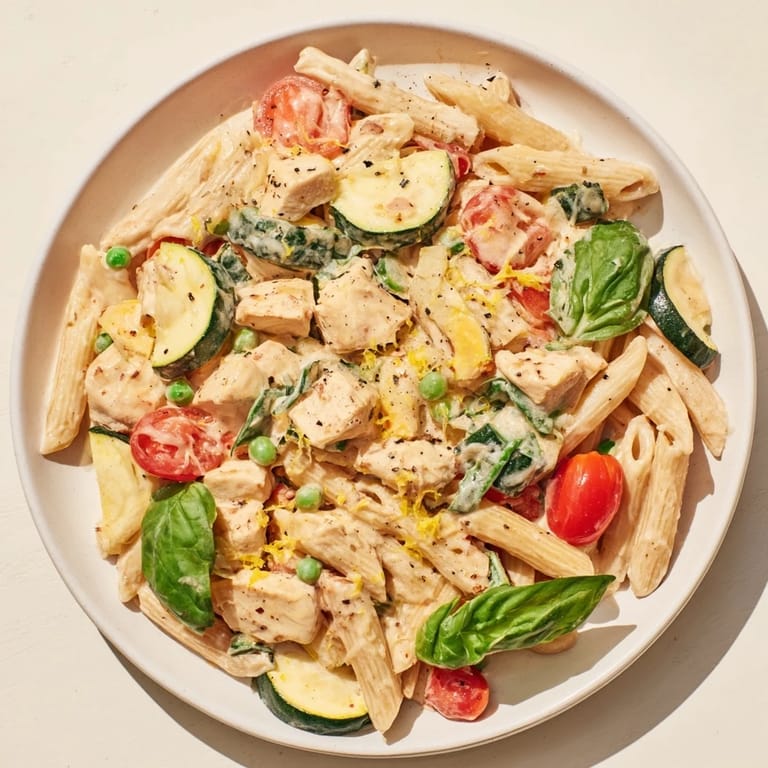
Pin My favorite moment with this dish came when my nine-year-old asked for seconds—she normally eats plain noodles and demands no vegetables. That's when I realized this pasta works because it doesn't announce itself as healthy or righteous; it just tastes good, and the vegetables are there like pleasant surprises.
The Magic of the 5-4-3-2-1 Formula
This structure isn't arbitrary—it's actually how professional cooks think about building dishes. Five vegetables means enough variety that you can swap almost any two and the dish still works; four pantry staples create a stable flavor backbone that can't go wrong; three cheeses give you options without requiring every cheese in your kitchen. The beauty is that once you understand the formula, you stop following recipes and start building them. I've made this with zucchini, tomatoes, broccoli, mushrooms, and peppers, and it's been excellent every single time. The real skill is understanding that structure matters more than exact ingredients.
Flexibility That Actually Works
The first time I made this for someone else, they asked if they could use shrimp instead of chicken—the answer is absolutely yes, just reduce the cooking time to 2-3 minutes so they don't turn rubbery. The same goes for sausage, which adds richness without much extra effort. For vegetarians, add chickpeas or white beans where the chicken would go; they'll absorb all the sauce flavors and add protein without missing a beat. The framework works because the sauce and vegetables do the heavy lifting; the protein is just there for texture and satisfaction.
Why This Stays in Rotation
This pasta has become my answer to the question I ask myself most weeknights: what can I make with what I have? It never feels like compromise; it feels like strategy. The lemon zest at the end is the unsung hero—it transforms what could be a heavy cream sauce into something bright and finished-tasting. Keep fresh lemons on hand specifically for this final step.
- If you're avoiding cream, use half-and-half or even whole milk with a tablespoon of cornstarch mixed in to create body.
- Make the pasta water stretch further by adding it gradually and tasting; you're looking for sauce that coats pasta, not a soup.
- Prep all your vegetables before you turn on the heat—once the skillet is hot, everything moves quickly and you won't have time to chop.
 Pin
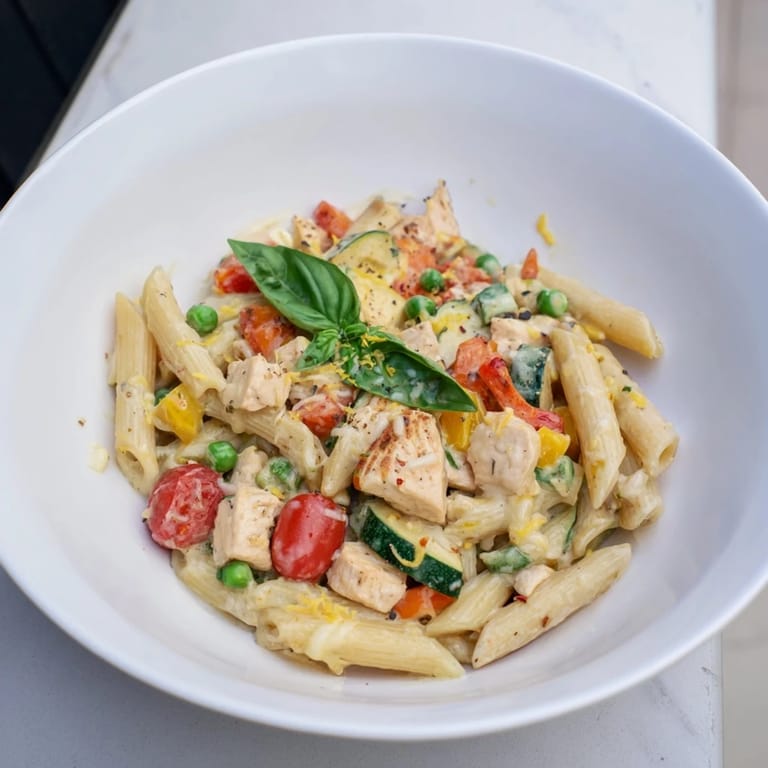
Pin This dish is proof that the best meals aren't about perfection or complexity—they're about paying attention and being willing to work with what you have. Every time you make it, it'll be slightly different, and that's exactly the point.
Recipe Q&A
- → Can I substitute the chicken with other proteins?
Yes, cooked sausage, shrimp, or chickpeas work well as alternatives to chicken, offering varied flavors and textures.
- → What types of pasta work best for this dish?
Short pasta like penne or fusilli holds the sauce nicely, but feel free to use any dried pasta you have on hand.
- → How can I make the dish vegetarian?
Omit the chicken and add chickpeas or extra vegetables to maintain protein and fullness.
- → Is it possible to lighten the creamy sauce?
Yes, substitute half-and-half or milk for the heavy cream to reduce richness while keeping creaminess.
- → How should leftovers be stored and reheated?
Store in an airtight container in the fridge up to 2 days. Reheat gently on the stovetop or microwave, adding a splash of water if needed.