 Pin
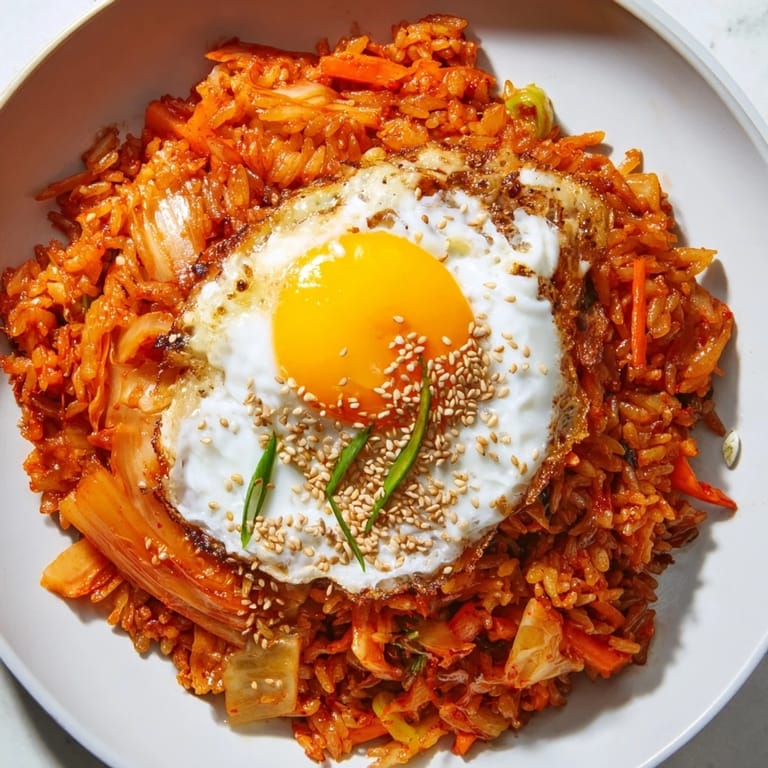
Pin I discovered kimchi fried rice on a Tuesday night when my fridge was nearly empty except for a container of aging kimchi and some leftover rice. The smell hit me first—that funky, garlicky punch that makes you either reach for seconds or step back, depending on your mood. I'd had versions in restaurants, but making it at home felt different somehow, like I was solving a puzzle with whatever I had on hand. Twenty-five minutes later, I understood why this dish has stayed in Korean kitchens for generations.
I remember cooking this for a friend who claimed she didn't like spicy food, then watched her eat the entire bowl without hesitation. She kept asking why it tasted so savory and balanced instead of just hot, and that's when I realized the gochujang and sesame oil were doing something quietly brilliant together. It became the dish I made when someone needed convincing that Korean food was worth exploring.
Ingredients
- Day-old short-grain rice: Room-temperature rice won't turn mushy when you stir-fry it, and the grains stay separate instead of clumping together like porridge.
- Napa cabbage kimchi: The funk and fermentation are what make this taste like something alive; fresh or too-young kimchi won't have that depth, so raid the jar that's been sitting around.
- Gochujang: This Korean chili paste carries heat and umami at the same time, nothing like hot sauce—it's thick, complex, and builds flavor rather than just burning.
- Yellow onion and carrot: These soften quickly and sweeten slightly as they cook, balancing the spice and tanginess.
- Green onions: The white parts cook down and become mellow; the green parts stay crisp and bright, scattered on top for freshness.
- Toasted sesame oil: A teaspoon goes a long way; the nuttiness ties everything together and reminds you this isn't just spicy rice.
- Sesame seeds: They add a final textural moment and a whisper of toastiness that makes plating feel intentional.
- Fried eggs: Optional but transformative—a runny yolk becomes sauce for the entire bowl.
Tired of Takeout? 🥡
Get 10 meals you can make faster than delivery arrives. Seriously.
One email. No spam. Unsubscribe anytime.
Instructions
- Start the aromatics:
- Heat oil in your wok or skillet over medium-high heat until it shimmers. Add the onion, carrot, and white parts of the green onion, letting them sauté for 2–3 minutes until their edges soften and the kitchen fills with that sweet, cooked-vegetable smell.
- Toast the kimchi:
- Add your chopped kimchi and listen for the immediate sizzle—it should hit the hot pan and start releasing its fermented aroma. Cook for another 2–3 minutes, stirring occasionally, until the edges begin to caramelize and turn slightly darker.
- Build the sauce:
- Mix in the gochujang, soy sauce, kimchi juice, sugar, and pepper all at once. Stir constantly for about a minute so the paste dissolves evenly and coats every vegetable piece with color and flavor.
- Add the rice and toss:
- Break up any clumps of rice with your spatula as you add it to the pan, then toss everything together for 3–4 minutes. You're aiming for every grain to glisten with the sauce and heat through completely—this is where patience matters, because rushing means cold rice in the middle.
- Finish with oil and greens:
- Drizzle in the sesame oil and scatter the green parts of the green onion across the top. One final stir combines everything and adds that unmistakable nutty fragrance that signals you're done.
- Fry the eggs (if using):
- In a separate small pan with the remaining oil, crack your eggs and cook them to your preference—I like runny yolks, but you do you.
- Plate and serve:
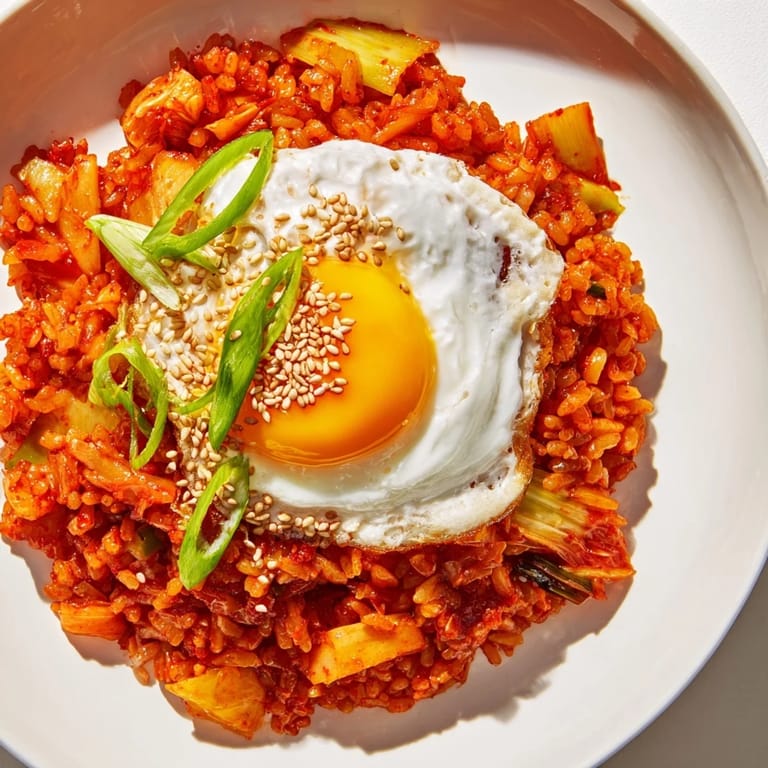
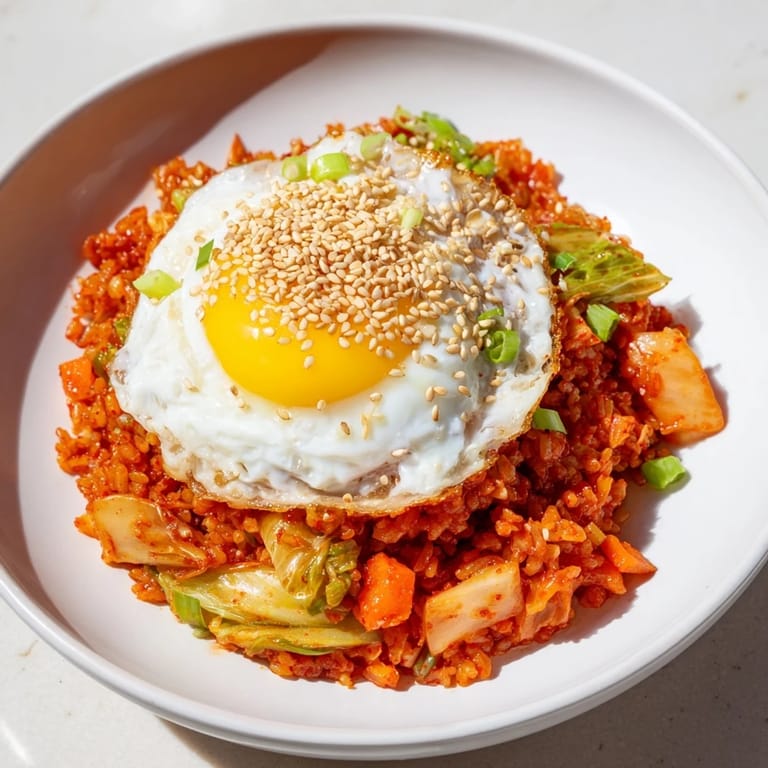
- Spoon the kimchi fried rice into bowls, top with an egg if you're using one, and scatter sesame seeds over everything like you meant to.
 Pin
Pin There was a moment, about halfway through stirring, when the kitchen smelled so good I had to pause and just breathe it in. That's when I understood why people cook the same dish over and over—it's not about perfection, it's about those small moments of anticipation and comfort happening at the same time.
The Kimchi Question
The quality and age of your kimchi matters more than you'd think. A fresh, mild kimchi will give you a gentle tang, while an older, funkier one adds complexity and fermented depth that feels almost meaty. I've made this with both, and the aged version tasted more complete—less like a hot vegetable dish and more like something with history. Start with what you have, but pay attention to how different kimchis change the final flavor.
Building Heat Without Overwhelm
The spice here doesn't come from one source—it builds from the gochujang, the kimchi, and sometimes the kimchi juice depending on how it was made. That layered approach means the heat feels balanced rather than aggressive. If you're cooking for people who are cautious, use less gochujang or add an extra tablespoon of rice to dilute it. If you want more edge, increase the gochujang and drizzle extra kimchi juice over your bowl before eating.
Simple Variations and Add-Ins
The beauty of fried rice is that it's forgiving and customizable, so make it your own. Diced cooked chicken or shrimp add protein and richness, while soft tofu cubes contribute creaminess. Even a handful of frozen peas brings color and freshness. I've left this vegetarian on purpose because the kimchi and gochujang carry so much umami on their own, but any addition that feels right in your kitchen is the right addition.
- Vegan option: Skip the egg or use a silken tofu dollop or cashew cream instead.
- Protein swap: Cooked shrimp, chicken, or extra-firm tofu all work beautifully.
- Grain option: Brown rice or even barley can replace short-grain rice for different texture and nutrition.
 Pin
Pin Kimchi fried rice taught me that the best meals don't require fresh ingredients or complicated technique—they just need conviction and ingredients that respect each other. Make it once, and you'll want it again.
Recipe Q&A
- → What type of rice works best?
Day-old short-grain rice is ideal as it prevents clumping and absorbs flavors well during stir-frying.
- → How can I adjust the spice level?
Modify the amount of gochujang and kimchi juice to taste, adding more for extra heat or less for milder flavor.
- → Can I make this dish vegan?
Yes, simply omit the fried egg or substitute with a plant-based alternative for a vegan-friendly version.
- → What protein additions work well?
Diced tofu, cooked chicken, or shrimp can be incorporated for extra protein and variation in texture.
- → What side drinks complement this dish?
A crisp lager or cold barley tea pairs nicely, balancing the bold, spicy, and savory flavors.
- → Why use toasted sesame oil and seeds?
Toasted sesame oil adds a nutty aroma while sesame seeds provide subtle crunch and deepen the dish's flavor profile.