 Pin
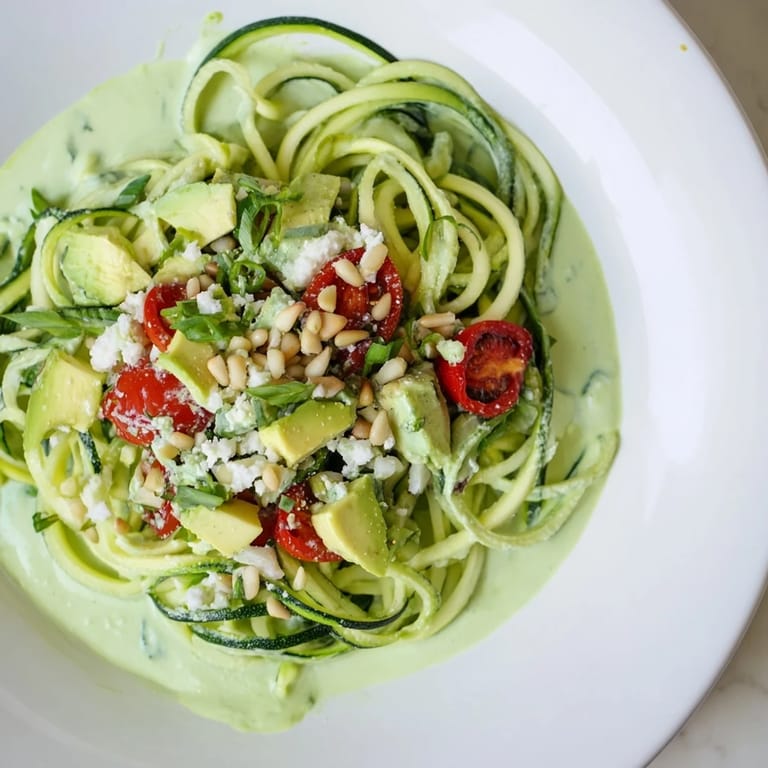
Pin Last summer, I was scrolling through photos of my sister's garden when I spotted her basil plant absolutely thriving, and I texted her half-joking that she owed me a recipe. She sent back a photo of a vibrant green pasta she'd made with zucchini noodles and a sauce so herbaceous it looked like bottled sunshine. When I finally made it, I understood why she'd been so smug about it—one bite and I was hooked on how fresh and light it felt while still being completely satisfying.
I made this for a friend who'd just started eating low-carb, and I remember her skepticism melting the moment she took a bite. She actually put her fork down and said, "Wait, this isn't sad diet food," which I'm pretty sure was the highest compliment I could have received in that moment.
Ingredients
- Zucchini: Four medium ones spiralized give you that satisfying noodle texture without the carb load—pat them dry or they'll water down your sauce halfway through eating.
- Savoy cabbage: Two cups thinly sliced adds a gentle crunch and slight sweetness that balances all those bright herbs beautifully.
- Cherry tomatoes: One cup halved brings little bursts of acidity and brightness, so don't skip them even if they seem optional.
- Avocado: One diced piece adds creaminess and makes the whole thing feel more substantial than it actually is.
- Scallions: Two sliced ones give you that sharp onion bite at the end that wakes everything up.
- Greek yogurt: One cup is your sauce base—use full-fat if you can, it makes everything silkier than the low-fat versions.
- Fresh basil: Half a cup of leaves (not packed) is essential here; dried basil will taste like sadness in comparison.
- Fresh parsley: Quarter cup adds earthiness without competing with the basil for attention.
- Fresh chives: Quarter cup brings a subtle onion undertone that somehow makes everything taste more summery.
- Fresh tarragon: Two tablespoons fresh (or one if using dried) gives the sauce its signature slightly sweet, almost anise-like quality.
- Lemon juice: Two tablespoons keeps everything bright and stops the sauce from tasting heavy.
- Garlic clove: One small one, minced, because too much will overpower all your delicate herbs.
- Extra virgin olive oil: Two tablespoons in the sauce plus more for sautéing—don't cheap out here.
- Dijon mustard: One teaspoon acts like a flavor amplifier, bringing depth without tasting mustardy.
- Salt and pepper: Taste as you go; the cheese and yogurt are already salty so you might need less than you think.
- Feta cheese: Quarter cup crumbled is your finishing touch that adds just enough saltiness and texture.
- Toasted pine nuts: Two tablespoons scattered on top give you that crispy contrast that makes people think you spent way more effort than you did.
Tired of Takeout? 🥡
Get 10 meals you can make faster than delivery arrives. Seriously.
One email. No spam. Unsubscribe anytime.
Instructions
- Prep your zucchini and let it breathe:
- Spiralize your four zucchini and lay the noodles on paper towels to soak up moisture—this step takes maybe five minutes but saves your entire dish from being a soggy mess. You'll feel the towel getting damp as the zucchini releases its water, which is exactly what you want.
- Sauté your cabbage and zoodles:
- Heat a large skillet over medium heat with a good drizzle of olive oil, then add your sliced cabbage and cook for about three to four minutes until it softens just slightly and starts to smell sweet. Add your dried zucchini noodles and sauté for two to three minutes more, stirring gently so they don't break apart—you want them tender but still with a little bite, not limp.
- Blend your green goddess sauce:
- In a blender or food processor, combine your Greek yogurt, basil, parsley, chives, tarragon, lemon juice, garlic, olive oil, Dijon mustard, salt, and pepper. Blend until smooth and creamy, then taste and adjust—if it tastes too herby, add more yogurt; if it's bland, add more lemon juice and garlic.
- Bring it together:
- In a large bowl, toss your sautéed zoodles and cabbage with the green goddess sauce, making sure everything gets coated. The warmth of the vegetables will help the sauce coat them more evenly.
- Add your fresh components:
- Gently fold in your cherry tomatoes, diced avocado, and sliced scallions—the avocado will soften slightly from the warmth, which is perfect. This is where the dish really comes alive with texture and freshness.
- Plate and finish:
- Divide among bowls and top with crumbled feta, toasted pine nuts, and any extra fresh herbs you have on hand. Serve immediately while the zoodles are still warm and the avocado is still firm.
 Pin
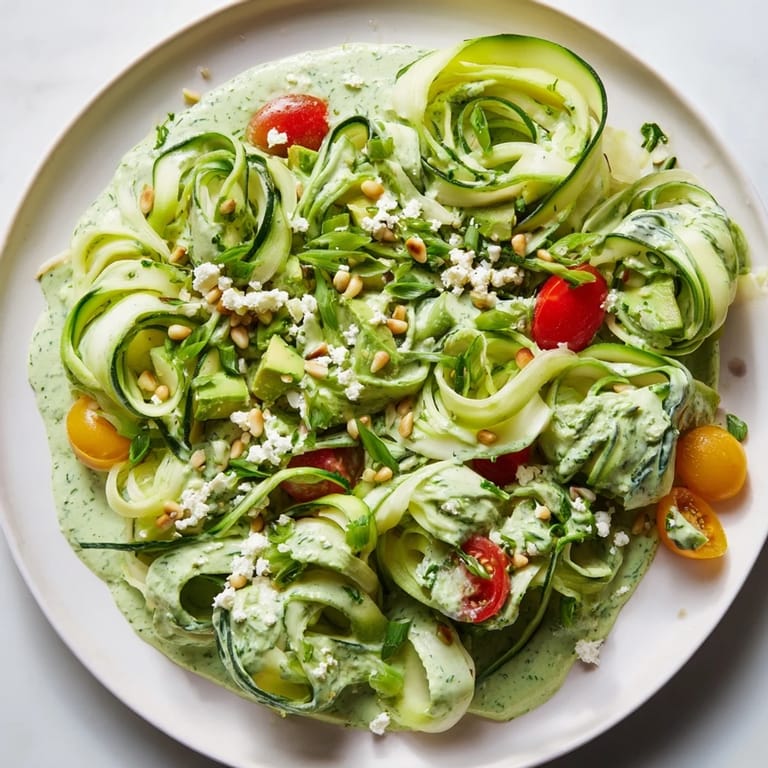
Pin I think the moment this dish stopped being just dinner for me was when I made it on a Sunday evening and invited three friends over on a whim. We sat outside eating from bowls, barely talking because we were too busy enjoying every bite, and someone said, "This tastes like health feels good," and I knew I'd found something special.
How to Make It Your Own
The beautiful thing about this recipe is that it's basically a template waiting for your personal touch. Swap the cabbage for spinach or kale if you want something earthier, add grilled chicken or shrimp if you need more protein, or throw in some roasted chickpeas if you're going fully plant-based. I've made versions with dill instead of tarragon, added a splash of Greek yogurt to thin out the sauce, and even made it cold the next day as a salad—every version tastes entirely different but equally good.
Cold vs. Warm
This dish works beautifully either way, which honestly makes it one of my most-made recipes. Warm, it feels cozy and the sauce coats everything like a gentle embrace. Cold, it becomes a bright salad that's perfect for meal prep or hot summer days when you don't want to turn on the stove.
Why This Sauce Changed My Cooking
Once I mastered this green goddess sauce, I started using it on everything—roasted vegetables, grilled fish, scrambled eggs, even as a dip for raw veggies. It's become my go-to when I want something that tastes restaurant-quality but comes together in about five minutes. The trick is not overthinking it: fresh herbs, yogurt, lemon, and salt are honestly all you really need.
- Toast your pine nuts in a dry skillet for two minutes right before serving so they're warm and extra crunchy.
- If you can't find fresh tarragon, use dill or chervil instead, but honestly the tarragon is what makes this taste special so try to find it.
- This keeps in the fridge for three days, but add the avocado and toppings fresh right before eating or you'll end up with sad brown avocado.
 Pin
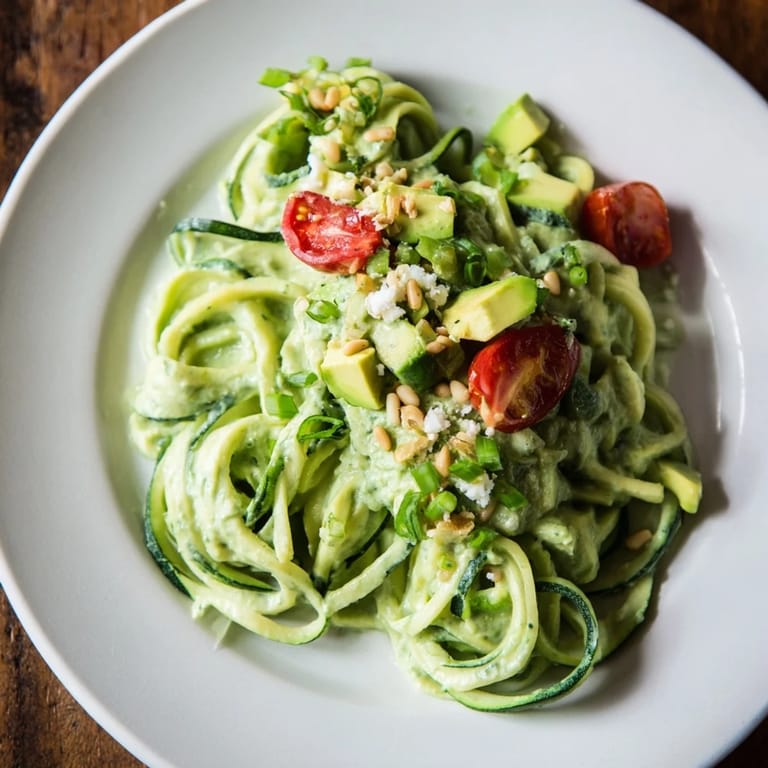
Pin This dish reminds me why cooking matters—it's not just about feeding yourself, it's about taking something simple and turning it into a moment worth remembering. Make this for yourself on a Tuesday night or for friends on a Saturday, and I promise it'll become one of those recipes you find yourself coming back to over and over.
Recipe Q&A
- → What is the best way to prepare the zucchini noodles?
Spiralize fresh zucchini and pat dry to remove excess moisture before lightly sautéing with cabbage to keep a tender but firm texture.
- → How can I make the sauce creamier without dairy?
Use a plant-based yogurt alternative to maintain creaminess while keeping the fresh herb flavour intact.
- → Can I substitute other vegetables for cabbage?
Yes, spinach or kale can be used instead of savoy cabbage for a slightly different texture and flavor.
- → What toppings complement this dish well?
Toasted pine nuts, crumbled feta cheese, and extra fresh herbs add texture and enhance the herbaceous notes of the sauce.
- → Is this dish served warm or cold?
It can be enjoyed warm as a comforting main dish or cold as a refreshing salad depending on preference.