 Pin
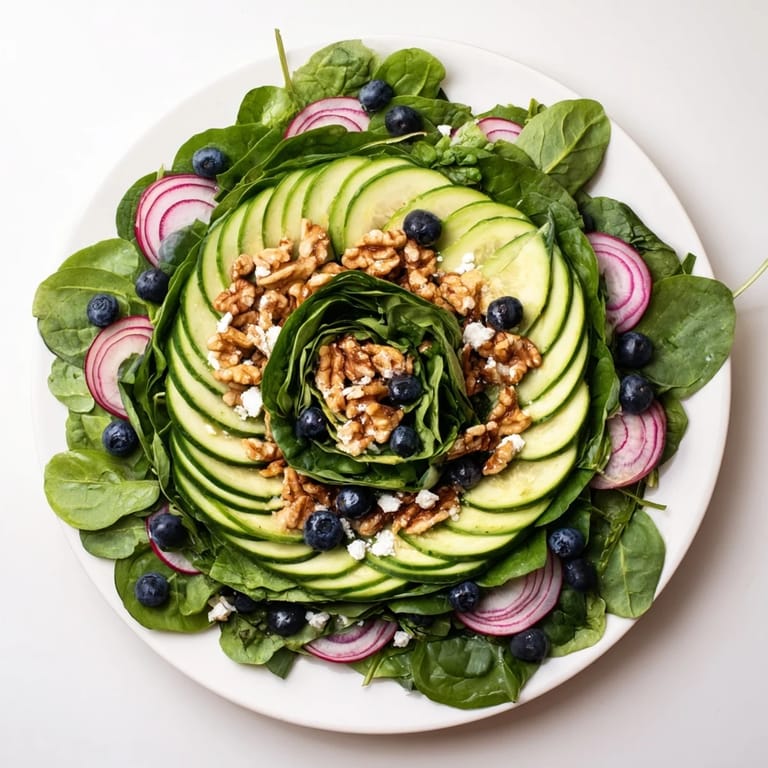
Pin I stumbled onto the idea for this salad while scrolling through some old geometry books at a thrift store, mesmerized by photographs of spirals in nature—pinecones, galaxies, seashells. It struck me that a plate of food could tell that same visual story. The next evening, I found myself arranging greens and vegetables in expanding arcs across my best round platter, and something magical happened: what started as an art project turned into one of the most balanced, crave-able salads I've ever made.
The first time I made this for a dinner party, my friend Sarah arrived early and watched me work for nearly twenty minutes, utterly transfixed. She said, 'It looks like you're painting.' I realized then that food arranged with intention becomes something beyond nourishment—it becomes a conversation starter, a moment where everyone slows down just a little before eating.
Ingredients
- Baby spinach leaves: The soft, mild base that anchors the innermost crescent; use the tender ones you find at the bottom of the container.
- Arugula: Its peppery bite cuts through the richness of avocado and feta, creating balance without dressing.
- Cherry tomatoes, halved: Their burst of sweetness and vibrant red color anchor the visual rhythm of the spiral.
- Cucumber, thinly sliced: Cool and crisp, cucumber brings freshness; a mandoline makes quick work of getting consistent thickness.
- Radishes, thinly sliced: Spicy and textural; they're what people taste and then ask 'what was that?' in the best way.
- Red onion, finely sliced: A thin accent that adds color and a whisper of sharpness without overwhelming.
- Avocado, sliced: Choose one that yields gently to thumb pressure; slice just before assembling so it doesn't brown.
- Blueberries: A surprising sweet note that makes people pause—they add complexity without being obvious.
- Toasted walnuts, chopped: Toasting them yourself brings out their nuttiness; store-bought toasted ones work too in a pinch.
- Crumbled feta cheese: The salty anchor that makes every other flavor pop; crumble it by hand for irregular, appealing pieces.
- Extra-virgin olive oil: Use one you actually enjoy tasting, because it's thinly drizzled and can't hide.
- Lemon juice: Fresh squeezed changes everything; bottled works, but fresh is noticeably brighter.
- Honey: A tiny touch of sweetness balances the acidity and the savory elements.
- Dijon mustard: An emulsifier that helps the dressing cling to leaves and adds subtle depth.
Tired of Takeout? 🥡
Get 10 meals you can make faster than delivery arrives. Seriously.
One email. No spam. Unsubscribe anytime.
Instructions
- Gather and prep everything first:
- Wash and thoroughly dry your greens—water is the enemy of a crisp salad. Slice your vegetables uniformly thin so they layer beautifully and cook evenly in acid from the dressing. Arrange everything within arm's reach of your platter before you begin; this is assembly, not cooking, so flow matters.
- Start your spiral with spinach:
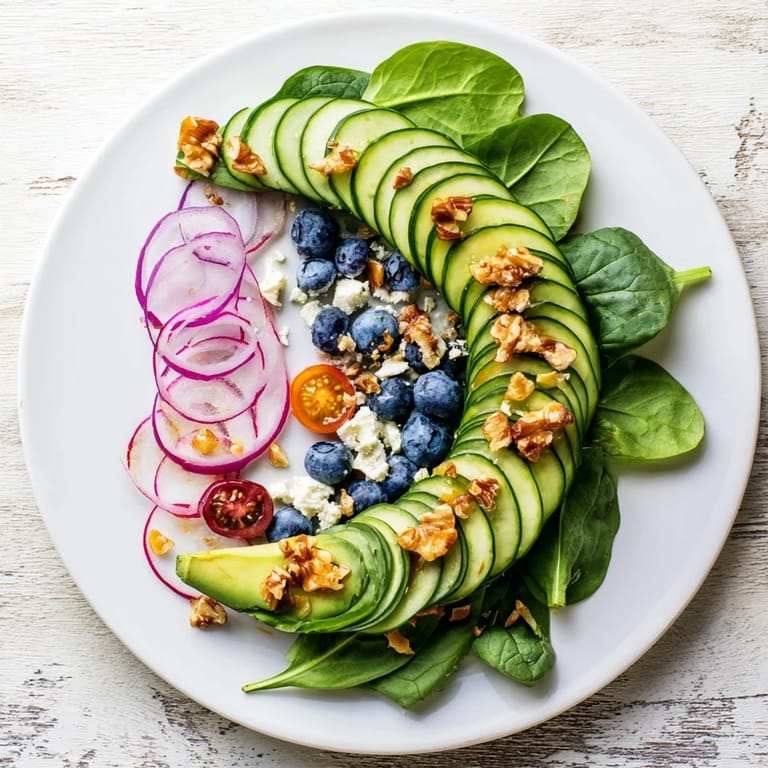
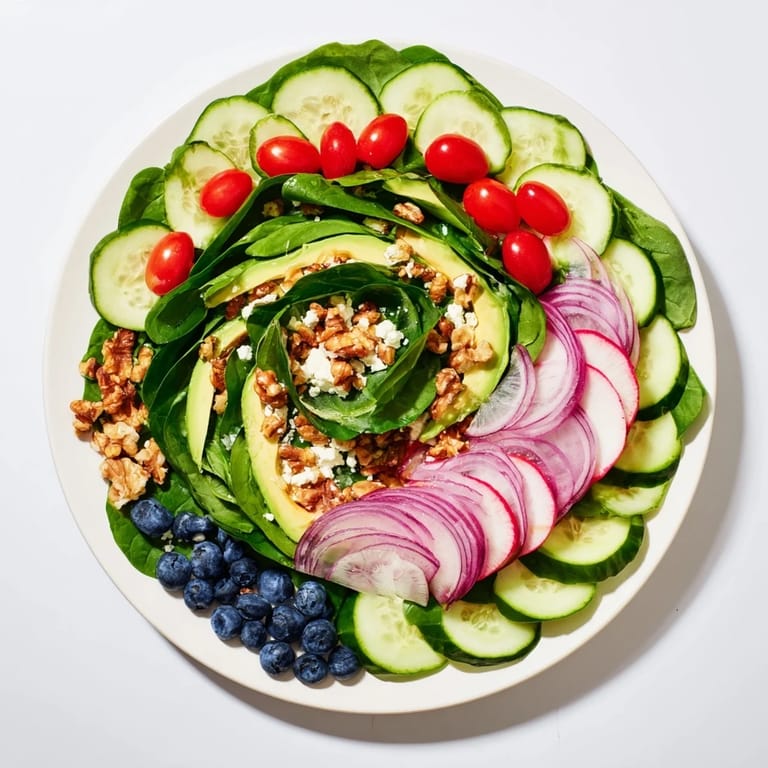
- Lay the tender spinach leaves in a crescent shape at the center of your round platter, overlapping them gently so they form a soft, delicate arc. Think of it as the beginning of a story that expands outward.
- Layer arugula in an expanding arc:
- Arrange arugula leaves so they overlap the spinach, each leaf slightly larger and farther out than the last. Let them naturally angle upward—this isn't rigid, so embrace the organic feel.
- Continue the spiral with tomatoes, cucumber, and radishes:
- Add the halved cherry tomatoes in their own expanding arc, then cucumber slices, then radish slices. Each section should be slightly wider than the one before, building momentum as your spiral grows. This is where the golden ratio lives—trust your eye more than measurements.
- Add red onion as a thin accent:
- Scatter thin red onion slices near the outer edge like a whisper rather than a shout. They're there for color and a touch of sharpness, not dominance.
- Nestle avocado and blueberries with intention:
- Slice your avocado and lay the pieces into gaps throughout the spiral, choosing places that create visual balance. Drop blueberries into pockets as unexpected flavor surprises. This is where you become an artist rather than a cook.
- Crown it with nuts and cheese:
- Scatter your toasted walnuts and crumbled feta evenly across the entire spiral, so every section gets a bit of nuttiness and salt. Don't overload any one area.
- Make your dressing with intention:
- In a small bowl, whisk olive oil, lemon juice, honey, and Dijon mustard until emulsified and smooth. Taste it, adjust seasoning, and remember that it should be bright and slightly bold since you'll only drizzle it lightly.
- Finish just before serving:
- Drizzle the dressing evenly across the spiral in a thin, artistic pattern. Serve immediately so the greens stay crisp and the whole composition hasn't wilted.
 Pin
Pin My seven-year-old nephew looked at this salad for a solid minute before eating, which he never does with food. He said, 'Did you paint this?' That moment reminded me that food made with care and intention speaks a language beyond taste—it says, 'You matter enough for me to slow down.'
The Golden Ratio in Your Kitchen
The Fibonacci spiral isn't just pretty—it's how nature solved the problem of fitting the most into the least space. When you arrange this salad, you're not following a rigid formula; you're following the same logic that sunflowers use to pack seeds. Each ingredient takes up slightly more space than the last, which naturally creates sections that feel balanced rather than crowded. Once you see this pattern, you'll start noticing it everywhere—in broccoli, in pinecones, in how people naturally gather around a table.
Why This Salad Works as a Meal
Salad gets a bad rap as the opening act, but this one is substantial enough to be the show. The combination of bitter greens, sweet fruit, crunchy nuts, and creamy avocado hits every taste and texture your mouth craves. Feta adds enough salt and umami that you don't feel like you're eating rabbit food, and the dressing brings everything into conversation. It's the kind of salad that makes people ask for seconds, which is how you know it's actually nourishing.
Making It Your Own
The beauty of this structure is that you can swap ingredients without breaking the spell—use goat cheese instead of feta, add grilled chicken if you want protein, substitute pomegranate seeds for blueberries, or swap in pistachios for walnuts. The spiral stays the same; only the colors and flavors shift. The real skill is maintaining that sense of balance and visual intention, regardless of what you're spiraling.
- Add grilled chicken, chickpeas, or hard-boiled eggs for a main-course version that still looks stunning.
- Make extra dressing and keep it separate if you're eating leftovers—dress only what you'll eat immediately.
- This salad is beautiful enough for a dinner party but simple enough for a Tuesday lunch when you want to feel a little special.
 Pin
Pin This salad taught me that presentation and nourishment aren't enemies; they're partners. When you eat something beautiful, it tastes better because your whole self—eyes, heart, mouth—is paying attention.
Recipe Q&A
- → What is the inspiration behind the salad's arrangement?
The salad is inspired by the golden spiral, arranging ingredients in expanding fan shapes to create a balanced and visually stunning presentation.
- → Can this salad be prepared ahead of time?
It's best served immediately to maintain the fresh texture and vibrant appearance of the greens and fruits.
- → Are there suitable alternatives for feta cheese?
Yes, goat cheese or a dairy-free cheese alternative can be used while maintaining the salad's creamy texture.
- → What dressings pair well with the salad components?
A light dressing made from olive oil, lemon juice, honey, and Dijon mustard enhances the flavors without overpowering the fresh ingredients.
- → Is this salad suitable for gluten-free and vegetarian diets?
Yes, it uses naturally gluten-free ingredients and is vegetarian-friendly as it contains no meat or gluten products.
- → Can protein be added to this salad?
Grilled chicken or chickpeas can be added for extra protein without disrupting the overall flavor balance.