 Pin
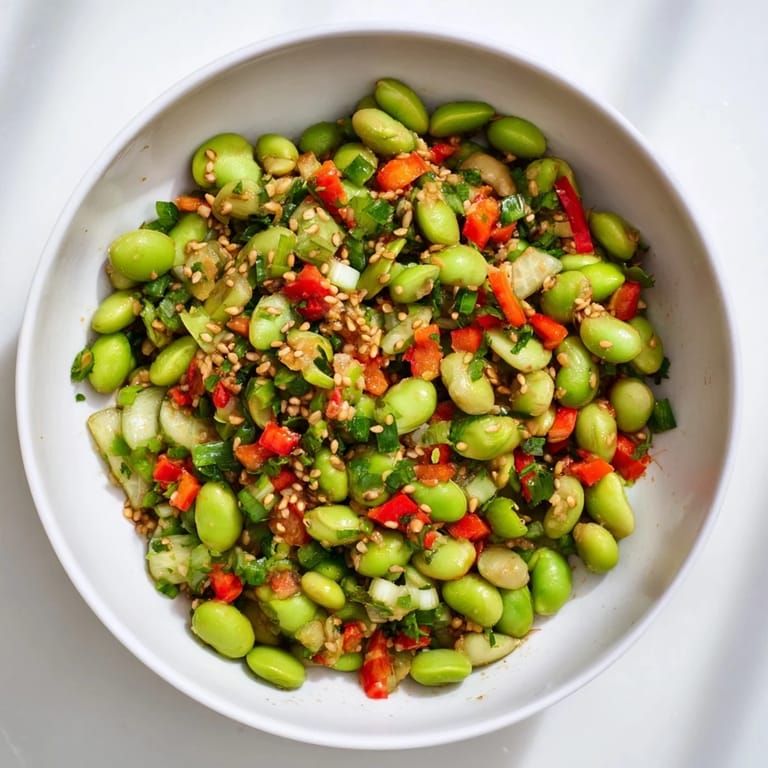
Pin There's something about the bright pop of edamame against a crisp cucumber dice that reminds me of a afternoon market visit—the kind where you fill your basket with things simply because they gleam under the sunlight. I'd grabbed a container of fresh edamame one summer, uncertain what to do with them beyond the steamed-and-salted routine, until a friend mentioned tossing them cold with sesame oil and ginger. That one suggestion transformed my entire approach to summer eating. Now this salad is my answer whenever I want something that feels both light and satisfying, ready in barely twenty minutes.
I made this for a potluck where everyone brought heavy casseroles, and mine disappeared first—mostly because people couldn't believe how refreshing it was in the middle of summer heat. One guest actually asked if I'd made the dressing myself, and when I said yes, the surprise on their face made me realize how much better homemade really tastes compared to bottled versions.
Ingredients
- Edamame, shelled (2 cups fresh or frozen): The foundation of this salad—frozen works beautifully and saves you the effort of shelling. They hold their bright green color and tender texture after a quick chill.
- Cucumber, large, diced: Watery vegetables like cucumber add that crisp contrast that makes each bite feel refreshing rather than heavy.
- Green onions, thinly sliced (2): These bring a mild onion bite that rounds out the flavors without overwhelming the delicate edamame.
- Red bell pepper, small, diced (optional): A touch of sweetness and color; I often leave this out when red peppers are expensive, but it's lovely when they're in season.
- Toasted sesame oil (2 tablespoons): Use the dark, aromatic kind—regular sesame oil tastes bland by comparison and this small amount goes a long way.
- Rice vinegar (1 tablespoon): This is milder than regular vinegar and plays nicely with Asian flavors without being sharp or aggressive.
- Soy sauce or tamari (1 tablespoon): The umami backbone of the dressing—tamari is genuinely better if you're avoiding gluten, not just a substitute.
- Honey or maple syrup (1 teaspoon): Just enough sweetness to balance the salt and sesame, like a gentle hum in the background.
- Fresh ginger, grated (1 teaspoon): Ginger from a jar tastes metallic; fresh ginger transforms the entire dressing into something vibrant and alive.
- Garlic, minced (1 clove): One clove is enough—more than that and garlic becomes the only thing you taste.
- Toasted sesame seeds (2 teaspoons total for dressing, plus 1 tablespoon for garnish): Toasting sesame seeds yourself in a dry pan for about two minutes fills your kitchen with a smell that promises something delicious is coming.
- Fresh cilantro, chopped (1 tablespoon optional garnish): This is one of those ingredients people either love or skip entirely, so I always offer it on the side.
Tired of Takeout? 🥡
Get 10 meals you can make faster than delivery arrives. Seriously.
One email. No spam. Unsubscribe anytime.
Instructions
- Boil and chill the edamame:
- Fill a pot with salted water—it should taste like the sea—and bring it to a rolling boil. Toss in the edamame and watch them bob around for about three to five minutes until they're tender but still holding their shape. The moment they're done, drain them into a colander and run cold water over them, or plunge them into an ice bath if you have time; this stops the cooking and locks in that bright green color.
- Combine your vegetables:
- In a large bowl, gather your chilled edamame with the diced cucumber, sliced green onions, and bell pepper if you're using it. At this point everything should look fresh and crisp, almost too pretty to dress.
- Build the dressing:
- Pour the sesame oil, rice vinegar, soy sauce, honey, ginger, garlic, and sesame seeds into a small bowl. Whisk it together until the honey dissolves and everything turns glossy—you'll notice the mixture going from separated and murky to smooth and cohesive.
- Bring it together:
- Pour the dressing over your vegetables and toss everything gently but thoroughly, making sure the dressing coats each piece. If you do this carefully the vegetables won't break down, and everything will glisten.
- Finish and rest:
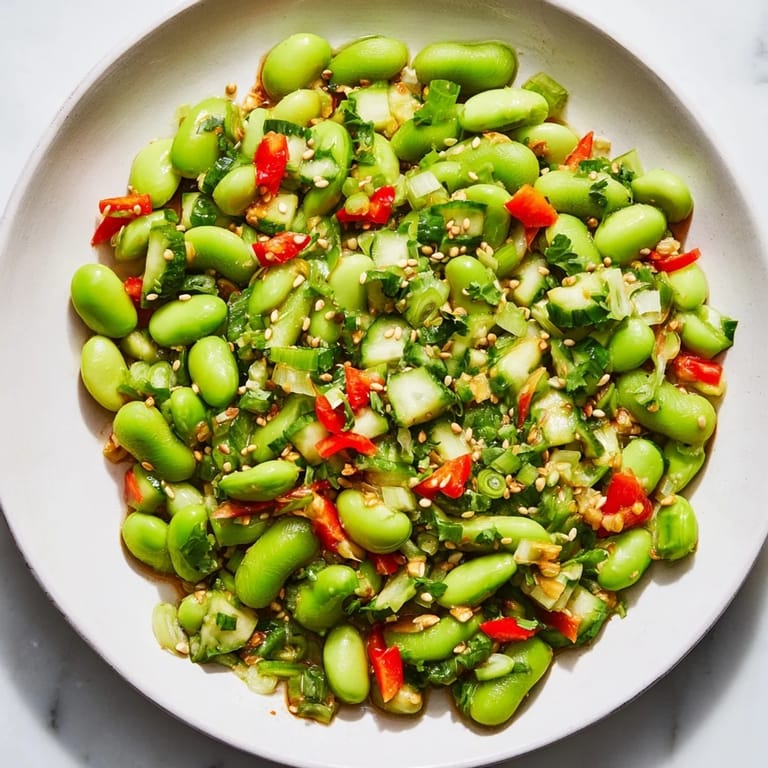
- Sprinkle the extra sesame seeds and cilantro on top if you're using them, then let the salad sit for at least thirty minutes before serving if you can manage it. The flavors will deepen and marry in a way they don't right away.
 Pin
Pin My favorite moment with this salad came when my five-year-old nephew tried it and asked why the beans tasted like a hug—I still think about that description. Food moments like that remind me why I bother cooking from scratch.
Why This Salad Works Year-Round
Edamame are frozen at peak freshness and available everywhere, which means you're never waiting for a season. In summer it's the perfect cool side to grilled fish; in winter it satisfies that craving for something light and vegetal when everything else feels heavy. The dressing itself is so quick to whisk together that I've made this salad on weeknights when I had barely thirty minutes to get dinner on the table, and it somehow still felt like I'd made something special.
Variations to Keep It Interesting
Once you have the basic structure down, this salad begs for improvisation. I've added shredded carrots for color, swapped snow peas for edamame when I had them on hand, thrown in diced mango for a touch of tropical sweetness, and even added a handful of crushed peanuts for texture. The dressing stays the same but the personality changes completely. A dash of sriracha or red pepper flakes transforms it from delicate to bold, depending on who I'm feeding.
Serving Suggestions and Storage
Serve this salad cold as an appetizer before a larger meal, or pack it into containers for a bento-style lunch that travels well. It keeps in the refrigerator for up to three days, though the vegetables will soften slightly; if you want to prep ahead, keep the dressing separate and toss everything together just before eating. This salad pairs beautifully alongside grilled chicken, fish, or tofu, and it's hearty enough to satisfy as a light vegetarian main course when you add a grain like quinoa or rice on the side.
- Store the dressing separately if you're packing for later so vegetables stay crisp.
- Make extra dressing even if you're not sure you'll need it—it's perfect on grain bowls, roasted vegetables, or as a marinade.
- Bring it to room temperature for about five minutes before serving if it's been chilled overnight; the flavors will taste more vibrant.
 Pin
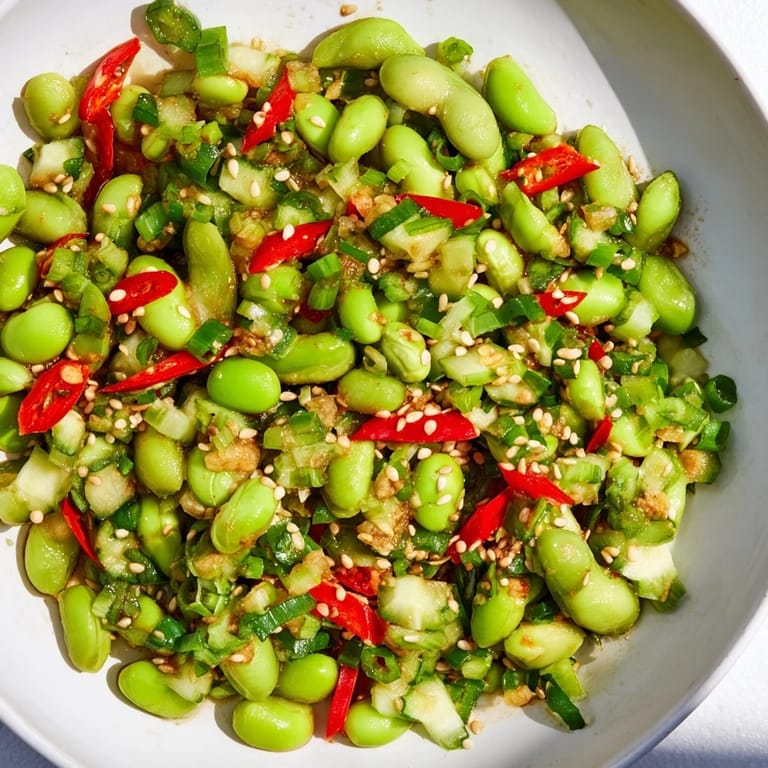
Pin This salad has become my go-to reminder that sometimes the best dishes are the simple ones, where each ingredient gets a moment to shine. Make it once and it'll become part of your regular rotation.
Recipe Q&A
- → How do I cook edamame for this salad?
Boil shelled edamame in salted water for 3-5 minutes until tender, then drain and rinse under cold water to chill.
- → Can I substitute soy sauce for a gluten-free option?
Yes, tamari works well as a gluten-free alternative to soy sauce without compromising flavor.
- → What adds crunch to this dish?
Crisp cucumber and toasted sesame seeds provide satisfying texture and contrast to the tender edamame.
- → How can I make the dressing spicier?
Add a pinch of red pepper flakes or a splash of sriracha to the sesame dressing for a mild heat boost.
- → Is it better served chilled or fresh?
While it can be served immediately, chilling for 30 minutes allows flavors to meld and enhances the freshness.
- → What dishes pair well with this salad?
It complements grilled fish or can be part of a bento-style lunch offering a fresh, light side.