 Pin
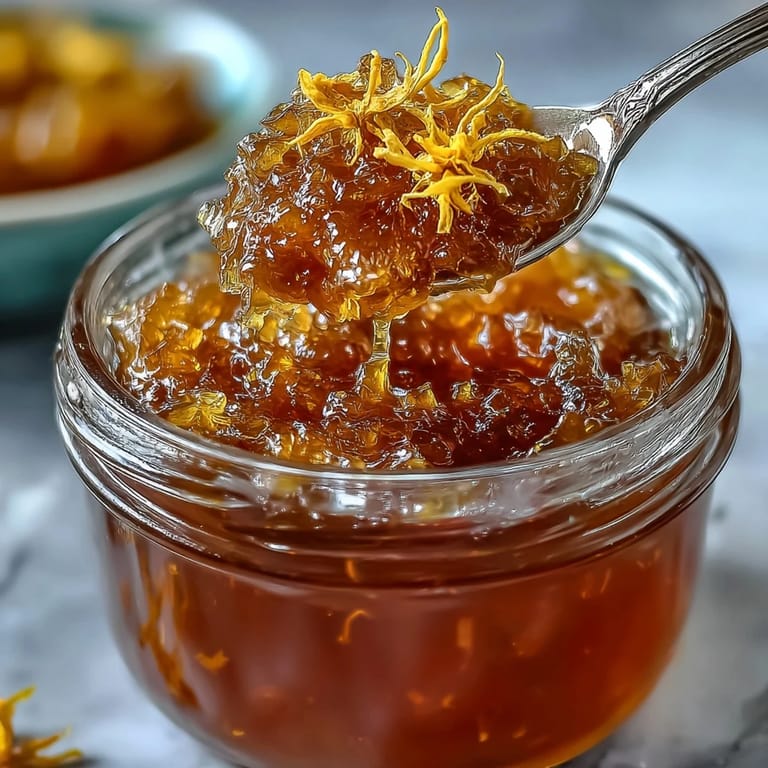
Pin My neighbor knocked on my kitchen door one spring morning with a basket overflowing with dandelion blossoms, their yellow faces still wet with dew. She'd spent the early hours foraging in her pesticide-free yard and wanted to know if I could turn them into something special. That's when I discovered dandelion jelly, a recipe that felt like capturing bottled sunshine. The first batch taught me that patience and gentle handling transform these humble wildflowers into something unexpectedly elegant and floral.
I'll never forget serving this jelly at a brunch last May, watching my sister's face light up as she spread it on warm toast and tasted it for the first time. She asked for the recipe immediately, then the next week told me she'd foraged her own dandelions and made three jars. Now every spring, we compare notes on whose batch is more floral, whose color is clearer, and it's become our own little tradition.
Ingredients
- Dandelion petals (2 cups, yellow parts only, tightly packed): These are your star ingredient, so source them from areas you know are pesticide-free, like your own yard or a trusted friend's garden—never from roadsides or treated lawns.
- Water (4 cups): Plain tap water works fine, but filtered water gives you a slightly cleaner, clearer final jelly.
- Lemon juice (2 tablespoons, freshly squeezed): Fresh lemon brightens the floral notes and helps the jelly set properly by adding natural pectin and acidity.
- Powdered fruit pectin (1 package, 1.75 oz): This is what turns your infusion into actual jelly rather than a syrup, so don't skip it.
- Granulated sugar (4 cups): This preserves the jelly and brings out the subtle sweetness of the dandelions; feel free to reduce slightly if you prefer less sweetness.
Tired of Takeout? 🥡
Get 10 meals you can make faster than delivery arrives. Seriously.
One email. No spam. Unsubscribe anytime.
Instructions
- Harvest and clean your petals:
- Pick only the bright yellow petals, leaving behind all the green sepals and stems because they're bitter and will ruin the delicate flavor. Rinse them gently under cool water to shake off any insects, then pat dry with a clean cloth.
- Steep the infusion:
- Bring your petals and water to a boil, then lower the heat to a gentle simmer for just 5 minutes—you're not trying to cook them, just start releasing their color and flavor. Remove from heat, cover the pot with a lid or cloth, and let it sit undisturbed for 4 hours, or overnight if you want a more intensely floral taste.
- Strain with patience:
- Pour everything through a fine mesh sieve lined with cheesecloth, letting it drip naturally without forcing it—this keeps your jelly clear and sparkling. You should end up with about 3½ to 4 cups of golden liquid that smells unmistakably like spring.
- Combine and heat:
- Pour your strained infusion into a large pot, add the fresh lemon juice and pectin, and stir well to dissolve the pectin completely. Bring it to a rolling boil over high heat, stirring frequently so nothing sticks to the bottom.
- Add sugar and boil hard:
- Dump all the sugar in at once and stir constantly until it dissolves, then let it boil hard—this isn't a gentle simmer—for 1 to 2 minutes until you reach the setting point at 220°F. You'll see the mixture suddenly become glossy and thick, and that's your signal to stop.
- Skim and jar:
- Remove from heat immediately and skim off any foam that's gathered on top with a spoon. Working quickly while it's still hot, ladle the jelly into sterilized jars, leaving ¼-inch headspace, then wipe the rims clean and seal with lids.
- Process and cool:
- Place your sealed jars in a boiling water bath for 10 minutes to ensure they seal properly, then lift them out carefully and set them on a towel to cool completely undisturbed for at least 12 hours. Once cool, press the center of each lid—if it doesn't pop back, you've got a good seal.
 Pin
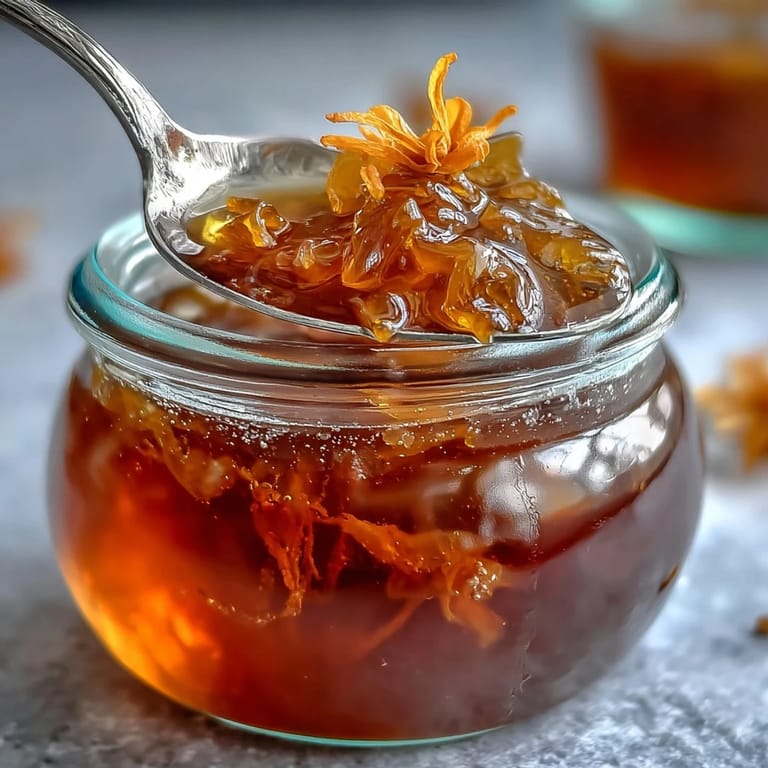
Pin Last spring, I gifted a jar of this jelly to my mother-in-law, who is notoriously hard to impress in the kitchen. A week later, she called me asking if I could make ten jars for her book club gift exchange. I felt like I'd discovered something secret and shared it, and now it's become her signature thank-you gift.
The Magic of Foraging Season
There's something almost meditative about walking through a yard in early spring, basket in hand, hunting for those perfect dandelion blooms. They're often overlooked because dandelions are weeds in most people's eyes, but that's exactly what makes foraging them so rewarding. When you transform something so ordinary into something precious, you start seeing your yard—and spring itself—differently.
Flavor Variations Worth Trying
Once you've made the basic recipe once, you'll start thinking of ways to play with it. Orange zest stirred in with the lemon juice adds a sunny citrus note that plays beautifully with the florals, while a whisper of rose water stirred in after cooking (not before, or it evaporates) makes it taste almost ethereal. I've even experimented with adding a vanilla bean split lengthwise during the steeping stage, which gives a subtle warmth without overshadowing the dandelion's delicate character.
Serving Suggestions and Storage
Dandelion jelly shines on buttered toast and warm scones, but it's also stunning as a glaze brushed over a plain cake while still warm, or swirled into Greek yogurt for breakfast. Store your sealed jars in a cool, dark cupboard where they'll keep for up to a year, though honestly, you'll have eaten them long before then. If you open a jar and it doesn't quite set—which happens sometimes—don't panic; just use it as a syrup over ice cream or pancakes instead.
- Spread it thick on fresh croissants with good butter for an instant fancy breakfast.
- Pair it with sharp cheddar or tangy chèvre on a cheese board for a surprising sweet-floral contrast.
- Drizzle it over vanilla panna cotta or whipped cream for a spring dessert that looks deceptively simple.
 Pin
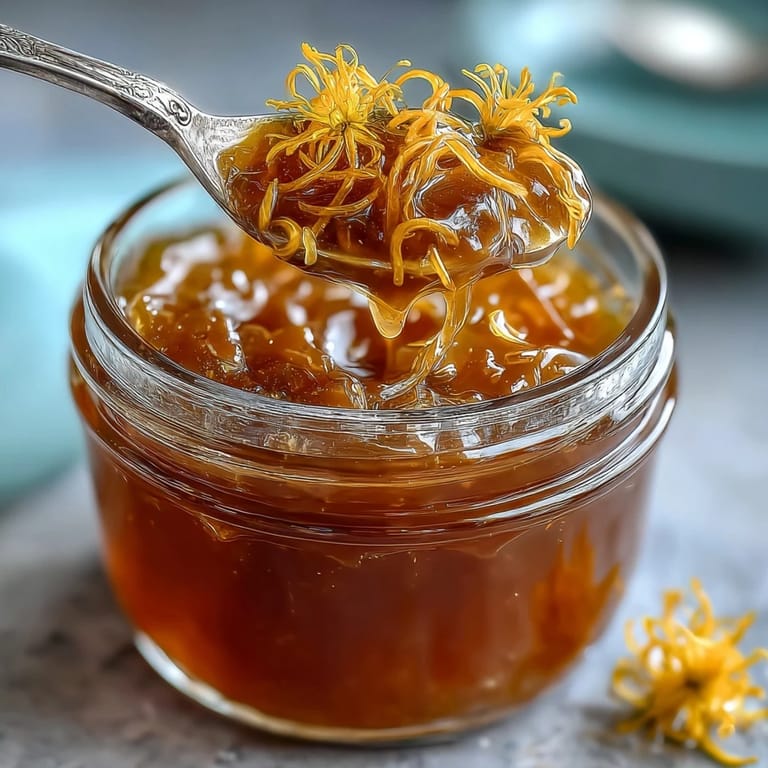
Pin Making dandelion jelly has taught me that the best recipes often come from paying attention to what's growing wild around you, and taking the time to turn it into something worth sharing. Every jar is a small act of patience and care that tastes like spring, no matter what time of year you open it.
Recipe Q&A
- → How do you prepare dandelion petals for this spread?
Remove all green parts like sepals and stems to prevent bitterness, then rinse the yellow petals gently to remove debris or insects.
- → Why is steeping necessary in this method?
Steeping allows the petals to infuse their delicate floral flavor into the water, deepening the essence of the spread over several hours.
- → What role does lemon juice play?
Lemon juice adds brightness and helps balance sweetness while aiding the thickening process with fruit pectin.
- → Can sugar levels be adjusted in this preparation?
Yes, sugar can be reduced slightly and low-sugar pectin used for a less sweet result without compromising texture.
- → What are recommended serving suggestions?
This floral spread pairs beautifully with toasted bread, scones, pancakes, or can be used as a glaze on desserts.