 Pin
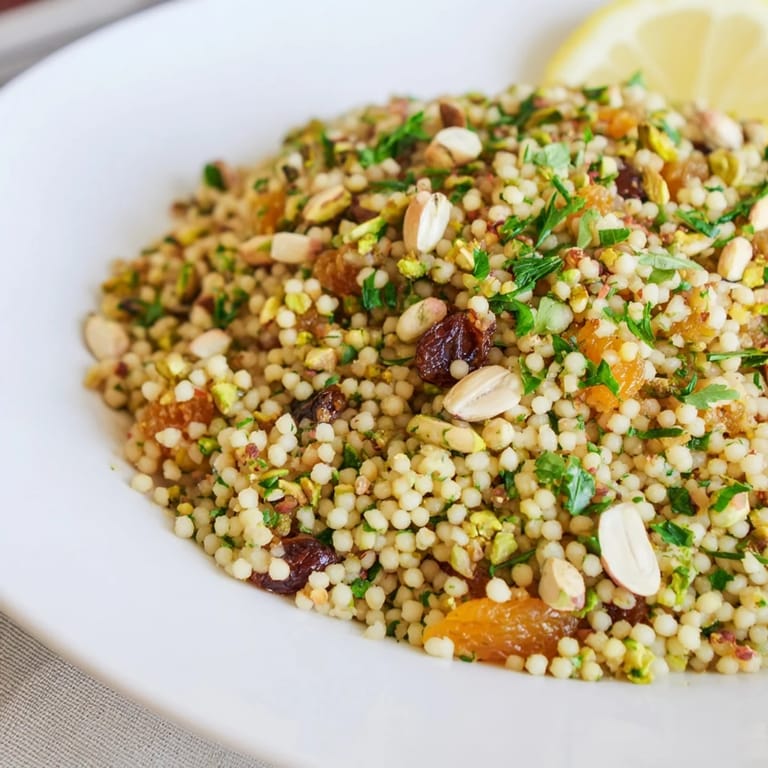
Pin I discovered this couscous pilaf on a quiet Tuesday afternoon when my neighbor brought over a container from her family's Moroccan kitchen. The moment I opened it, the warmth of cinnamon and cumin hit me, and I knew I had to learn how to make it myself. What started as a simple side dish became something I'd make whenever I wanted to feel transported—no passport required, just a saucepan and a handful of spices.
The first time I made this for guests, my kitchen smelled so incredible that people were asking what I was cooking before they even walked in the door. I served it alongside roasted chicken, and watching everyone go back for seconds told me I'd gotten something right. Now it's become my go-to when I want to impress without stress.
Ingredients
- Couscous: This tiny pasta absorbs flavor beautifully—don't skip the step of letting it rest after the broth is poured, or you'll end up with mushy clumps instead of fluffy grains.
- Vegetable or chicken broth: Homemade tastes best, but quality store-bought works just fine; it's the foundation for everything else.
- Dried apricots and raisins: They plump up in the hot broth and add natural sweetness that balances the spices—choose the softest ones you can find.
- Almonds and pistachios: Toast them yourself if you have time; the difference between raw and toasted is the difference between okay and unforgettable.
- Olive oil: Use something decent—it's one of the few ingredients you taste directly.
- Onion and garlic: The aromatic base that makes everything smell like home.
- Cumin, cinnamon, coriander, and turmeric: These four spices are the soul of the dish; they need to bloom in hot oil to release their fullest flavor.
- Fresh parsley and mint: Don't skip these—they brighten up the whole thing and add a freshness that dried herbs can't deliver.
Tired of Takeout? 🥡
Get 10 meals you can make faster than delivery arrives. Seriously.
One email. No spam. Unsubscribe anytime.
Instructions
- Bloom your aromatics:
- Heat the olive oil and let the onion soften slowly, about 2–3 minutes. You want it translucent and sweet, not rushed or brown. Add the garlic and give it just 30 seconds—any longer and it turns bitter.
- Wake up the spices:
- Stir in all the spices and toast them for about 30 seconds until the whole saucepan smells like a spice market. This step sounds small, but it's where the magic happens.
- Coat the dried fruit:
- Add the apricots and raisins and stir them into the spiced oil so every piece gets coated. This helps them stay distinct instead of clumping together later.
- Bring the broth to a boil:
- Pour in the broth and let it come to a full boil so the heat is ready to do its work. You'll see steam rising and smell that fragrant warmth intensify.
- Finish with couscous:
- Remove from heat, stir in the couscous, cover tightly, and walk away for 5 minutes. Resist the urge to peek; the steam is doing the work of cooking without any fussiness.
- Fluff and fold:
- Use a fork to gently break up any clumps, then carefully fold in the nuts and fresh herbs so they stay whole and visible. You want texture and color in every bite.
- Taste and adjust:
- Add more salt or a squeeze of lemon if it needs brightness. Serve it warm, with extra nuts scattered on top and lemon wedges on the side for anyone who wants more zip.
 Pin
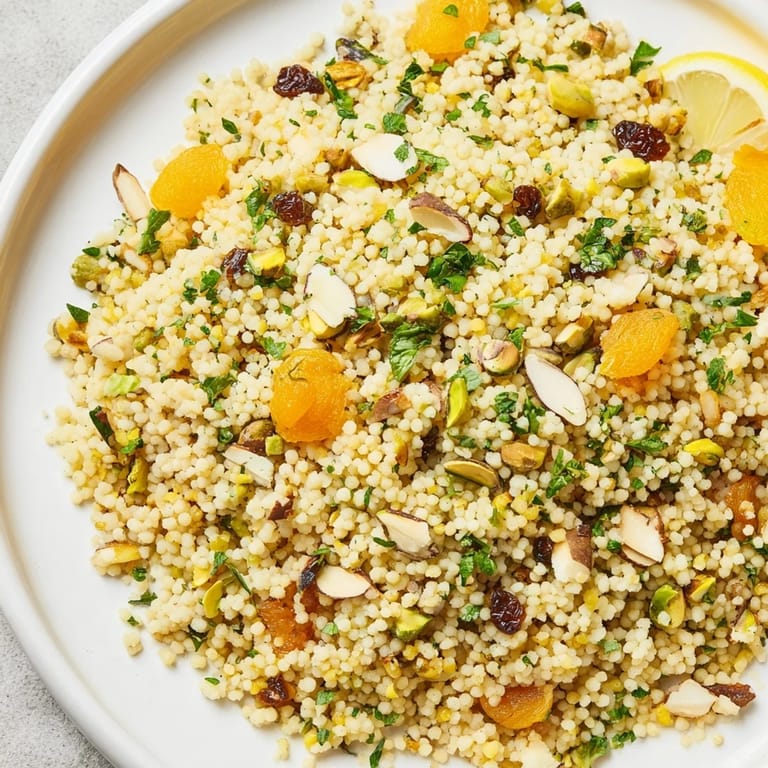
Pin There was a moment during a dinner party when someone asked for the recipe, and I realized this simple pilaf had become something people wanted to recreate at home. That's when I knew it wasn't just about the ingredients—it was about the warmth of sharing something that tastes both exotic and comforting.
Playing with Flavor
Once you understand how this pilaf works, you can start improvising with dried fruits based on what's in your pantry. I've tried dried cranberries for a tartness that cuts through the richness, dates for a deeper sweetness, and even dried cherries for something unexpected. The spice blend is flexible too—if you love warmth, add a pinch of ground ginger or a tiny bit of cayenne for heat.
Making It a Meal
This pilaf shines as a side, but it can absolutely stand on its own as a light lunch, especially with a simple green salad and some grilled vegetables alongside. I've also stirred in cooked chickpeas for protein and served it in lettuce wraps for something more substantial. Some nights I warm it gently with a drizzle of olive oil and a handful of extra herbs, and it feels brand new.
Make It Your Own
The beauty of this recipe is that it invites you to adjust it based on what you have and what you love. Stick to the core technique—blooming the spices, letting the couscous rest—and everything else is open to your creativity.
- Double the amount if you're feeding a crowd, and it scales perfectly.
- For a vegan version, stick to vegetable broth and you're already there.
- Make it ahead and reheat gently with a splash of broth if needed; it keeps beautifully for a few days.
 Pin
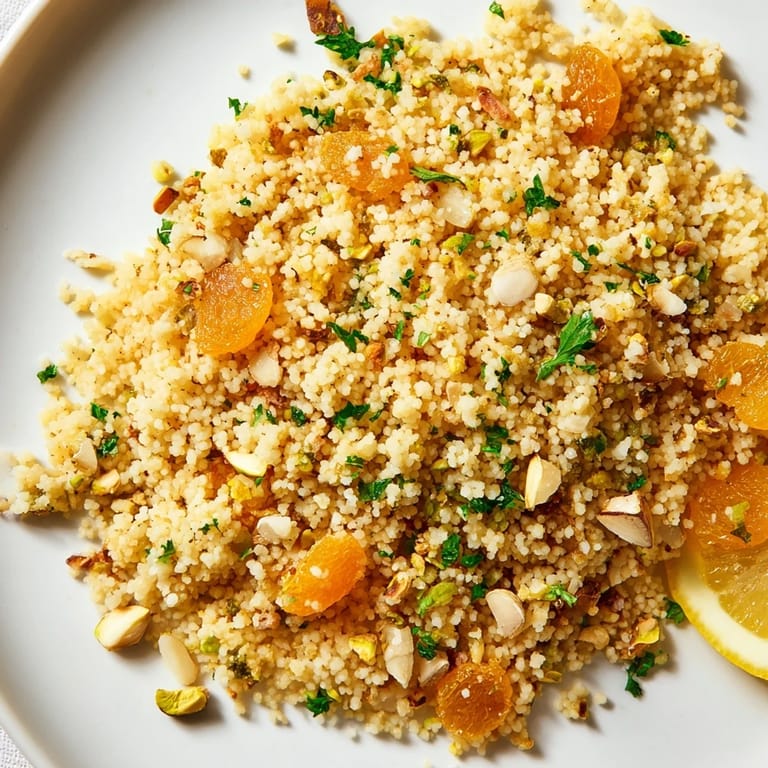
Pin This couscous pilaf has become my answer to the question of what to make when I want something that feels special but isn't complicated. Every time I make it, someone asks for the recipe.
Recipe Q&A
- → What grains are used in this dish?
Couscous is the primary grain, soaked in vegetable broth to absorb the savory flavors.
- → Which spices enhance the pilaf's flavor?
Ground cumin, cinnamon, coriander, turmeric, black pepper, and salt create a warm, aromatic blend.
- → Can I substitute the dried fruits?
Yes, dried cranberries, cherries, or dates can replace apricots and raisins to suit your taste.
- → How are the nuts prepared for this dish?
Almonds and pistachios are toasted and roughly chopped, then gently folded in for added texture and flavor.
- → Is this suitable for a vegan diet?
Using vegetable broth instead of chicken broth makes this dish entirely plant-based.
- → How long does it take to cook?
Preparation and cooking together take about 30 minutes, making it a quick and easy dish.