 Pin
Pin There's something about coconut rice that transports me instantly to a humid afternoon in Bangkok, watching an elderly vendor stir a massive pot of jasmine rice and coconut milk with practiced, hypnotic movements. I didn't know her name, but she let me hover nearby while she worked, and the steam rising from that pot smelled like everything warm and tropical at once. Years later, I finally figured out how to recreate that exact creamy, fragrant texture in my own kitchen, and now it's become my go-to when I need dessert that feels like comfort wrapped in a bowl.
My partner once asked me what I was making when the kitchen filled with that particular coconut-vanilla smell, and I honestly couldn't find the words to explain why something so simple could smell so expensive. She tasted a spoonful straight from the pot and immediately understood—no explanation needed. That's when I knew this recipe had to stick around.
Ingredients
- Jasmine rice: Use 1 cup rinsed—the rinsing really matters because it helps the grains stay separate and lets them absorb the coconut milk cleanly without getting gummy.
- Coconut milk: Full-fat is non-negotiable here; it's what gives you that luxurious, slightly glossy finish that makes people think you spent all day on this.
- Water: 1 cup balances the richness so the rice doesn't become cloying, though you can substitute more coconut milk if you're feeling indulgent.
- Granulated sugar: ⅓ cup is the right amount for a gentle sweetness that doesn't mask the coconut's natural flavor.
- Salt: ¼ teaspoon feels tiny but it's the secret that makes everything taste more itself, not salty but amplified.
- Vanilla extract: 1 teaspoon stirs in at the end and adds this barely-there warmth that ties the whole thing together.
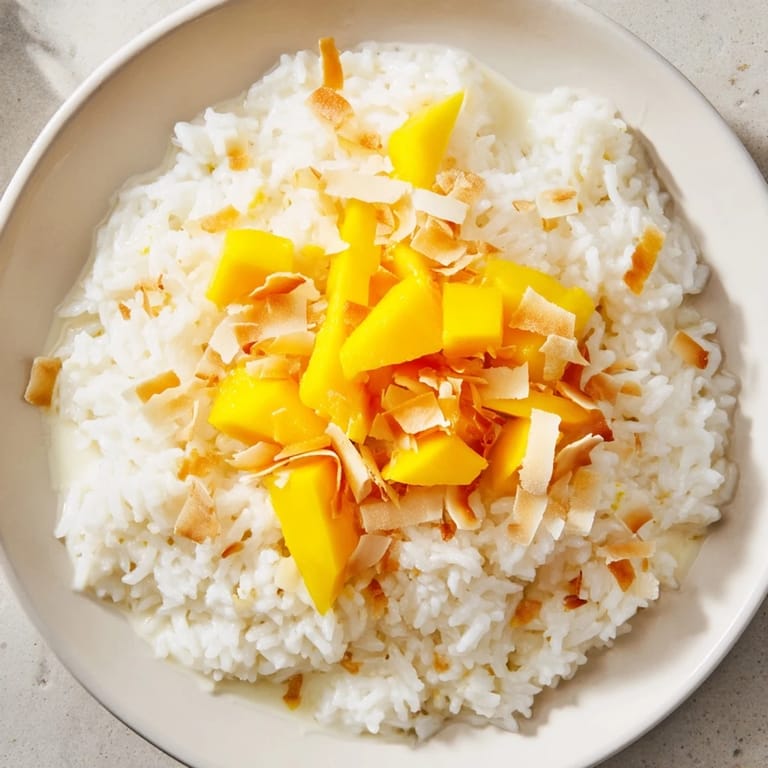
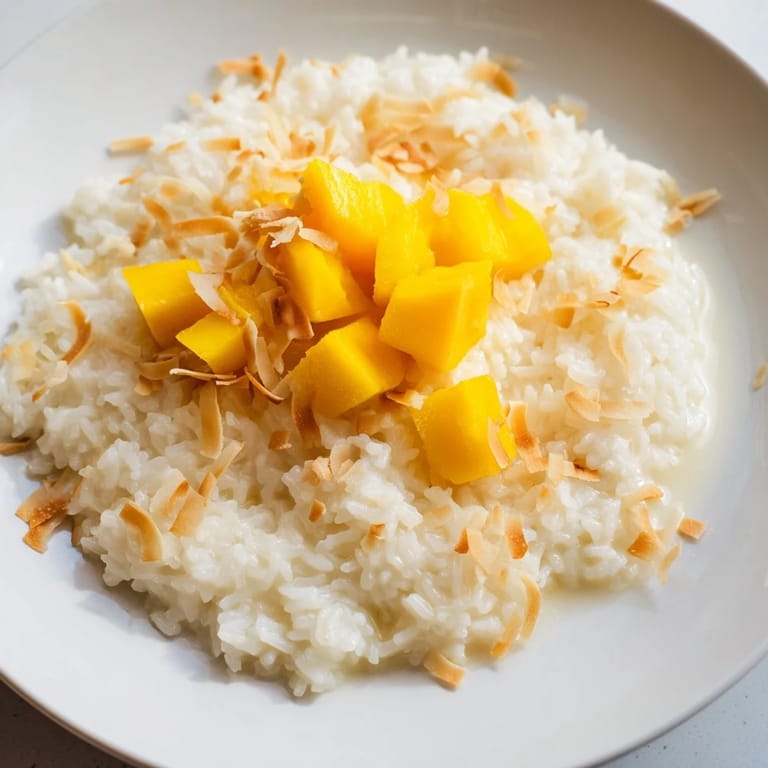
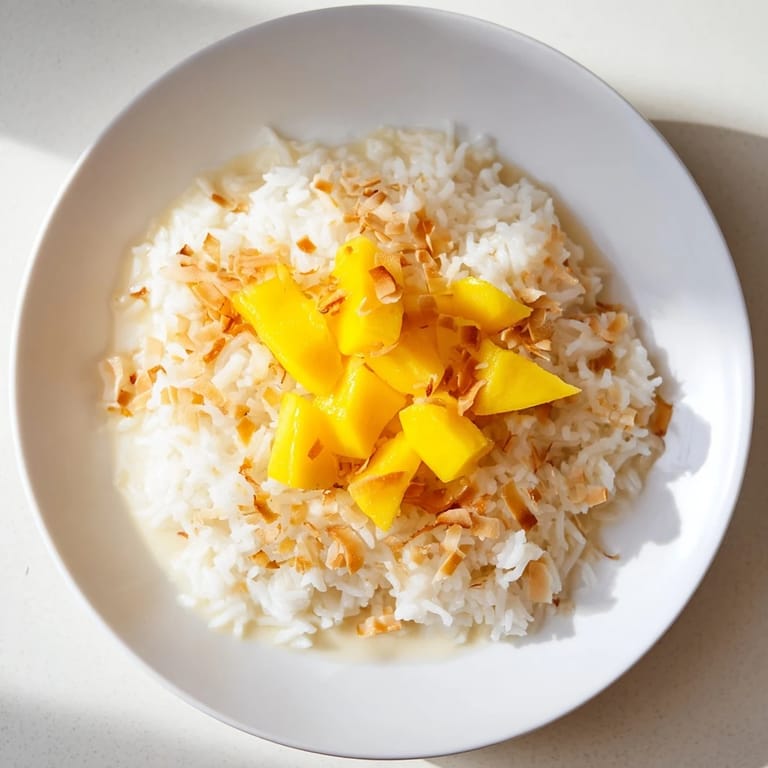
- Toasted coconut flakes and fresh fruit: Optional garnishes that transform a bowl of rice into something that looks intentional and special.
Tired of Takeout? 🥡
Get 10 meals you can make faster than delivery arrives. Seriously.
One email. No spam. Unsubscribe anytime.
Instructions
- Combine and observe:
- In a medium saucepan, mix your rinsed jasmine rice with the coconut milk, water, sugar, and salt. As you stir, you'll see the sugar starting to dissolve and the mixture turning creamy even before heat touches it.
- Bring to life:
- Place the saucepan over medium heat and let it come to a gentle boil—you're looking for small bubbles breaking the surface, not a rolling boil that'll make everything stick. This takes about 3 to 4 minutes.
- Let it whisper:
- Once it's boiling, drop the heat to low, cover with a lid, and let it simmer for 18 to 20 minutes. You'll hear a gentle hiss underneath, and the kitchen will smell increasingly like a tropical dream.
- The quiet test:
- After 18 minutes, peek under the lid—the liquid should be mostly absorbed and the rice tender to the bite. If there's still visible liquid pooling, give it another minute or two.
- Finish with vanilla:
- Remove from heat, stir in the vanilla extract while everything's still steaming, and let it sit covered for 5 minutes. This resting time lets the rice relax and absorb any last bits of liquid.
- Fluff and serve:
- Use a fork to gently separate the grains—you'll see them transform from slightly clumped to ethereal and separate. Serve warm or at room temperature, topped with toasted coconut and fruit if you like.
 Pin
Pin The first time my sister brought her kids over and one of them asked for seconds of what she thought was a fancy restaurant dessert, I realized this recipe had quietly become something that makes people feel taken care of. That's when humble weeknight dessert becomes something worth repeating.
The Coconut Milk Question
Full-fat canned coconut milk sits on the shelf looking the same as the lite version, but they're entirely different in the pot. The full-fat stuff has this beautiful density that coats your mouth and makes the rice taste silky, while lite milk gives you something thin and watery that no amount of cooking can fix. I learned this the hard way by trying to be healthy, and the difference was so stark I never made that mistake again. If you're really concerned about richness, you can use three-quarters coconut milk and one-quarter water instead, but don't go lighter than that.
Playing With Temperature and Texture
This rice is genuinely good either way—warm and creamy right after cooking, or cold the next morning when it somehow tastes even more indulgent, like a pudding. Some days I serve it still steaming in a bowl, other times I chill it and it becomes this almost custard-like thing that's somehow more satisfying. The vanilla becomes quieter when cold and the coconut flavor comes forward more, which is its own kind of magic. You can even stir in a spoonful of thick coconut cream right before eating if you want to feel fancy.
Making It Your Own
The beauty of this recipe is how willingly it accepts your changes without falling apart. I've made it with brown sugar instead of white, added a pinch of cardamom or a strip of lime zest while it cooks, layered it with fruit halfway through serving, or even stirred in a little coconut yogurt at the very end for extra richness. The foundation is so solid that you can experiment without fear. None of these changes fundamentally break the dish—they just shift the mood a little.
- If you want it richer, swap some water for more coconut milk or stir in cream right before serving.
- If you like fruit, add mango, pineapple, or even strawberries while the rice is still warm so they soften slightly.
- If you're serving it cold, let it sit in the fridge uncovered for the first hour so it doesn't get a condensation crust.
 Pin
Pin This recipe reminds me why I cook in the first place—not to impress anyone, but because a bowl of creamy, fragrant rice can make an ordinary evening feel a little bit like a small, sweet escape. That's really all you need.
Recipe Q&A
- → What type of rice works best for this dish?
Jasmine rice is ideal for its fragrant aroma and soft texture, which complements the creamy coconut milk perfectly.
- → Can I use all coconut milk instead of mixing with water?
Yes, using full coconut milk exclusively will enhance the richness and creaminess of the dish.
- → How should I adjust sweetness levels?
Sweetness can be modified by increasing or reducing granulated sugar according to personal preference.
- → What are good garnish options for this dish?
Toasted coconut flakes and chopped fresh tropical fruits like mango or pineapple add texture and bright flavors.
- → Is this suitable for gluten-free and vegetarian diets?
Yes, the dish is naturally gluten-free and vegetarian, making it accessible to many dietary needs.