 Pin
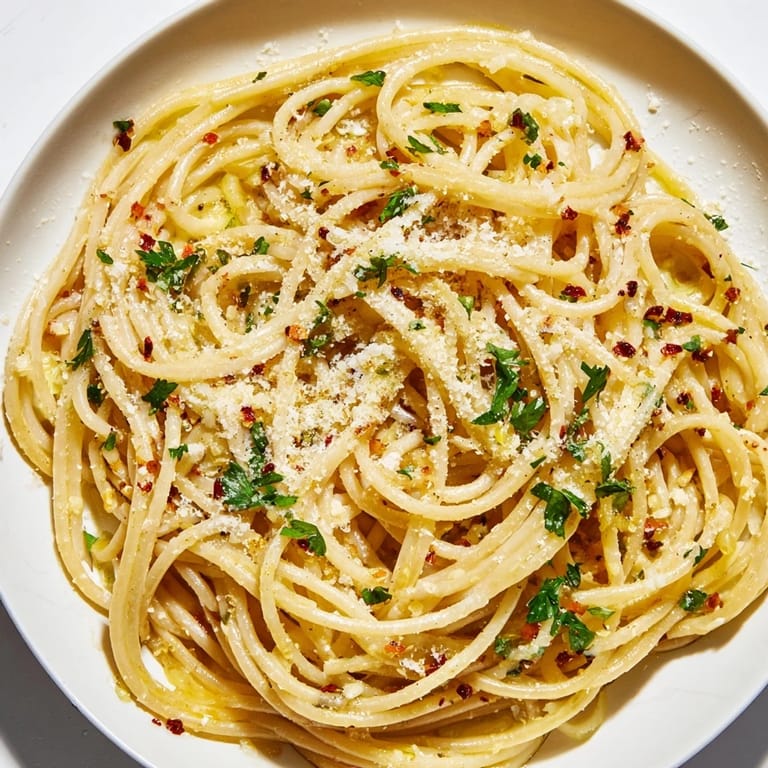
Pin The first time I made aglio e olio, I was standing in a tiny Roman kitchen with a friend who kept insisting that the best dishes don't need much—just good ingredients and patience. Ten minutes later, I tasted what she meant: spaghetti clinging to silky, fragrant oil infused with garlic that had turned golden without a hint of bitterness. Now whenever I need dinner fast but don't want it to feel rushed, this is what I reach for.
I made this for my neighbor one evening when she stopped by stressed about feeding her kids something that wasn't from a box, and watching her taste it—that quiet moment of relief—reminded me why simple food can matter more than complicated food ever could.
Ingredients
- Dried spaghetti: 200 g (7 oz)—use a good quality bronze-cut pasta if you can find it, the texture grabs the oil so much better than the glossy stuff.
- Extra-virgin olive oil: 4 tbsp—this is where the whole dish lives, so don't go cheap here, and taste it before you buy if you get the chance.
- Garlic cloves: 4 large, thinly sliced—thinness matters because it cooks faster and distributes better through the pasta.
- Red chili flakes: 1 tsp adjusted to taste—start with less if you're unsure, you can always add more heat but you can't take it back.
- Fresh parsley: 2 tbsp chopped—the green brightness at the end feels like a small surprise after all that richness.
- Freshly ground black pepper: to taste—grind it yourself, the difference is genuinely noticeable.
- Sea salt: to taste—for both the pasta water and the final seasoning.
- Parmesan cheese: 2 tbsp freshly grated, optional—if you use it, grate it right before serving or it'll clump up in the heat.
Tired of Takeout? 🥡
Get 10 meals you can make faster than delivery arrives. Seriously.
One email. No spam. Unsubscribe anytime.
Instructions
- Get your water going:
- Fill a large pot with water, salt it generously—it should taste like the sea—and bring it to a rolling boil. This takes a few minutes but don't skip it; you need that aggressive heat.
- Cook the spaghetti:
- Add the pasta and stir it once so nothing sticks. Cook until al dente, usually about 8 minutes depending on your brand, then before you drain it, scoop out half a cup of that starchy water and set it aside—this liquid is like edible glue that brings everything together.
- Start the garlic oil:
- While the pasta finishes, heat your olive oil in a large skillet over medium-low heat. The temperature here is everything: too hot and the garlic burns and tastes bitter, too cool and it never gets fragrant.
- Toast the garlic gently:
- Add your sliced garlic and stir it often, listening for a gentle sizzle rather than a harsh crackle. After about a minute, you'll smell it transform from raw to warm and golden—that's when you know you're close to done, usually around 1 to 2 minutes total.
- Wake it up with heat:
- Sprinkle in the chili flakes and stir for just 10 seconds to bloom them in the oil. Don't linger here or they'll go from warm to burnt.
- Bring it all together:
- Drain your spaghetti and add it directly to the skillet with the garlic oil. Toss everything together, and if it looks too dry, splash in a little of that reserved pasta water—just enough to make everything silky and loose, not wet.
- Finish and serve:
- Season with salt and pepper, toss in the fresh parsley, and move the whole thing to your plates right away. If you're using Parmesan, grate it over the top just before eating.
 Pin
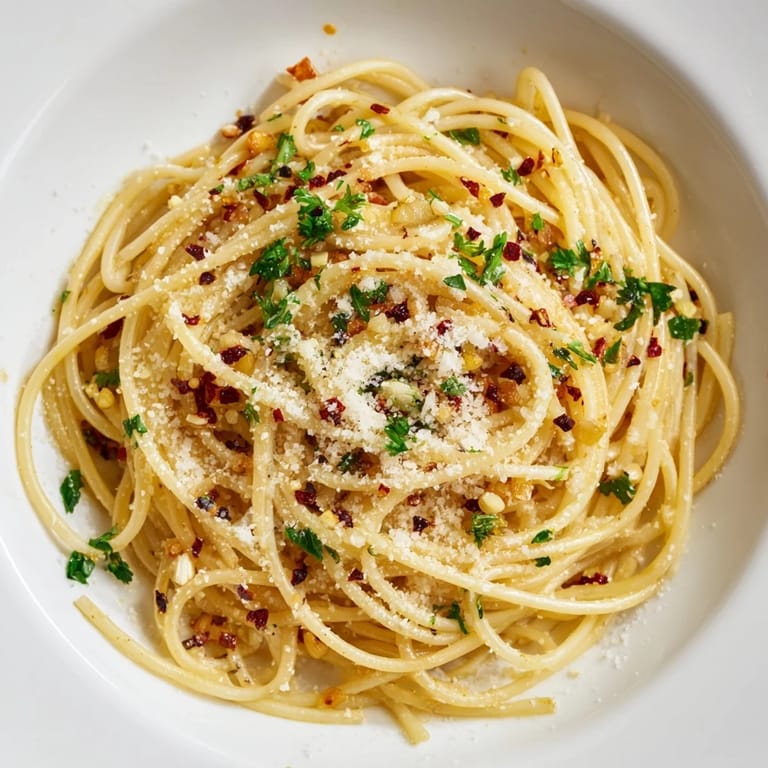
Pin Last spring my partner came home exhausted and I made this without asking, and when he ate it standing at the counter with his eyes closed, I realized that sometimes the fastest food is the best kind because it lets you rest instead of keeping you busy.
The Heat Question
Red chili flakes are forgiving if you approach them with respect—start with half a teaspoon and taste, then add more if you want the heat to announce itself. Some nights I use almost nothing because the focus is the garlic and the oil, other nights I go heavy because I want that warmth rolling through every bite. There's no wrong answer, just what you're in the mood for.
Why This Works So Fast
Most pasta dishes build layers of flavor over time, but aglio e olio does something different—it relies on the quality of three ingredients working in perfect simplicity. The heat, the timing, and the technique do all the work, which is why it's less forgiving than something dumped in a pot and left alone, but also why it tastes so clean and immediate. Once you've made it a few times and stopped watching the clock, it becomes automatic.
Building Your Own Variations
I've added things to this over time—a squeeze of fresh lemon juice right at the end brightens everything, sometimes a handful of toasted breadcrumbs on top adds texture, and in winter I've stirred in white beans to make it more substantial. The base is so strong that it accepts additions without losing its character, but honestly, on tired nights when I need food fast, the plain version is what keeps calling me back.
- A squeeze of lemon juice stirred in right before serving cuts through the richness and feels like an entirely different dish.
- If you're making this vegan, the pasta water becomes even more important because there's no Parmesan to add richness.
- Breadcrumbs toasted in extra olive oil scattered on top add a textural surprise that feels almost fancy without any real effort.
 Pin
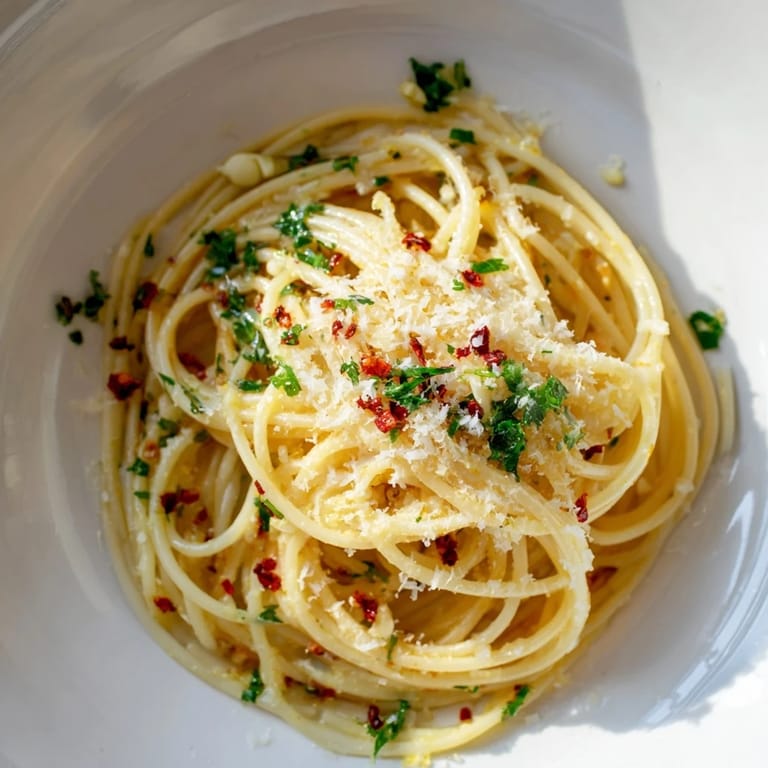
Pin This is the kind of dish that reminds you that cooking doesn't have to be complicated to be worth your time. Make it when you're hungry and tired, and let ten minutes of heat and oil turn three humble ingredients into something that tastes like you've been working on it all day.
Recipe Q&A
- → How do I prevent garlic from burning?
Cook garlic over medium-low heat and stir frequently until it turns golden and fragrant, usually 1–2 minutes, to avoid bitterness.
- → Can I adjust the spiciness of the dish?
Yes, control the heat by adding more or fewer red chili flakes according to your taste preferences.
- → What pasta type works best here?
Traditional dried spaghetti is ideal for this preparation, cooking al dente to hold the flavorful oil sauce.
- → Is it possible to make this gluten-free?
Absolutely. Substitute regular spaghetti with gluten-free pasta to accommodate dietary needs.
- → How can I add freshness to the dish?
Chopped fresh parsley stirred in at the end brightens the dish and complements the garlic and chili flavors beautifully.
- → Can Parmesan cheese be omitted?
Yes, omit or replace Parmesan with a vegan alternative to suit dietary preferences without compromising taste.