 Pin
Pin There's something about the late summer farmers market that always catches me off guard, and it was there I discovered this combination almost by accident. I'd grabbed a bunch of zucchini with no real plan, then spotted those vibrant green pumpkin seeds at a neighboring stall, and suddenly my cart was full of ingredients that felt like they were meant to find each other. What started as a way to use up garden overflow became one of those dishes I find myself making on repeat, especially when I want something that feels both light and deeply satisfying at the same time.
I made this for my friend Maya one evening when she mentioned she was craving something nourishing but couldn't eat dairy, and watching her face light up when she tasted it reminded me why I love cooking like this. She asked for the recipe that same night, and now she texts me pictures of her spiralized zucchini when she's making it, which feels like the highest compliment a recipe can receive.
Ingredients
- Raw pumpkin seeds (pepitas), 1 cup: These are the heart of your pesto, packed with magnesium and a subtle earthiness that anchors the bright basil.
- Fresh basil leaves, 2 cups packed: Don't buy the pre-packaged stuff if you can help it, as fresh basil from a farmers market or your garden makes a noticeable difference in brightness.
- Garlic, 2 cloves: Mince them fine so they disappear into the pesto rather than shouting over everything else.
- Extra-virgin olive oil, 1/3 cup: This is where quality actually matters, as it's the backbone that carries all the flavors.
- Lemon juice, 2 tablespoons: Fresh squeezed is truly worth the few seconds it takes, as bottled juice tastes flat by comparison.
- Nutritional yeast, 2 tablespoons: This gives the pesto a subtle cheesy depth without any dairy at all, a secret weapon I rely on constantly.
- Sea salt and freshly ground black pepper: These aren't afterthoughts, they're the final touches that make everything taste like itself.
- Water, 2 to 4 tablespoons: Add this gradually to reach the exact consistency you prefer, as different batches of basil hold moisture differently.
- Medium zucchini, 4: Choose ones that feel firm and weigh about the same so they cook evenly if you decide to warm them.
- Cherry tomatoes, 1/2 cup halved: These are optional but they add little bursts of sweetness that balance the earthiness perfectly.
Tired of Takeout? 🥡
Get 10 meals you can make faster than delivery arrives. Seriously.
One email. No spam. Unsubscribe anytime.
Instructions
- Pulse your pesto together:
- Put the pumpkin seeds, basil, garlic, olive oil, lemon juice, nutritional yeast, salt, and pepper into your food processor and pulse until it looks like a thick, coarse paste with some texture still visible. Add water one tablespoon at a time while pulsing, tasting as you go, until you reach that creamy consistency that coats a spoon but still feels substantial.
- Transform your zucchini:
- Run each zucchini through your spiralizer in long, even strokes, or use a julienne peeler if that's what you have on hand. The goal is ribbons or thin noodles that will pick up the pesto easily without becoming mushy.
- Decide on your temperature:
- If you're serving the noodles raw, pat them dry gently with paper towels to remove excess moisture so the pesto clings properly. For warm noodles, heat a tablespoon of olive oil in a large skillet over medium heat and add the spiralized zucchini, stirring often for just two to three minutes until they're slightly tender but still have a little snap to them.
- Bring it all together:
- Transfer your zucchini noodles to a large bowl and pour that verdant pesto over top, then toss everything gently until every strand is coated in green. Taste and adjust the seasoning if needed, as sometimes the zucchini's water content changes how the salt lands on your palate.
- Plate and serve:
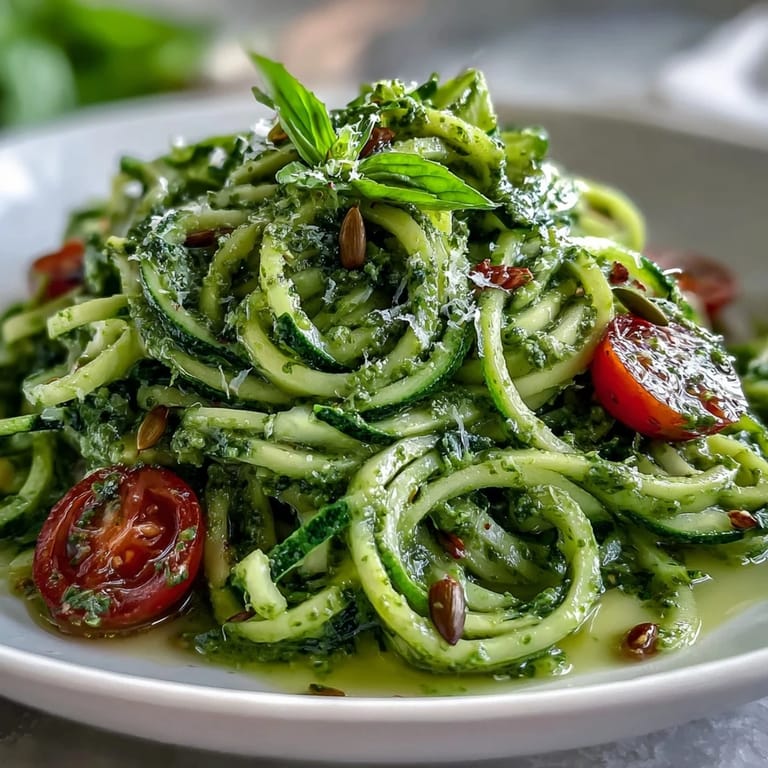
- Divide between plates or bowls and scatter those halved cherry tomatoes and fresh basil leaves on top if you're using them. This dish is best eaten right away while the textures are at their best and the basil's brightness hasn't started to fade.
 Pin
Pin My favorite version of this dish happened on an unexpected evening when I had friends over and realized I had almost nothing in my refrigerator except zucchini and a handful of pantry staples. What could have been an embarrassing moment turned into something everyone asked about afterward, and it taught me that sometimes the best meals come from working with what you actually have rather than waiting for perfect conditions.
Raw Versus Warm, A Choice That Matters
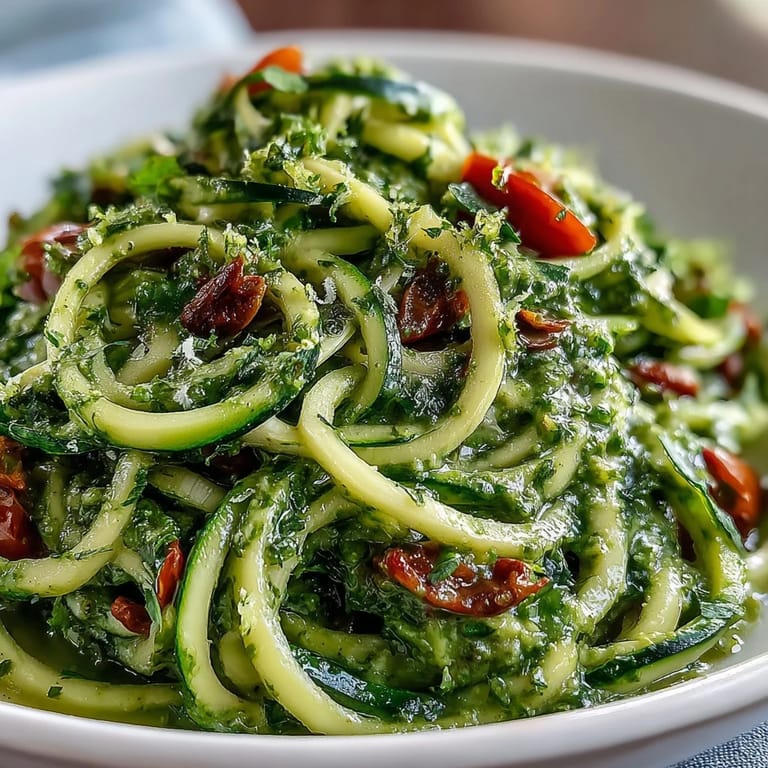
I've learned that the decision between serving this dish cold or warm changes it in surprising ways that go beyond just temperature. The raw version has this crisp, almost snap-back quality that feels refreshing and light, perfect for warm days when your body wants something that won't weigh you down but still satisfies. When you warm the noodles gently, they become silkier and more tender, embracing the pesto like a warm hug, and this version feels right on cooler evenings or when you want something that tastes a bit more indulgent. There's no wrong choice here, just different moods calling for different preparations.
Making It Creamy Without Compromise
The nutritional yeast is honestly what taught me that vegan cooking isn't about deprivation, it's about discovering ingredients that do things dairy never could. That subtle, cheesy undertone it brings makes people pause and ask what's in the pesto, and getting to explain that it's entirely plant-based never gets old. If you want to push the creaminess further, stirring in some mashed avocado right before tossing works beautifully and adds both richness and a subtle sweetness.
Ways to Make This Completely Your Own
Once you understand how this dish is structured, it becomes a template for endless variations depending on what's in your kitchen and what your body's asking for that day. The pesto can swap in sunflower seeds if pumpkin seeds aren't available, or walnuts if you want a different kind of earthiness altogether, and the result will taste delicious even if it's not exactly the same. Think of it less as a rigid recipe and more as a framework where you get to make decisions based on what you have and what you're craving.
- Toss in some cooked chickpeas or white beans if you want extra protein and a heartier texture.
- Top with pomegranate arils or fresh pomegranate seeds if you want bright pops of tart sweetness.
- Swap the basil for fresh arugula or even herbs like dill or tarragon if you're feeling adventurous.
 Pin
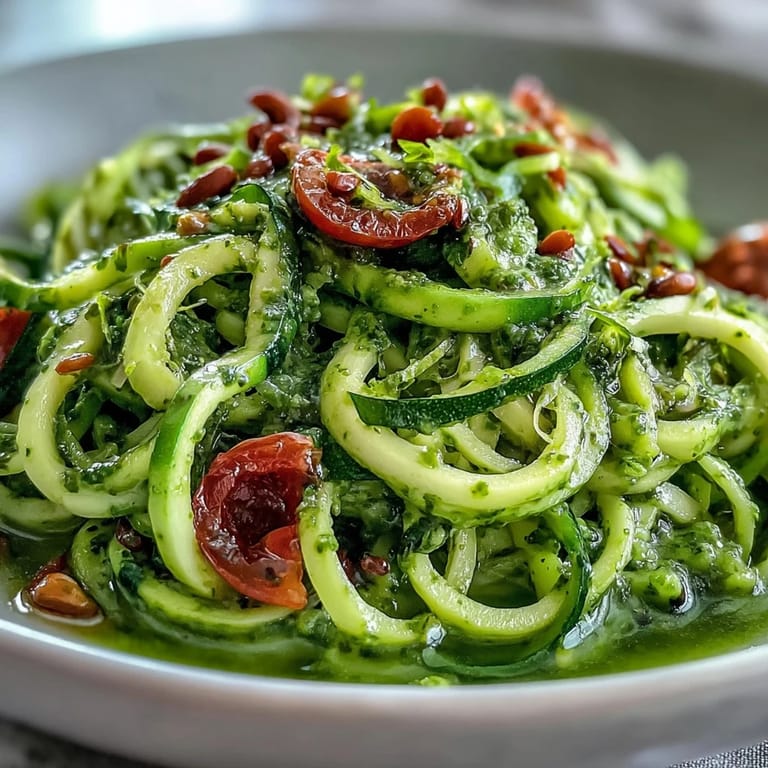
Pin This dish has become my go-to when I want to feed people something that feels special without spending hours in the kitchen, and it never fails to surprise those who think vegan eating means missing out on richness and flavor. It's proof that the most satisfying meals often come from the simplest combinations done with real attention and care.
Recipe Q&A
- → Can I make the pesto ahead of time?
Absolutely. The pumpkin seed pesto keeps well in an airtight container in the refrigerator for up to one week. The flavors often develop and improve after a day or two. You may need to add a splash of water when reheating to restore creaminess.
- → How do I prevent zucchini noodles from getting watery?
Pat spiralized zucchini dry with paper towels before tossing with pesto to remove excess moisture. If serving warm, sauté briefly just until heated through—avoid overcooking as this releases more water and makes noodles soggy.
- → What can I substitute for pumpkin seeds?
Sunflower seeds work beautifully as a direct substitute, offering similar texture and mild flavor. Walnuts provide a richer, earthier taste. Cashews create an even creamier consistency. Adjust quantities to match the original volume.
- → Is this dish served raw or cooked?
Both options work wonderfully. Raw zucchini noodles offer maximum freshness and crunch. For warmer comfort, lightly sauté in olive oil for 2–3 minutes until just tender. The pesto can be served at room temperature or gently warmed.
- → How can I add more protein to this dish?
Toss in cooked chickpeas, white beans, or lentils for plant-based protein. Hemp seeds sprinkled on top add protein and healthy fats. Crumbled tempeh or baked tofu also complement the pesto flavors beautifully while boosting protein content.
- → What tools do I need to make this?
A food processor is essential for smooth pesto. A spiralizer creates perfect noodles, though a julienne peeler works as an alternative. Large mixing bowls and basic kitchen tools complete the setup. No special cooking equipment required.