 Pin
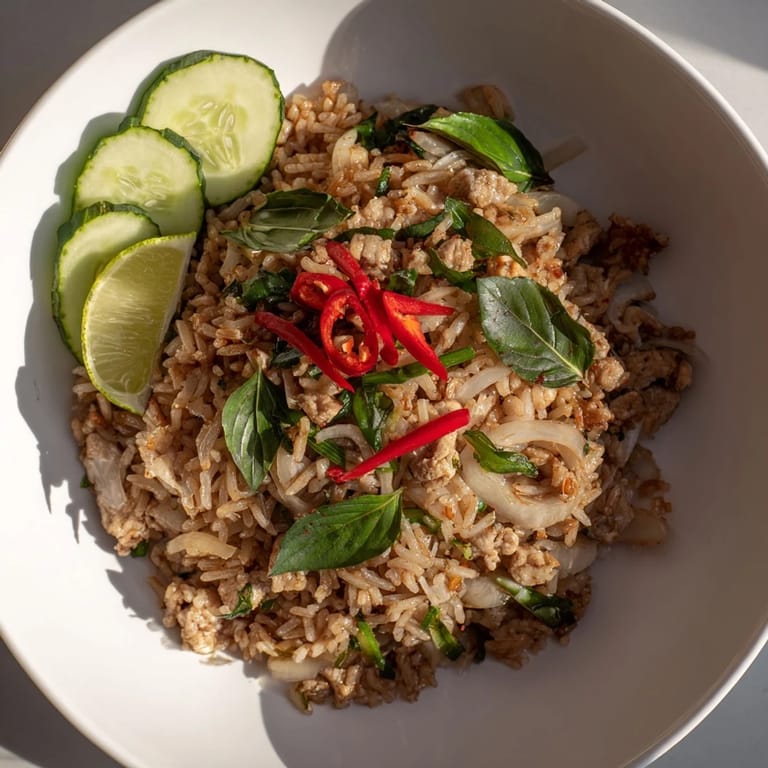
Pin The first time I made Thai basil chicken fried rice was on a sweltering summer evening when the farmer's market had closed early, leaving me with whatever I could find at the corner store. Holy basil caught my eye—green and spiky, smelling like nothing I'd ever crushed between my fingers before. I didn't have a plan, just a wok and curiosity. Twenty minutes later, my kitchen was thick with steam and that impossible smell, and I understood why people in Bangkok eat this for lunch without thinking twice.
I made this for my neighbor who'd just moved in, and she ate the entire serving without speaking—the kind of compliment that matters more than words. When she finally looked up, she asked if I'd learned to cook in Thailand. I hadn't, but in that moment, standing in my small kitchen with the smell of basil still hanging in the air, it felt like I'd traveled somewhere real.
Ingredients
- Chicken thighs or breasts (400g, thinly sliced): Thighs stay tender even when you cook fast, but breasts work fine if that's what you have—just don't slice them too thick or they'll dry out before the rice catches up.
- Jasmine rice (4 cups, day-old): Room-temperature rice from yesterday is worth planning for; freshly cooked rice turns mushy and clumpy no matter how hard you work it.
- Onion (1 medium, finely chopped): The sweetness balances the heat, so don't skip it even if you're in a hurry.
- Garlic (3 cloves, minced): Mince it fine so it disappears into every grain of rice rather than lingering in chunks.
- Thai red chilies (2–3, finely sliced): Start with two and taste as you go; these little peppers pack more personality than their size suggests.
- Holy basil leaves (1 cup): This is where the magic lives—add it at the very end so the heat doesn't steal its bright, peppery flavor.
- Red bell pepper (1 medium, sliced, optional): It adds color and sweetness, but I often skip it when I'm running late and the dish stands on its own.
- Soy sauce (2 tbsp): The backbone that ties everything together without overpowering the basil.
- Oyster sauce (1 tbsp): A small amount gives depth; too much and you lose the delicate balance.
- Fish sauce (1 tbsp): It smells funky in the bottle, but trust it—it's the ingredient that makes people say they can't quite place what makes this taste so good.
- Sugar (1 tsp): A tiny amount rounds out the salty-spicy-savory and keeps the dish from feeling one-dimensional.
- White pepper (½ tsp): It's warmer and less sharp than black pepper, letting other flavors breathe.
- Vegetable oil (2 tbsp): Use something neutral so the basil and chilies stay the star.
Tired of Takeout? 🥡
Get 10 meals you can make faster than delivery arrives. Seriously.
One email. No spam. Unsubscribe anytime.
Instructions
- Heat the wok and build your flavor base:
- Pour the oil into your wok and let it get genuinely hot—you want the surface to shimmer and move. When you add the garlic and chilies, they should sizzle immediately, filling your kitchen with that sharp, green fragrance that tells you everything is working.
- Cook the chicken until it loses its blush:
- The sliced chicken will go from raw and gray to opaque and cooked in about three to four minutes over high heat. Don't crowd the pan and don't walk away; you want to watch it change color because that's when you know it's ready for the next step.
- Build the vegetable layer:
- The onion and bell pepper need just two minutes to soften at the edges while staying firm enough to find in each bite. They're not meant to disappear; they're meant to add texture and sweetness that keeps the rice from tasting one-note.
- Break up the rice and let it heat through:
- This is where day-old rice becomes your secret weapon—it won't mush, and it'll separate into individual grains as you turn it in the hot wok. Use your spatula to really work it, breaking up any clumps that stuck together in the fridge.
- Season until the rice tastes alive:
- Pour in all the sauces and the sugar, and keep moving everything so the flavors coat each grain evenly. You're not mixing; you're turning everything together so nothing sticks to the bottom and burns.
- Let the basil finish the story:
- Right when the rice is heated through, remove the wok from the heat and fold in the holy basil—the heat will wilt it gently without cooking away its distinctive peppery bite. Stir just until you don't see any bright green leaves standing straight up.
 Pin
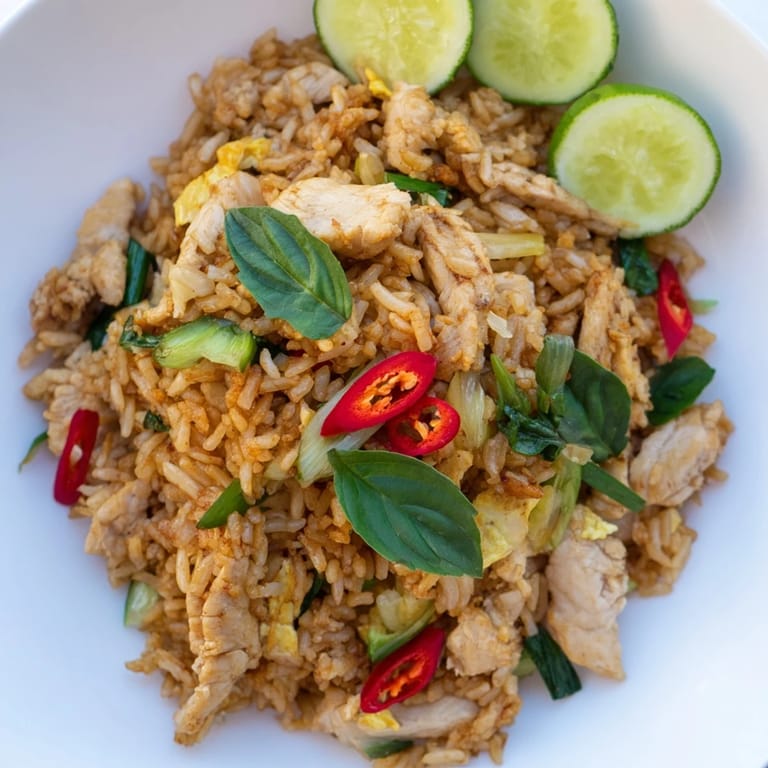
Pin There's a moment right at the end, when the basil hits the hot rice and you smell that sudden green-peppery bloom, where you realize you've made something that tastes like actual intention. That's when I know the night is going somewhere good.
Why This Tastes Like a Real Thai Meal
Holy basil is the ingredient that does the heavy lifting here—it has a flavor that's peppery, anise-like, and alive in a way that regular Italian basil can never match. The combination of garlic, chilies, and basil is what makes Thai cooking feel authentic, not some exotic version of something else. When those three ingredients hit a hot wok together, they transform the whole dish from "seasoned rice" into something that tastes like it came from somewhere specific and real.
The Heat You Control
The beauty of fried rice is that the spice level is never fixed—it's always a conversation between you and the meal you're making. Two chilies might be right on a cool evening when you want comfort, but on a hot day when you're cooking because you're hungry and the kitchen is already warm, you might slice five. The fish sauce and soy sauce provide a steady savory foundation that keeps the heat from feeling overwhelming, even when you're generous with the peppers.
Making It Your Own
I've made this same fried rice with shrimp on nights when the market had beautiful prawns, with crispy tofu when I was cooking for vegetarian friends, and once with leftover pork because that's what was in the fridge. The chicken-and-basil combination is perfect, but the structure is flexible enough that you can follow your instincts. The important thing is respecting the rhythm: fast heat, good ingredients, and the basil saved for last.
- If you can't find holy basil, Thai basil is the next best thing, though the flavor will be slightly different—don't use Italian basil unless you genuinely have no other choice.
- Leftover vegetables work beautifully here; that bit of carrot or zucchini from yesterday's dinner adds substance without requiring a special trip to the market.
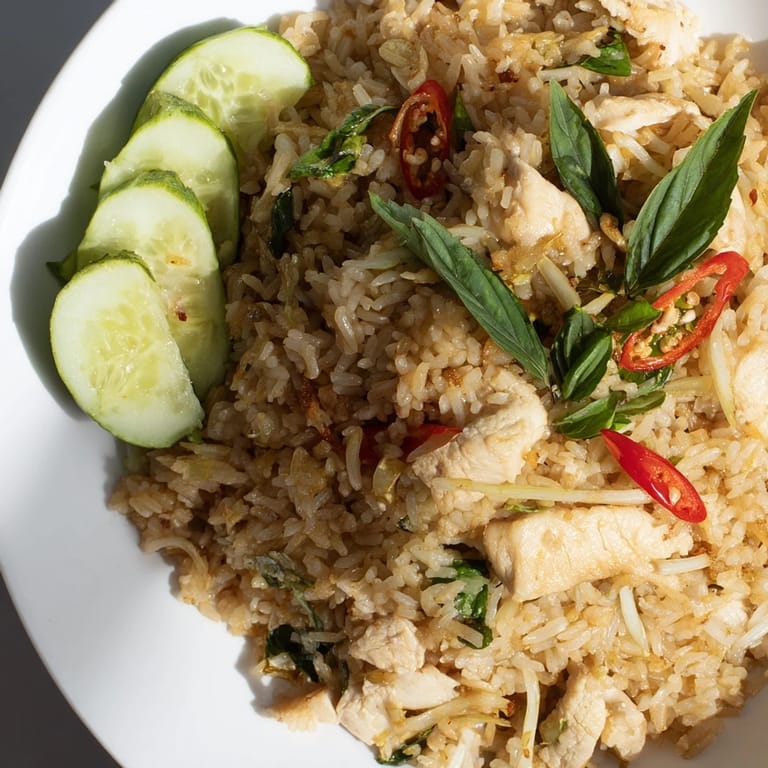
- Serve it immediately with lime wedges and cucumber slices so people can adjust the brightness and coolness to match their hunger.
 Pin
Pin This fried rice has become my answer to so many evenings—when I'm tired but hungry, when friends drop by hungry, when I want something that tastes like travel without leaving my kitchen. Make it once and you'll understand why.
Recipe Q&A
- → What type of basil is used in the dish?
Holy basil is traditionally used for its distinctive aroma, but Thai basil can be a suitable substitute.
- → Can I use another protein besides chicken?
Yes, shrimp, tofu, or pork can replace chicken for different flavor variations.
- → Why use day-old jasmine rice?
Day-old rice has a drier texture that prevents clumping and ensures a better stir-fry consistency.
- → How can I adjust the spiciness of the dish?
Adjust the number of Thai red chilies or add chili oil to increase heat according to preference.
- → What sauces are essential for the flavor?
Soy sauce, oyster sauce, and fish sauce create a savory, umami-rich base that balances sweetness and spice.