 Pin
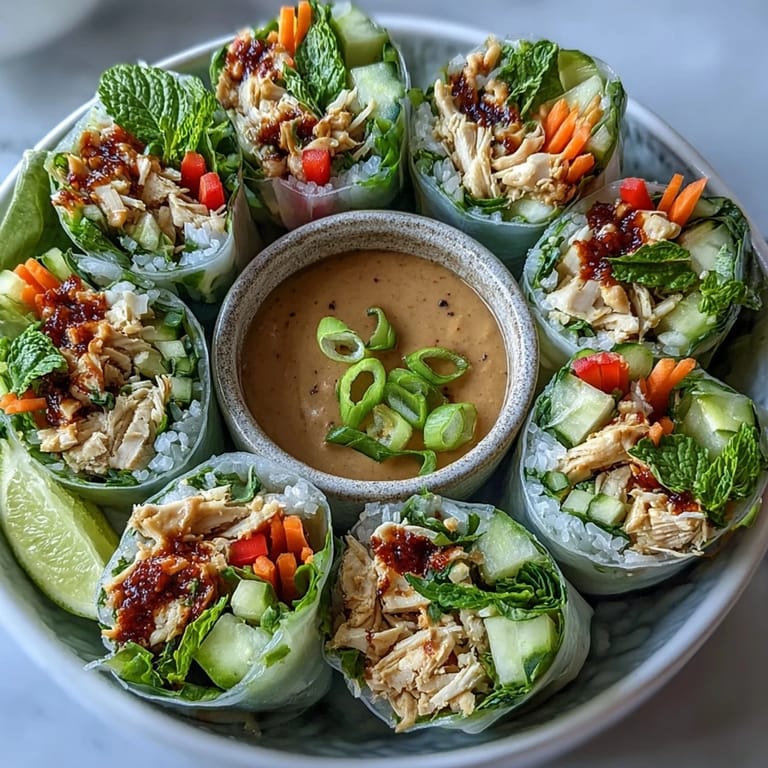
Pin My friend Sarah showed up one summer afternoon with a bag of rice paper wrappers and a mission: teach me how to make spring rolls that didn't fall apart. We spent the next hour in my kitchen, laughing at our first lumpy attempts, but by the third roll, something clicked. Now whenever I make these, I think of how she insisted the secret was patience with the rice paper and respecting the filling-to-wrapper ratio. These light, fresh rolls became my go-to when I wanted something that felt restaurant-quality but didn't demand hours in the kitchen.
I made these for a potluck once and watched them disappear within minutes while dishes with way more complexity sat untouched. A coworker asked for the recipe right there, standing in the kitchen with a damp napkin, and I realized these rolls had somehow become the dish people actually remember.
Ingredients
- Rice paper wrappers (8): These are delicate and need respect; buy a fresh package because old ones crack instead of softening.
- Cooked chicken breast (1 cup, shredded): Use rotisserie chicken if you're short on time, or poach your own for maximum control over texture.
- Carrots (1 cup, julienned): Cut them thin and consistent so they soften slightly when the paper hydrates, making the rolls easier to bite through.
- Cucumber (1 cup, julienned): Pat them dry with paper towels first; excess moisture makes the wrappers soggy and weak.
- Red bell pepper (1 cup, thinly sliced): The color matters here, both visually and flavor-wise; it adds brightness and sweetness.
- Lettuce leaves (1 cup, torn): This is your structural backbone, so choose something sturdy like romaine or butter lettuce.
- Fresh mint and cilantro (1/2 cup each): These are non-negotiable; they're what make these rolls taste like a summer afternoon.
- Green onions (2, sliced thin): They add a gentle bite that wakes up everything else.
- Creamy peanut butter (1/3 cup): The foundation of your sauce; don't skip the creamy version or you'll fight with texture.
- Soy sauce (2 tbsp): Use tamari if you need gluten-free, and don't oversalt by accident.
- Fresh lime juice (1 tbsp): Bottled works, but fresh lime truly changes the brightness of the sauce.
- Honey or maple syrup (1 tbsp): This balances the salt and spice with gentle sweetness.
- Sesame oil (1 tsp): A little goes a long way; it adds complexity that makes people ask what your secret is.
- Warm water (1/4 cup): Keep it nearby when you're whisking the sauce; you might need more depending on peanut butter consistency.
- Garlic and ginger (1 clove and 1 tsp, respectively): Mince and grate these fresh; they're the backbone of the sauce's warmth.
- Sriracha or chili sauce (1 tsp, optional): Add this only if you want heat; the dish is perfectly pleasant without it.
Tired of Takeout? 🥡
Get 10 meals you can make faster than delivery arrives. Seriously.
One email. No spam. Unsubscribe anytime.
Instructions
- Prep Your Station:
- Arrange all your vegetables and herbs on a platter within arm's reach, organized in the order you'll use them. Have a damp kitchen towel ready next to your workspace; it's the difference between smooth assembly and frustrated tugging.
- Soften the Rice Paper:
- Fill a shallow dish with warm (not hot) water and dip one wrapper in for about 10 to 15 seconds until it's pliable but still has a tiny bit of resistance. Lay it flat on that damp towel, and resist the urge to overwork it.
- Layer Your Filling:
- Start with a small handful of lettuce along the bottom third, then add a pinch of chicken, then vegetables in a neat line, finishing with mint, cilantro, and green onion. Less is more here; overstuffed rolls will tear.
- Master the Roll:
- Fold the bottom edge up and over the filling snugly, fold in the sides like an envelope, then roll upward as tightly as you can manage without tearing. Think of it like a spring roll burrito, and you've got the movement down.
- Whisk the Sauce Together:
- Combine peanut butter, soy sauce, lime juice, honey, sesame oil, warm water, garlic, ginger, and Sriracha in a small bowl. Whisk until smooth, adding more water if it's thicker than you want for dipping.
- Serve with Intention:
- Plate the rolls whole or halved, and serve immediately with the sauce alongside. This is a dish that's best enjoyed right away while the wrappers are still tender and the herbs are vibrant.
 Pin
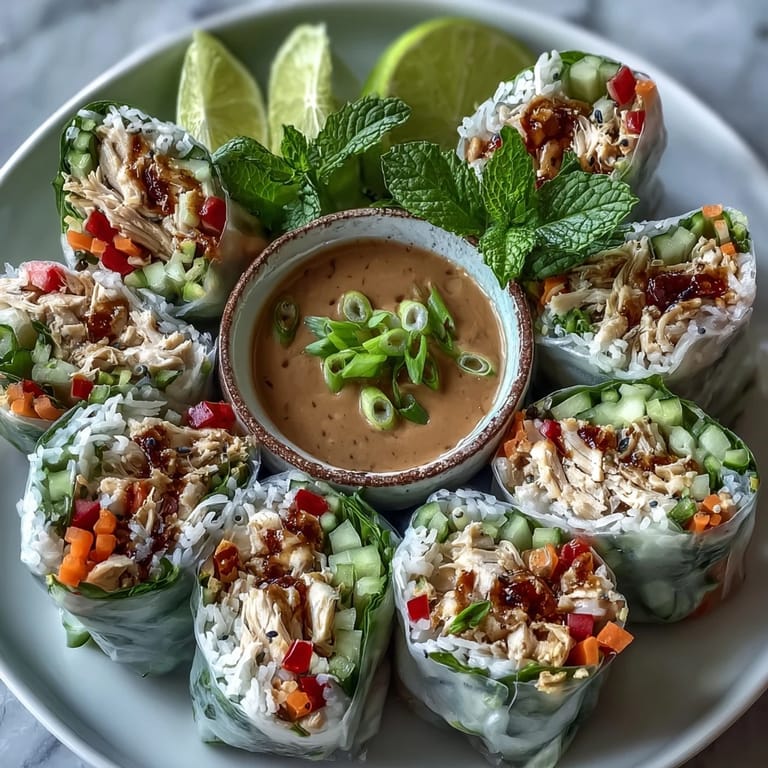
Pin There's something deeply satisfying about biting into a spring roll and hearing that crisp sound, then finding perfect layers of flavor and texture underneath. They've become my answer to the question, 'What do you want to make tonight?' because they somehow feel both light and substantial.
The Sauce Is Where the Magic Lives
I used to think spring roll sauce was complicated until I realized it's just five core flavors playing together: creamy, salty, tangy, sweet, and aromatic. Once you understand that ratio, you can adjust it based on your mood or what you have on hand. Sometimes I add a tablespoon of rice vinegar for extra tang, or a touch more sesame oil for deeper warmth. The sauce is honestly more forgiving than the rolling process.
Why These Work as a Light Meal
Spring rolls sit in that beautiful space between appetizer and lunch; they're protein-forward enough to satisfy without feeling heavy. The fresh herbs and crisp vegetables mean you're eating something that actually feels good, not just something that tastes good. I've served these at summer dinners, packed them for picnics, and made them for myself on nights when I wanted something nourishing but didn't want to spend an evening cooking.
Variations and Ways to Make Them Your Own
Once you've mastered the basic technique, these become endlessly adaptable without losing their essential character. I've made them with shrimp, tofu, turkey, and even served vegetarian versions that disappear just as fast as the chicken ones. Add vermicelli noodles if you want heartiness, or swap in different herbs like basil or Thai mint if that's what speaks to you. The framework stays the same; the details are yours to play with.
- Roast the vegetables lightly if you prefer them softer, or keep them raw for maximum crunch and nutritional benefit.
- Make a batch of sauce and freeze it in ice cube trays so you have individual portions ready whenever rolls call to you.
- Pair these with jasmine tea or a crisp white wine, and you've created something that feels restaurant-worthy in your own kitchen.
 Pin
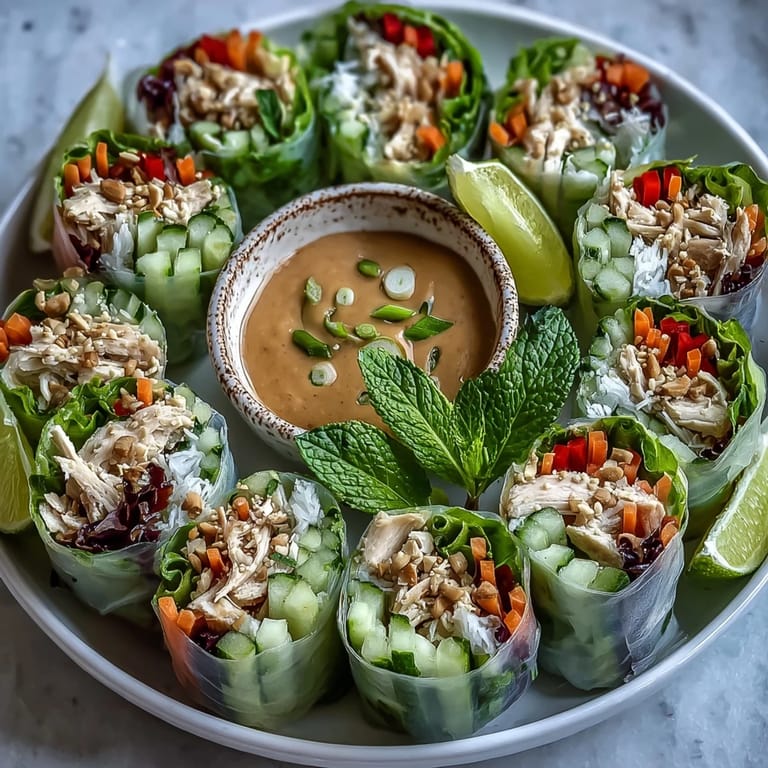
Pin These spring rolls remind me that simple food done thoughtfully tastes better than complicated food done carelessly. Make them for people you like, and you'll see why they disappear so quickly.
Recipe Q&A
- → Can I make these spring rolls ahead of time?
It's best to assemble spring rolls just before serving, as the rice paper wrappers can become tough or dry when refrigerated for too long. You can prep all vegetables, shred the chicken, and make the peanut sauce up to 24 hours in advance. Store components separately in the refrigerator and roll when ready to serve.
- → What can I use instead of peanut butter?
For a nut-free alternative, try sunflower seed butter or tahini. Both will provide a creamy texture, though the flavor will be slightly different. You may need to adjust the sweetness with additional honey or maple syrup to balance the flavors.
- → Are rice paper wrappers gluten-free?
Most rice paper wrappers are naturally gluten-free as they're made from rice flour and water. However, always check the packaging to confirm, as some brands may include wheat-based additives. Look for wrappers labeled specifically as gluten-free if you have celiac disease or severe gluten sensitivity.
- → How do I prevent the rice paper from tearing?
Don't oversoak the wrappers—10–15 seconds in warm water is usually enough. They should feel pliable but not overly soft or mushy. Work on a damp towel rather than a dry surface, and handle them gently. If a wrapper does tear, simply double-layer it with another wrapper or use it for practice.
- → Can I add noodles to the filling?
Yes, thin rice vermicelli noodles work wonderfully in these spring rolls. Soak them in warm water until soft, drain well, and add them along with the vegetables. This makes the rolls more filling and adds a nice texture contrast to the crisp vegetables.