 Pin
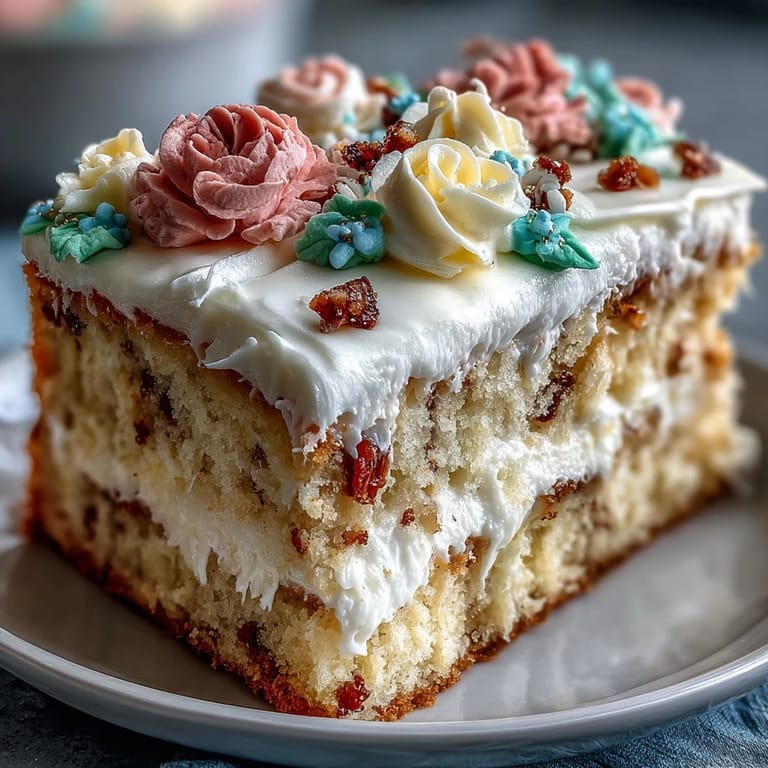
Pin My cousin's First Communion fell on a Saturday in May, and I found myself in my kitchen at dawn, flour dusting my apron before the neighborhood was even awake. There's something about baking a cake for a milestone that makes you want to get every detail right—the crumb tender, the frosting smooth enough to pipe without breaking, the flowers looking like they actually belong on something this meaningful. This sheet cake became my answer to wanting something elegant but not fussy, something that would feed a crowd without requiring a pastry degree.
What I remember most isn't the baking itself but the moment when my young niece saw the finished cake—how her eyes went wide at the piped flowers, how she asked if I'd bought it from a fancy bakery. That's when I realized the cake had become part of her memory of the day, which felt like exactly what a dessert should do.
Ingredients
- All-purpose flour (2 ½ cups): This is your structure, so measure it properly by spooning into a measuring cup and leveling off rather than scooping directly from the bag, which packs it down and throws everything off.
- Baking powder (2 ½ tsp): Make sure yours isn't stale by checking the expiration date; old baking powder won't give you the lift you need for that tender crumb.
- Salt (½ tsp): Even in a sweet cake, salt enhances the vanilla flavor and balances the sweetness in ways you won't consciously notice but will definitely taste.
- Unsalted butter (1 cup for cake): Room temperature is non-negotiable here; cold butter won't cream properly with the sugar, and you'll end up with a dense, heavy cake instead of the light one you're after.
- Granulated sugar (2 cups): This creams into the butter to trap tiny air bubbles that make the cake rise and stay tender.
- Eggs (4 large, room temperature): Cold eggs won't incorporate smoothly, which means your batter becomes grainy instead of silky; set them out while you prep everything else.
- Vanilla extract (1 tbsp for cake): Pure vanilla makes a real difference in a simple cake like this—it's one of the few places where paying for quality actually shows in the final taste.
- Whole milk (1 cup, room temperature): The temperature matters because it helps everything combine smoothly and evenly distribute through the batter.
- Unsalted butter (1 ½ cups for frosting): Softened to the point where your finger leaves a slight impression; too soft and it'll be greasy, too cold and you'll be fighting it with the mixer.
- Powdered sugar (6 cups, sifted): Sifting isn't just for show—it breaks up the lumps that would otherwise create a grainy frosting instead of that smooth, spreadable texture.
- Whole milk (¼ cup for frosting): Adds the right consistency so your buttercream isn't stiff but also pipes cleanly without slumping.
- Vanilla extract (2 tsp for frosting): A touch more than you'd expect, which helps the frosting taste less one-dimensionally sweet.
- Food coloring: Gel coloring stays vibrant without thinning out your buttercream the way liquid food coloring does, which is why pastry people swear by it.
Tired of Takeout? 🥡
Get 10 meals you can make faster than delivery arrives. Seriously.
One email. No spam. Unsubscribe anytime.
Instructions
- Set yourself up for success:
- Preheat your oven to 350°F and grease that 9x13-inch pan thoroughly—I use butter and then line it with parchment for insurance. This isn't about being precious; it's about making sure your cake comes out cleanly so you have a blank canvas for decorating.
- Dry ingredients together:
- Whisk flour, baking powder, and salt in a medium bowl, and set it aside—this mixing ensures the leavening distributes evenly instead of creating pockets of raw-tasting batter. It takes thirty seconds and makes a real difference.
- Cream butter and sugar until clouds form:
- Beat softened butter and sugar for a full three minutes with an electric mixer until the mixture is pale and fluffy, which means you're trapping the air that helps the cake rise. If you rush this step, you'll taste it in a denser, heavier crumb.
- Add eggs one by one:
- Drop each egg in separately and mix until it's fully incorporated before adding the next one, which takes maybe thirty seconds per egg. This prevents the batter from looking curdled and lumpy.
- Stir in vanilla:
- Once all eggs are in, add the vanilla and mix until you can't see any streaks of it.
- Alternate wet and dry like you're building layers:
- Start with the flour mixture, add a third of it and mix until just combined, then add about a third of the milk, mix, then repeat until everything is incorporated and you finish with flour. The reason for alternating is that the milk needs the flour to distribute properly, and going this slowly means you won't overmix, which is the fastest way to develop gluten and end up with a tough cake.
- Bake with patience:
- Pour into your prepared pan, smooth the top, and bake for 28 to 32 minutes until a toothpick poked into the center comes out clean with no wet batter clinging to it. Every oven runs a bit different, so start checking at 28 minutes.
- Cool the cake properly:
- Let it sit in the pan for ten minutes (this firms it up enough to handle), then turn it out onto a wire rack to cool completely. If you try to frost warm cake, the frosting will slide right off.
- Make the frosting while the cake cools:
- Beat softened butter until it's pale and creamy, then add powdered sugar and milk in alternating batches, beating after each addition until you have something smooth and fluffy with no lumps. This should take a few minutes and feel deeply satisfying as it comes together.
- Add vanilla to the finished frosting:
- Stir it in thoroughly so the flavor is even throughout.
- Divide and tint your frosting:
- Scoop portions into separate bowls and add gel food coloring one tiny drop at a time until you have the shades you want. Gel coloring is forgiving and vibrant—you won't end up with pale, washed-out flowers.
- Frost the base:
- Spread a generous layer of plain (or white-tinted) buttercream all over the cooled cake as your canvas. This gives you something to pipe the flowers onto and helps them stick.
- Pipe your flowers:
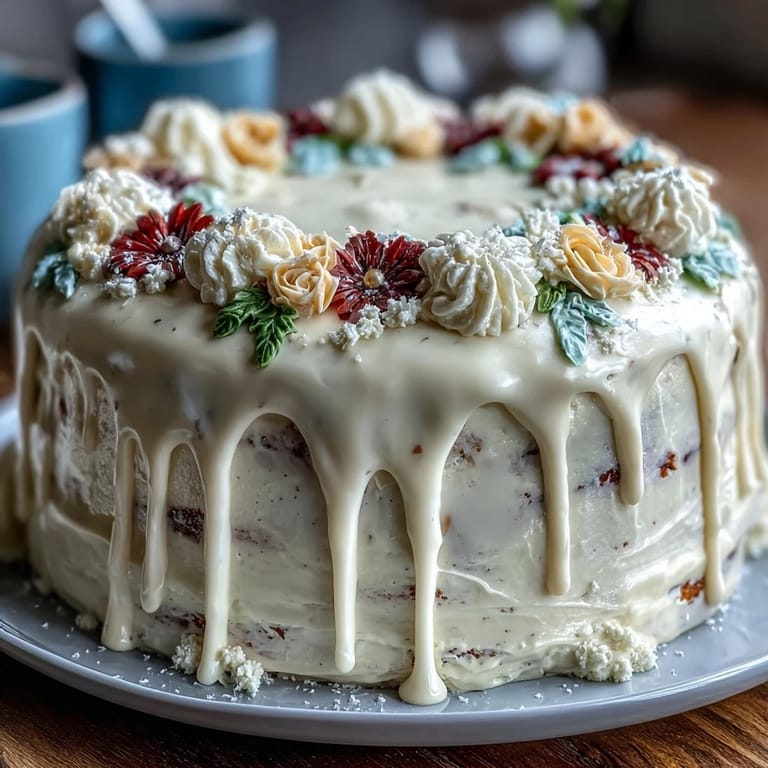
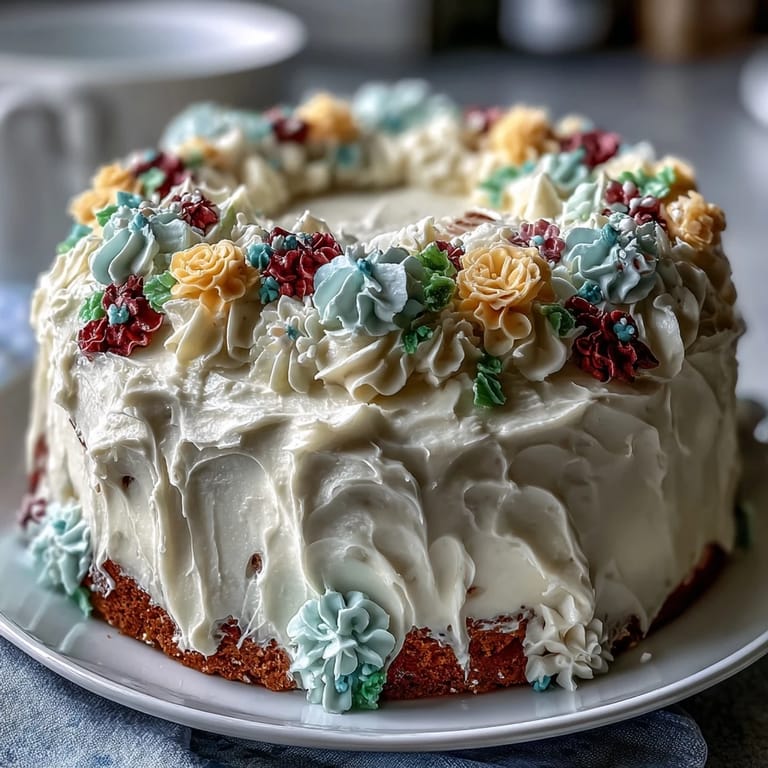
- Fill piping bags fitted with flower tips with your colored buttercream and start practicing in one corner before you commit to the whole cake. The motion is a gentle squeeze-and-lift that creates petals, and it gets easier after the first few flowers.
- Add leaves and finishing touches:
- Use a leaf tip with green buttercream to pipe leaves between and around the flowers, creating a balanced design. If you want to add a cross or text, use a small round tip and steady pressure.
 Pin
Pin I think what makes this cake special isn't the technique but the intention behind it—baking something that will sit on a table at a celebration and taste like someone who cares made it. That matters more than perfect piping or Instagram-worthy decoration.
Why This Cake Works for Milestones
A sheet cake is the practical choice when you're feeding a crowd, but it can feel impersonal if you're not careful. The buttercream flowers transform it into something that feels special without requiring you to hand-sculpt fondant figures or have steady hands you might not actually possess. The vanilla flavor is clean and classic, which means it appeals to kids and adults alike, and it pairs well with almost any beverage from lemonade to Moscato. What I appreciate most is that this cake can be made mostly ahead, which means you're not stressed or flour-covered when the guests arrive.
The Story Behind the Decorating
The first time I piped flowers for a cake, I was convinced I'd ruin it. My sister talked me through it over the phone while I stood in front of the cake muttering words I shouldn't have said, and by the third flower, something clicked—the motion became muscle memory, and the flowers actually looked intentional instead of accidental. That's when I realized piping isn't a talent you're born with; it's a skill you acquire through doing it badly a few times first. Now I practice in a quiet moment before guests arrive, and those first few experimental flowers never make it onto the actual cake.
Making It Your Own
You can keep this cake simple and classic, or you can add your own touches depending on what matters to the person you're baking for. Some ideas: add almond extract to the batter for a deeper vanilla flavor, use different shades of buttercream to create a color story, or pipe a cross in white buttercream if the celebration has religious significance. You could also make this a day or two ahead—the cake actually tastes better as it sits because the flavors marry together. The flexibility is part of what makes it feel less like following a recipe and more like creating something specific.
- If you don't have piping tips, a small spoon and patience can create rustic flowers that look charmingly homemade.
- Leftover buttercream can be refrigerated for a week or frozen for a month, so don't stress about making too much.
- A small offset spatula makes spreading the base frosting easier and creates a more polished finish than the back of a spoon.
 Pin
Pin This cake has become the thing I reach for when someone wants something that tastes homemade and looks like you care, which turns out to be most occasions worth marking with cake. Bake it with the knowledge that you're creating a small moment of joy.
Recipe Q&A
- → How do I achieve a moist texture in this sheet cake?
Ensure not to overmix the batter and use softened butter and room temperature eggs to create a tender, moist crumb.
- → What is the best way to tint buttercream without affecting its texture?
Use gel food coloring sparingly as it provides vibrant hues without thinning the buttercream, maintaining smooth consistency.
- → Can I prepare the cake in advance?
Yes, the cake can be baked a day ahead and stored covered at room temperature to preserve freshness and flavor.
- → What piping tips are recommended for the floral decorations?
Flower, leaf, and round piping tips help create detailed petals, leaves, and accents for a classic buttercream decoration.
- → Are there any suitable flavor variations to enhance the cake?
Adding half a teaspoon of almond extract to the batter enriches the flavor with a subtle, nutty undertone.