 Pin
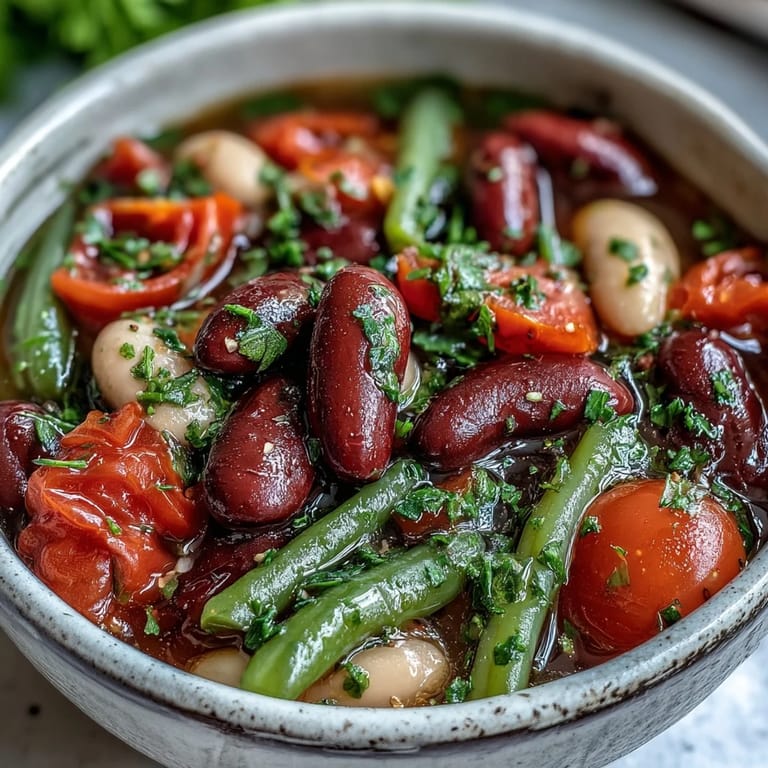
Pin My neighbor brought over a mason jar of three-bean salad last summer, the kind with that sharp vinegary punch that makes your mouth water before you even taste it. I loved it so much I started wondering what it would taste like as a soup instead—warm, comforting, but keeping that bright tangy personality that made the original so addictive. One rainy afternoon, I gathered up cans of beans from my pantry and decided to experiment, and this vibrant, hearty soup was born. It became my go-to when I wanted something nourishing that didn't feel heavy, and honestly, it's been my secret weapon for impressing people who think vegetarian cooking is boring.
I made this for my book club on a chilly Thursday night when I didn't have time for anything fancy, and three people asked for the recipe before dessert arrived. What surprised me most was how the soup seemed to get better as everyone talked and laughed—the flavors deepened, the beans softened just enough, and somehow it tasted like comfort without tasting like compromise. That's when I knew this recipe deserved a permanent spot in my rotation.
Ingredients
- Kidney beans, cannellini beans, and green beans (1 cup each): This trio gives you variety in texture and a complete protein profile when combined, plus canned versions mean zero fuss and zero waste if you rinse them well.
- Red bell pepper, red onion, celery, and garlic: These are your flavor foundation, and using red onion instead of yellow adds both sweetness and a subtle earthy note that makes people ask what your secret ingredient is.
- Cherry tomatoes: They burst slightly when simmered, releasing their bright acidity naturally so you don't need extra acid down the line.
- Vegetable broth: Low-sodium lets you control the final seasoning and prevents that canned-soup taste that haunts lesser recipes.
- Red wine vinegar, Dijon mustard, and sugar: This combination mimics that classic three-bean salad tang while the mustard adds depth and emulsifies the flavors so everything feels cohesive rather than thrown together.
- Dried oregano and red pepper flakes: Oregano ties everything to that summer-salad nostalgia, while the heat is entirely optional depending on who you're feeding.
- Fresh parsley: Always add it at the end—heat destroys its bright, grassy flavor, and it's what makes people say this tastes restaurant-quality.
Tired of Takeout? 🥡
Get 10 meals you can make faster than delivery arrives. Seriously.
One email. No spam. Unsubscribe anytime.
Instructions
- Build your flavor base:
- Heat olive oil in a large pot over medium heat, then add your red onion, celery, and minced garlic. You're looking for that soft, fragrant moment when the kitchen smells amazing and your vegetables have just started to turn translucent—usually about 3 to 4 minutes. Don't rush this step because you're building the foundation that makes people close their eyes and sigh when they taste the soup.
- Add the pepper and beans:
- Stir in your red bell pepper and cook for another 2 minutes until it's just starting to soften, then add all three types of beans along with the cherry tomatoes. This quick sauté—just 1 to 2 minutes—helps the beans warm through and start releasing their flavors into the oil.
- Introduce the broth:
- Pour in your vegetable broth and bring everything to a gentle boil, then immediately reduce the heat to a simmer. The gentle bubbling (not aggressive boiling) is what keeps the beans intact and the vegetables tender rather than mushy.
- Make the magic sauce:
- While the soup simmers, whisk together red wine vinegar, Dijon mustard, sugar, dried oregano, and crushed red pepper flakes in a small bowl. This is where the three-bean salad essence lives, so taste the mixture before adding it to the pot and adjust if needed.
- Let everything meld:
- Add the vinegar mixture to the pot and simmer uncovered for 15 minutes. This is when you can step away, tidy up your counter, or just stand there breathing in the aroma while the flavors get to know each other.
- Finish with brightness and seasoning:
- Taste the soup, adjust salt and black pepper to your preference, then stir in your fresh chopped parsley at the very end. The parsley should stay vibrant green, a visual reminder that this is a fresh, alive soup.
- Serve and celebrate:
- Ladle into bowls and garnish with extra parsley if you're feeling fancy. Serve it hot or warm depending on the weather and your mood.
 Pin
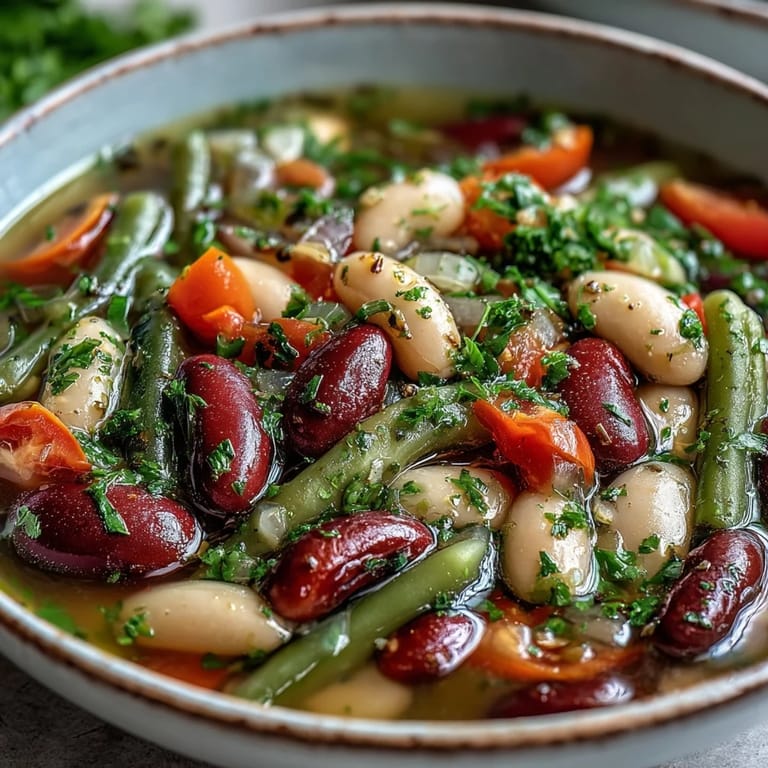
Pin My daughter came home from school one day and asked why her lunchbox soup smelled like the fair, and that's when I realized this recipe captures something nostalgic and joyful at the same time. It's the kind of soup that tastes like someone who cares took time with it, even though honestly, anyone can make it.
Why This Works As A Soup
Three-bean salad is usually served cold and crisp, a side dish that sits quietly on a picnic blanket next to potato salad. Turning it into a soup doesn't betray that original vision—it respects it while asking what happens if you warm it up, add broth, and let those flavors talk to each other in a liquid environment. The beans become softer but maintain their individual character, and the vegetables somehow taste both more delicate and more flavorful at the same time.
The Vinegar Question
Vinegar is the soul of this soup, so don't be shy with it. Some people are nervous about acidic soups thinking they'll taste thin or aggressive, but when you combine vinegar with mustard and just a touch of sugar, something magical happens—the soup becomes bright without tasting sour, complex without tasting confused. If you're making this for someone who finds red wine vinegar intimidating, apple cider vinegar works beautifully and tastes slightly softer and more apple-forward.
Make It Your Own
This recipe is flexible in the way that good cooking should be. I've made it with fresh green beans blanched and cut into pieces, and I've made it with canned, and both were delicious though the texture differs slightly. Basil and dill work if parsley isn't what you have on hand, and if you want protein beyond the beans, a cup of cooked quinoa stirred in just before serving makes it even more substantial.
- For an extra protein boost without changing the vegetarian nature of the dish, stir in cooked quinoa, white beans, or even shredded rotisserie chicken if you're not cooking vegetarian.
- Add a teaspoon of Dijon mustard directly to your bowl if you like extra tang, or a pinch more red pepper flakes if heat calls to you.
- This soup keeps beautifully in the refrigerator for up to four days, and reheats gently over low heat so you don't accidentally concentrate the flavors.
 Pin
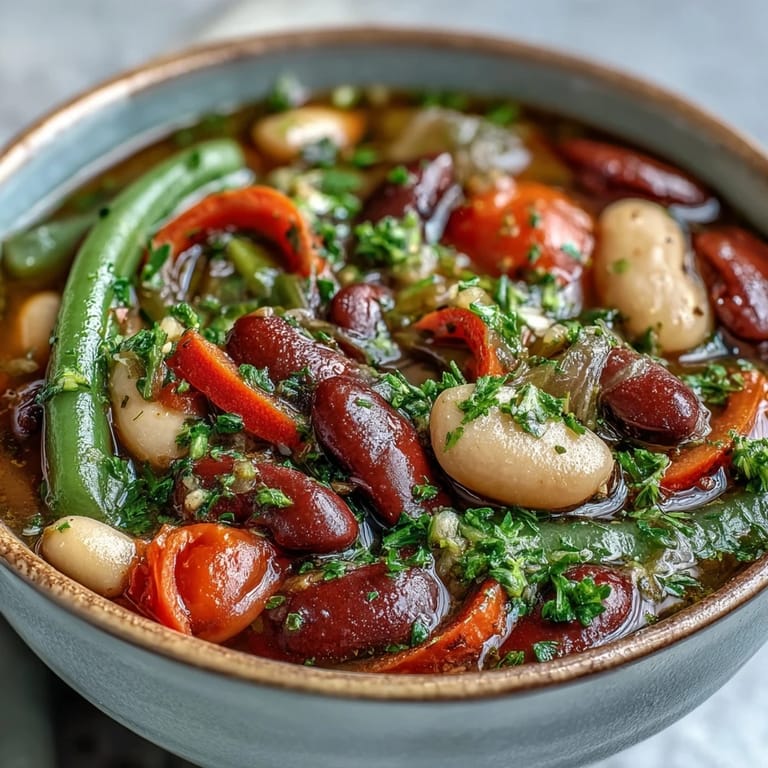
Pin This soup reminds me that the best recipes aren't usually the complicated ones—they're the ones that taste like someone understood exactly what you needed to eat. It's easy enough for a weeknight and good enough for guests, which makes it the kind of recipe worth keeping around.
Recipe Q&A
- → Can I use dried beans instead of canned?
Yes, you can use dried beans. Soak them overnight and cook until tender before adding to the soup. This will extend your preparation time significantly.
- → How long does this soup keep in the refrigerator?
Store in an airtight container for up to 4-5 days. The flavors continue to develop over time, making leftovers even more delicious.
- → Can I freeze this soup?
Yes, freeze for up to 3 months. The texture may soften slightly upon reheating, but the flavor remains excellent. Thaw overnight in the refrigerator before reheating.
- → What can I substitute for red wine vinegar?
Apple cider vinegar, white wine vinegar, or even a squeeze of fresh lemon juice work well as substitutes, each offering a slightly different flavor profile.
- → Is this suitable for meal prep?
Absolutely! This soup is ideal for meal prep. Make a batch on Sunday and portion into containers for easy lunches throughout the week.
- → Can I add other vegetables?
Certainly! Zucchini, carrots, or spinach make excellent additions. Add heartier vegetables early in cooking and delicate greens like spinach during the last few minutes.