 Pin
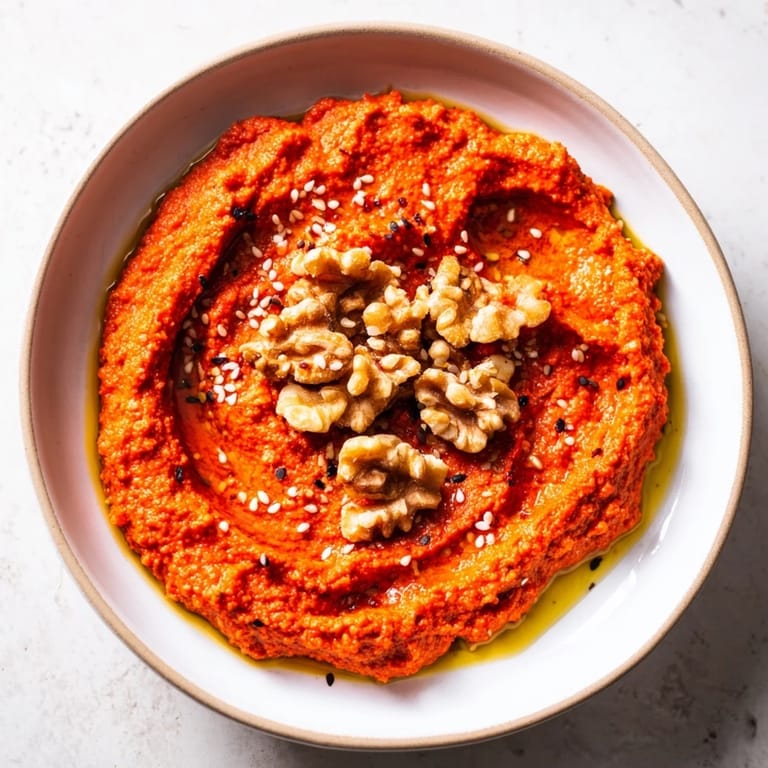
Pin The first time I tasted muhammara was at a small restaurant in Aleppo, where the owner's mother made it fresh every morning. She wouldn't share her exact recipe, but watching the deep red paste emerge from her food processor—glossy with olive oil and flecked with walnut—I understood that this wasn't just a dip. It was a bridge between textures and flavors, where smoke met tang met nutty warmth. Years later, I finally cracked my own version at home, and it's become the one thing I make whenever I need to feel like I'm feeding people something that matters.
I made this for a dinner party once when a friend's mother was visiting from Damascus, and I was quietly terrified she'd taste inauthenticity in every spoonful. But she went quiet after her first bite, then smiled and asked if I'd studied in Syria. That moment taught me that food made with attention and respect speaks louder than perfect technique.
Ingredients
- Red bell peppers (3 large): The foundation—choose peppers with thin skin and deep color, they'll char faster and sweeter.
- Walnuts (1 cup, lightly toasted): Don't skip the toasting; it wakes up the nuts and builds the smoky backbone of the whole dip.
- Garlic cloves (2): Raw is traditional, but if you want gentler garlic, roast it alongside the peppers.
- Breadcrumbs (2 tbsp): This binds everything and adds body; use gluten-free if you need to, and don't leave it out.
- Ground cumin (1 tsp): Earthy and essential—this is what makes it taste like something from a souk, not a kitchen experiment.
- Smoked paprika (1/2 tsp): The quiet smoke that carries through every spoonful.
- Aleppo pepper or red chili flakes (1/2 tsp): Start conservative; you can always add heat, but you can't take it back.
- Salt and black pepper (1/2 tsp salt, freshly ground pepper to taste): Season as you go—taste matters more than measurements here.
- Pomegranate molasses (2 tbsp): The soul of the dish; use real pomegranate molasses, not concentrate, and your guests will taste the difference.
- Extra virgin olive oil (2 tbsp, plus more for drizzling): Good oil makes good food better.
- Lemon juice (1–2 tbsp): Fresh lemon only; it balances the richness and brightens everything.
- Toasted sesame seeds (1 tbsp, optional): A scattering at the end adds a gentle crunch that feels deliberate.
Tired of Takeout? 🥡
Get 10 meals you can make faster than delivery arrives. Seriously.
One email. No spam. Unsubscribe anytime.
Instructions
- Char the peppers until they're blackened:
- Heat your oven to 220°C (425°F), spread the red peppers on a tray, and roast them for 20–25 minutes, turning halfway through, until the skins are blistered and charred nearly black. That char is flavor—don't skip it.
- Let them steam and soften:
- Transfer the hot peppers to a bowl, cover it tightly with plastic wrap, and let them sit for 10 minutes. The steam loosens the skin so it peels away like a whisper.
- Peel away the blackened skin:
- Once cooled enough to handle, peel off the charred skin with your fingers—it should come away easily—discard the stems and seeds, and let yourself appreciate how the flesh has transformed from firm to yielding.
- Build the base in the food processor:
- Add the peeled peppers, walnuts, garlic, breadcrumbs, cumin, smoked paprika, Aleppo pepper, salt, and black pepper to your food processor. Pulse everything together until it's coarse and textured—you want it chunky enough that you can still see the walnut pieces.
- Bring it together with pomegranate and oil:
- Add the pomegranate molasses, olive oil, and lemon juice, then process until smooth but with some body and texture remaining. Taste as you go, adjusting the molasses or lemon to find your balance between smoke, tang, and depth.
- Present it with intention:
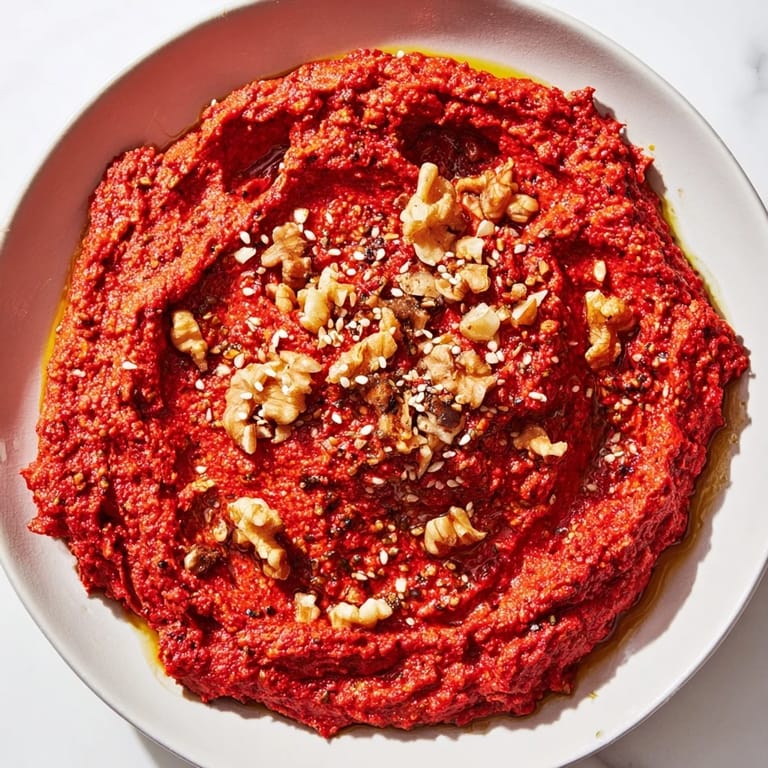
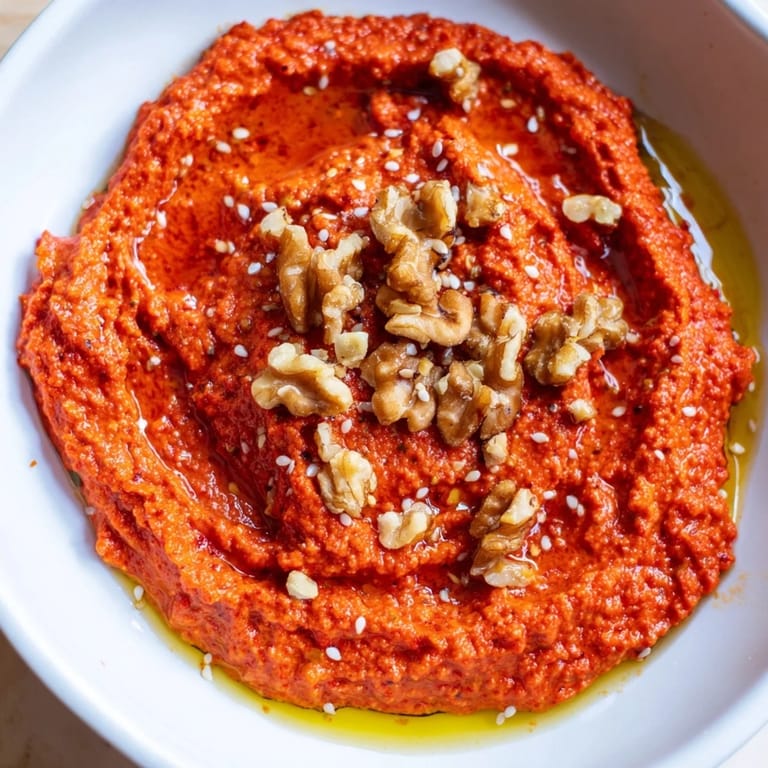
- Spoon the muhammara into a shallow bowl, drizzle with a generous thread of good olive oil, scatter the sesame seeds across the top, and serve it with warm pita, crackers, or fresh vegetables.
 Pin
Pin There's a moment when muhammara transitions from separate ingredients to something unified, something that tastes like it was always meant to be together. I remember standing in my kitchen watching that happen for the first time, and thinking that this is what hospitality looks like—taking raw things and transforming them into something warm to share.
The Heat Question
Aleppo pepper brings a gentle warmth without harsh bite, but if you prefer milder heat, start with a quarter teaspoon and taste your way up. Some people add a pinch of cayenne for sharper kick, others leave the heat out entirely—there's no wrong choice here, only your choice. The beauty of muhammara is that it invites customization without losing its identity.
Storage and Serving
Muhammara keeps beautifully for five days in an airtight container in the refrigeridge, and it actually tastes better the next day when the flavors have settled into each other. Serve it as part of a mezze spread with hummus and baba ghanoush, or let it be the star of the table with warm pita and fresh vegetables. It's equally at home at a casual weeknight meal or on a table set for company.
When to Make This
Make muhammara when you want something that tastes like a celebration but doesn't demand elaborate technique. It's perfect for potlucks, because it travels well and impresses without apology. It's also perfect for quiet evenings when you want to cook something that makes your kitchen smell like somewhere else entirely.
- Red peppers are sweetest and cheapest during late summer and early fall—plan accordingly if you want the best flavor.
- This recipe doubles easily if you're feeding a crowd, and it freezes reasonably well for up to two months in an airtight container.
- Serve it at room temperature or slightly chilled; cold from the refrigerator makes the flavors duller than they deserve to be.
 Pin
Pin Muhammara is the kind of food that makes people feel welcome without you having to say much at all. Serve it, and watch what happens.
Recipe Q&A
- → How do I roast the peppers for best flavor?
Roast peppers at 220°C (425°F) for 20–25 minutes until skins char. Let steam in a covered bowl, then peel for a smoky, sweet taste.
- → Can I substitute walnuts with another nut?
Pecans or almonds work well but may alter texture and flavor slightly. Toast them lightly before blending for best results.
- → What gives muhammara its smoky taste?
The combination of roasted peppers and smoked paprika contributes to the distinctive smoky flavor central to this dish.
- → Is there a way to adjust the heat level?
Adjust Aleppo pepper or red chili flakes quantity to increase or decrease spiciness according to preference.
- → How should muhammara be stored?
Keep refrigerated in an airtight container for up to 5 days. Stir before serving to refresh the texture.
- → Can this spread be made gluten-free?
Yes, use gluten-free breadcrumbs to maintain texture without gluten content.