 Pin
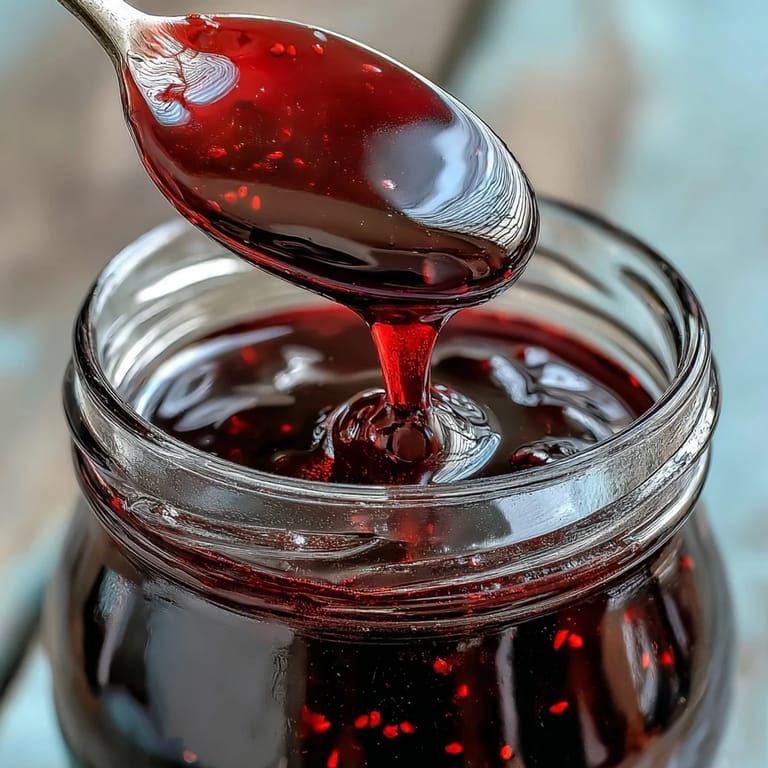
Pin There's something almost magical about watching black currants transform from tiny dark orbs into a jewel-toned jelly that catches the light like stained glass. My grandmother used to make this every summer, and the first time I tried it myself, I was convinced I'd somehow unlock a secret that would make mine taste exactly like hers. It didn't, but that failure led me to understand what makes this preserve so special: patience, clarity, and the willingness to let gravity do the work instead of rushing the process.
I made this for the first time on a rainy afternoon when my friend texted asking if I had anything interesting to eat. That jar of black currant jelly changed the entire mood of the visit—suddenly we were spreading it on fresh bread, spooning it over cream cheese, even dissolving it into sparkling water. She left with a jar, and I realized then that homemade preserves are basically edible love letters.
Ingredients
- Fresh black currants (1 kg / 2.2 lbs): These berries are packed with natural pectin, which is why they jell beautifully without any fussing—just make sure they're ripe and the stems are completely removed.
- Water (250 ml / 1 cup): This seems minimal, but it's just enough to prevent sticking while the fruit releases its own juice.
- Granulated sugar (800 g / 4 cups): The ratio matters here—too little and it won't set, too much and you lose the delicate flavor that makes black currant special.
- Lemon juice (2 tbsp): This brightens the deep flavor and helps activate the natural pectin, so don't skip it even though it seems like a small detail.
Tired of Takeout? 🥡
Get 10 meals you can make faster than delivery arrives. Seriously.
One email. No spam. Unsubscribe anytime.
Instructions
- Prepare and rinse:
- Run your currants under cold water and pick through them gently, removing every single stem and any leaves hiding in there—this takes longer than you'd think, but it keeps the final jelly pristine.
- Simmer the fruit:
- Combine the berries and water in your largest, heaviest saucepan over medium heat, then let them bubble softly while you stir and mash them down occasionally. You'll hear the liquid getting thicker and smell that intensely tart, almost wine-like aroma that means the currants are releasing everything they've got.
- Drain without pressing:
- Pour your cooked fruit into a sieve lined with cheesecloth or use a jelly bag, then walk away—this is the hard part. Let gravity do the work for at least 2 hours (overnight is better) without squeezing, which would cloud your jelly.
- Measure and calculate sugar:
- Once you've collected your juice, measure it carefully and add sugar at a 1:1 ratio by cup. This is where a candy thermometer becomes your best friend, though the wrinkle test works too.
- Dissolve and boil:
- Return the juice to a clean pan with the sugar and lemon juice, stirring gently over low heat until every sugar crystal vanishes, then crank the heat up and let it boil hard for 10 to 12 minutes until it reaches 105°C (221°F) on a thermometer or wrinkles on a cold plate.
- Skim and jar:
- Remove from heat, skim off any foam that's formed on top, then carefully ladle the hot jelly into sterilized jars leaving just a quarter inch of headspace. Seal immediately and let cool completely at room temperature.
 Pin
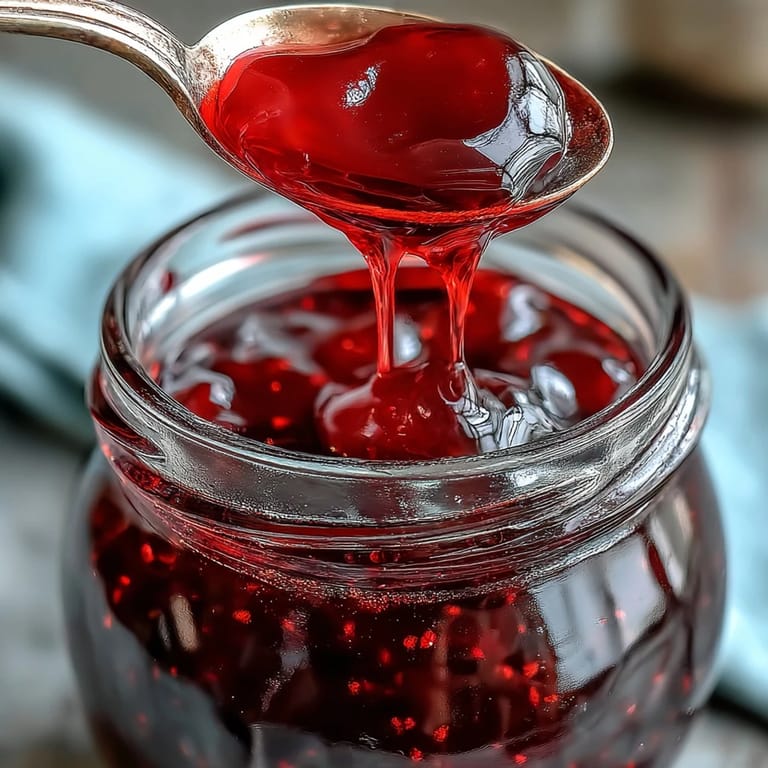
Pin Years later, I finally made a batch that was nearly as good as my grandmother's, and the moment I realized it was actually better felt like permission to stop comparing myself to her and start trusting my own instincts. That's when black currant jelly stopped being a recipe and became something I could teach to someone else.
The Science of Setting
Black currants are naturally high in pectin, which is why this recipe works so reliably without added gelling agents—the fruit itself contains everything needed to transform liquid into jelly. If your berries were picked late in the season or stored too long, they might have less pectin, in which case you can add a small amount of commercial pectin according to package directions. The wrinkle test on a cold plate is oddly satisfying: drop a bit of hot jelly on a chilled ceramic plate, let it cool for a minute, then push it with your finger—if it wrinkles and holds its shape, you're done.
Beyond Basic Spreading
This jelly transforms desserts in ways that store-bought versions can't quite match—it glazes fruit tarts with a glossy finish, swirls into sponge cakes for a pop of tartness, and melts into soft cheeses as if they were made for each other. I've also drizzled it over plain yogurt for breakfast, stirred it into sparkling water for an afternoon drink, and even used it as a glaze for roasted duck with surprisingly elegant results. The beauty of homemade jelly is that it tastes vibrant and alive in ways that make people pause and ask what's different about it.
Storage and Shelf Life
Your sealed jars will keep in a cool, dark place for at least a year, though honestly mine never last that long because I keep opening them. Once opened, store in the refrigerator and use within 3 weeks, which is usually when the flavor starts to fade and the texture can soften a bit. If you're planning to give jars away, make sure they're completely sealed and write the date on the label so your friends know you're not just gifting them your pantry overflow.
- Always sterilize your jars and lids properly to prevent any mold or contamination.
- If a jar doesn't seal after cooling, refrigerate it and use it first.
- This recipe contains no major allergens, making it a thoughtful gift for people with dietary restrictions.
 Pin
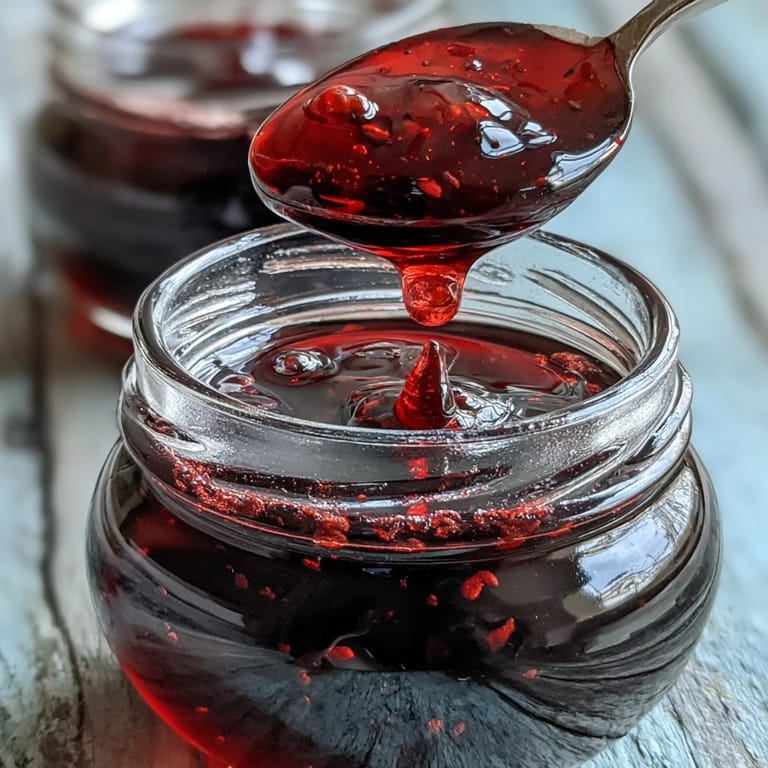
Pin Making black currant jelly is an act of slowing down, of trusting that good things take time, and of creating something beautiful enough to give away without feeling like you're giving away anything less than your best. Every jar that comes out of your kitchen is a small investment in someone's breakfast table.
Recipe Q&A
- → How long does black currant jelly take to set?
The jelly typically sets within 12-24 hours after cooling completely. The wrinkle test or reaching 105°C (221°F) during boiling ensures proper setting. If very soft after 24 hours, reboil with additional pectin.
- → Can I use frozen black currants?
Yes, frozen currants work excellently. Thaw completely before cooking and expect slightly more juice extraction. The freezing process actually helps break down cell walls, making juice extraction easier.
- → Why shouldn't I press the fruit when draining?
Pressing or squeezing the fruit forces pulp and solids through the sieve, creating cloudy jelly. Letting gravity do the work over several hours produces crystal-clear preserves with that signature jewel-like appearance.
- → How do I know when the jelly is ready?
Use either a candy thermometer (105°C/221°F indicates setting point) or the wrinkle test: place a spoonful on a cold plate, refrigerate 1 minute, then push gently with your finger. If the surface wrinkles, it's ready.
- → What's the shelf life of homemade black currant jelly?
Properly sealed and sterilized jars keep for 12-18 months in a cool, dark place. Once opened, refrigerate and consume within 3 weeks. Always check for seal integrity before storage.