 Pin
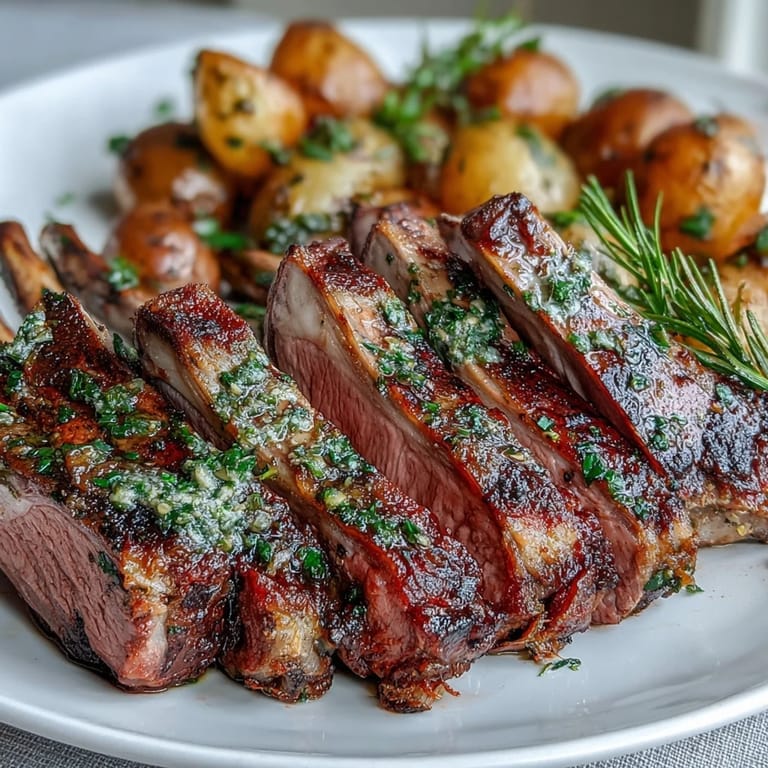
Pin There's something about a perfectly roasted rack of lamb that stops a weeknight conversation mid-sentence. I discovered this dish on a surprisingly quiet Tuesday when I wanted to cook something that looked restaurant-worthy but didn't require hours at the stove or a sink full of pans. What struck me most was how the kitchen filled with the scent of rosemary and thyme within minutes, transforming an ordinary evening into something that felt deliberate and special.
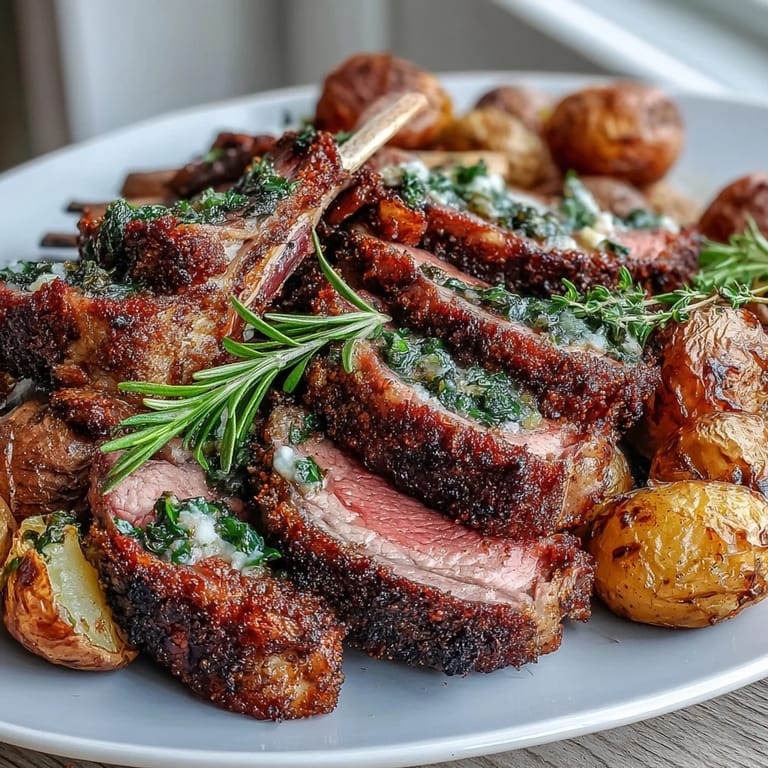
I made this for someone who claimed they didn't really like lamb, and watching their face change after the first bite was one of those quiet kitchen victories. The green olives scattered across the golden potatoes caught the light from our dining room lamp, and suddenly we were talking less about the food and more about planning the next time I'd make it. That's when I knew this recipe had become something I'd return to.
Ingredients
- Small rack of lamb, Frenched (about 500–600 g): The frenching matters more than you'd think, as it helps the meat cook evenly and looks elegant on the plate without extra work on your end.
- Extra-virgin olive oil: Use the good stuff here, especially for coating the potatoes, as it carries the flavor in a way regular oil simply won't.
- Fresh rosemary and thyme: Dried herbs will work if you're in a pinch, but fresh herbs release their oils as the lamb roasts, creating depth that dried versions struggle to match.
- Baby potatoes: Halving them ensures they roast through in the same time the lamb needs, which is the entire secret to this one-pan magic.
- Green olives and capers: These add a briny punch that wakes up your palate and cuts through the richness of the lamb beautifully, turning it from a simple roast into something with character.
- Smoked paprika: Just half a teaspoon does the heavy lifting, giving the potatoes a subtle smokiness that nobody can quite name but everyone notices.
Tired of Takeout? 🥡
Get 10 meals you can make faster than delivery arrives. Seriously.
One email. No spam. Unsubscribe anytime.
Instructions
- Heat your oven and prep your stage:
- Get your oven to 220°C and line your pan with parchment or foil—this saves you from scrubbing later, trust me. Having everything ready before you touch the lamb makes the actual cooking feel calm and controlled.
- Coat the potatoes with warmth:
- Toss the halved baby potatoes with olive oil, paprika, oregano, salt, and pepper, then spread them out on one side of your baking tray. They'll need that head start to become truly golden while the lamb roasts.
- Season the lamb with intention:
- Pat the rack dry with paper towels—this is non-negotiable if you want a proper sear. Mix your mustard, rosemary, thyme, garlic, and olive oil into a paste, then rub it all over the meat like you're giving it a gentle massage.
- Arrange everything for success:
- Place the lamb fat-side up on the opposite side of the tray from the potatoes, making sure they don't touch. The space between them matters, as it lets hot air circulate and cook each element properly.
- Roast with attention:
- Slide the tray into the oven and set a timer for about 12-13 minutes, then flip your potatoes. Aim for an internal temperature of 54°C for medium-rare lamb, which gives you that perfect pink center without any gray.
- Build your bright finish:
- While everything roasts, combine your green olives, parsley, lemon zest, and capers in a small bowl. This mixture is your secret weapon for adding freshness that balances the richness of the roasted meat.
- Rest and release:
- When the lamb hits your target temperature, tent it loosely with foil and let it rest for 8-10 minutes—this keeps the juices from running onto your plate and makes each bite more tender. During this time, toss the olive mixture gently into your warm potatoes.
- Finish with grace:
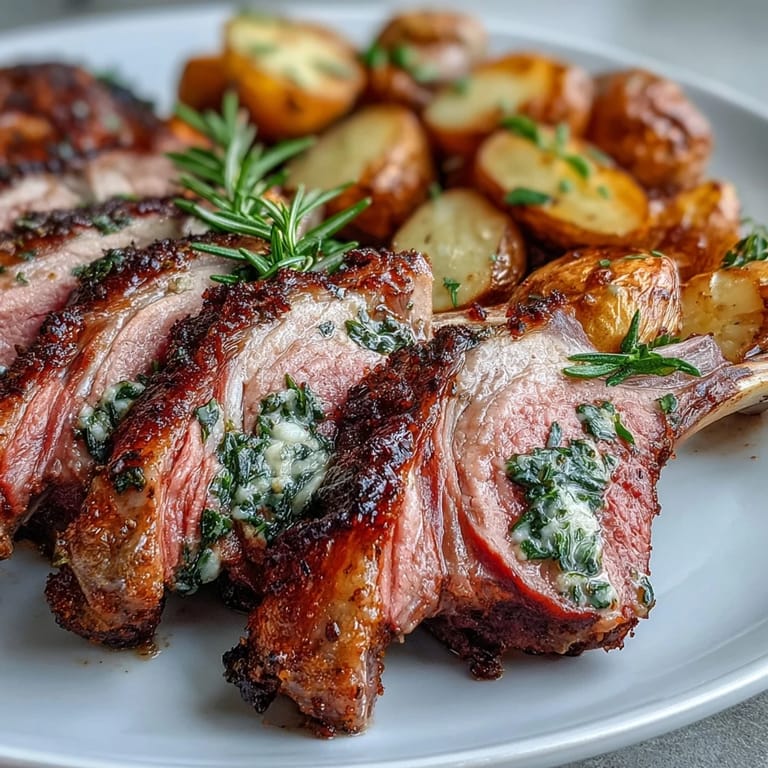
- Slice the lamb into individual chops and arrange them alongside the olive potatoes. The presentation does half the work, and you've earned the moment to simply enjoy what you've made.
 Pin
Pin This dish became my go-to when I wanted to prove to myself that cooking at home could be as satisfying as eating out, without the noise or the bill. There's something grounding about feeding someone well in your own kitchen, especially when the effort feels invisible.
Timing Without Stress
One of the reasons I return to this recipe is that it teaches you to think in layers rather than steps. The potatoes start their journey, then the lamb joins them, and by the time you're building the olive finish, everything is nearly ready. I've learned to use that prep time not for panic, but for setting the table or choosing a wine, which transforms cooking from a race into a rhythm.
Why One Pan Changes Everything
Before I mastered this technique, I'd roast proteins separately and vegetables separately, creating a kitchen full of dishes and decisions. Sharing a pan forces you to think about temperature zones and timing, which actually makes you a better cook. The potatoes absorb the lamb's rendered fat, adding a richness they wouldn't get roasting alone, so you're not just saving dishes—you're building better flavor.
Small Touches That Matter
The lemon zest and fresh parsley scattered over everything at the end might seem like decoration, but they do actual work—they brighten the palate and remind you that you're eating something alive and intentional, not just proteins and starches. Every element in this dish has been chosen because it serves a purpose, not because it sounds fancy.
- If you want to prep ahead, rub the herb-mustard mixture onto the lamb up to 4 hours before roasting, which lets the flavors marry and deepen.
- Black olives work beautifully if you can't find green ones, and sun-dried tomatoes add a different kind of richness if you're feeling experimental.
- A light red wine like Pinot Noir or Grenache pairs so naturally with this meal that it feels like the dish was designed with a glass in hand.
 Pin
Pin This recipe taught me that elegant meals don't demand complicated techniques or endless ingredients. Sometimes the best dinner is the one you actually make because it fits into your real life, and this one does.
Recipe Q&A
- → What temperature should I cook the lamb to for medium-rare?
For medium-rare, roast the lamb until it reaches an internal temperature of 54°C (130°F). Use a meat thermometer inserted into the thickest part of the meat, avoiding the bone, for the most accurate reading.
- → Can I prepare the lamb ahead of time?
Yes, you can marinate the lamb with the herb-mustard rub up to 4 hours in advance. Keep it covered and refrigerated, then bring it to room temperature 30 minutes before roasting for even cooking.
- → What can I substitute for green olives?
Black olives work beautifully as a substitute, or you can add sun-dried tomatoes for a different flavor profile. Kalamata olives also pair well with lamb and potatoes.
- → How do I know when the lamb is done resting?
Let the lamb rest tented with foil for 8-10 minutes after roasting. This allows the juices to redistribute throughout the meat, ensuring each chop is tender and flavorful when sliced.
- → What wine pairs best with this dish?
Light to medium-bodied red wines work wonderfully with lamb. Try a Pinot Noir for its delicate fruit notes, or a Grenache for a slightly spicier profile that complements the Mediterranean herbs and olives.
- → Can I use regular potatoes instead of baby potatoes?
Absolutely. Cut regular potatoes into 2-3 cm chunks to match the size of halved baby potatoes. This ensures they cook through in the same time as the lamb.