 Pin
Pin I discovered this recipe by accident on a gray November evening when I had dark chocolate languishing in the pantry and a sudden craving for chili that felt both familiar and strange. My partner was skeptical when I mentioned chocolate going into the pot, but the way the cocoa deepened the spices and rounded out the heat converted them completely. Now it's become our go-to weeknight dinner when we want something that tastes like we've been cooking all day, even though it comes together in under an hour.
I made this for a small dinner party last winter and watched my guests pause mid-spoonful, trying to identify what made it taste so deeply satisfying. When I revealed the chocolate, someone laughed and said it tasted like autumn itself. That moment sealed it for me—this wasn't just a fusion experiment, it was something that genuinely worked, that brought people together over something warm and a little bit mysterious.
Ingredients
- Ditalini pasta (250 g): Small tubes that catch the sauce beautifully and cook evenly in the pot; this shape is key because it won't get lost or mushy.
- Ground beef or plant-based mince (400 g): The backbone of the chili; I prefer a mix of leaner and fattier beef for flavor, and plant-based versions work just as well.
- Kidney beans and black beans (400 g each): Drain and rinse these well—the starch they release affects the final texture.
- Onion, garlic, red bell pepper, jalapeño: These four build a flavor foundation that's aromatic and clean; don't skip the mincing step, it helps everything blend.
- Diced tomatoes (400 g): Use canned for consistency; fresh tomatoes are lovely but less reliable for this one-pot method.
- Chili powder, cumin, smoked paprika, cinnamon, oregano: Each spice plays a role; cinnamon is the secret that keeps people guessing.
- Beef or vegetable broth (700 ml): Low-sodium lets you control the salt and taste the chocolate better.
- Dark chocolate (40 g) and cocoa powder (1 tbsp): The chocolate should be at least 70% cocoa, and unsweetened cocoa powder adds depth without extra sugar.
- Brown sugar (½ tbsp): Just enough to balance the cocoa's bitterness without making it dessert.
Tired of Takeout? 🥡
Get 10 meals you can make faster than delivery arrives. Seriously.
One email. No spam. Unsubscribe anytime.
Instructions
- Build the flavor base:
- Heat oil in your pot over medium heat and sauté the onion until it releases its sweetness and softens. Stir in the garlic, bell pepper, and jalapeño, letting them become fragrant and just start to catch at the edges—this takes about two to three minutes.
- Brown the meat:
- Add your ground beef or plant-based mince and break it into small pieces as it cooks; you're looking for color and texture, not one solid block. This step matters because it renders fat that flavors everything else.
- Bloom the spices:
- Sprinkle in all your spices and stir constantly for exactly one minute—this wakes them up and makes them taste more alive. You'll smell the difference immediately.
- Build the sauce:
- Stir in tomato paste first, let it coat everything, then add your tomatoes, beans, cocoa powder, brown sugar, and broth. The moment before everything comes together is when it still looks a little chaotic, but trust the process.
- Cook the pasta in the pot:
- Stir in the ditalini and bring everything to a gentle boil, then cover and reduce heat to a simmer. Stir occasionally and taste at ten minutes; if the pasta is still firm and the liquid hasn't been fully absorbed, give it another minute or two. The pasta will continue absorbing liquid even after you remove the pot from heat.
- Finish with chocolate:
- Remove the lid, stir in your chopped dark chocolate, and watch it melt into the sauce in real time. The chocolate won't taste like chocolate—it will taste like a secret ingredient that somehow makes everything taste right.
 Pin
Pin My favorite memory with this recipe happened on a Tuesday night when my roommate came home with news she'd gotten the job she'd been hoping for for months. We had exactly one pot left to wash, and she asked if I could make something that felt celebratory but didn't require takeout. This dish came together while we talked, and by the time the chocolate melted in, she said it tasted like good luck. I've made it dozens of times since, but that's the one that matters.
Why the Chocolate Works Here
Chocolate in savory food isn't a gimmick—it's a technique that professional chefs have used for centuries, especially in Mexican and Spanish cooking. Here, the cocoa adds what I think of as umami's warm older sibling: a roundness that makes spices taste richer and heat feel less aggressive. Dark chocolate specifically, because it has minimal sugar, actually amplifies other flavors rather than masking them. The cinnamon helps too, creating a subtle sweetness that feels like spice rather than sugar.
Adapting This to What You Have
I've made this with ground turkey, with lentils instead of beans, with roasted mushrooms for earthiness. The structure stays the same, but the soul of the dish is flexible. If you don't have kidney beans, use pinto or cannellini. If your bell pepper is green instead of red, it will taste a little more assertive but still work. Even the chocolate can be adjusted—if you only have milk chocolate, use less of it and add another tablespoon of cocoa powder to balance the flavor.
Building the Right Bowl
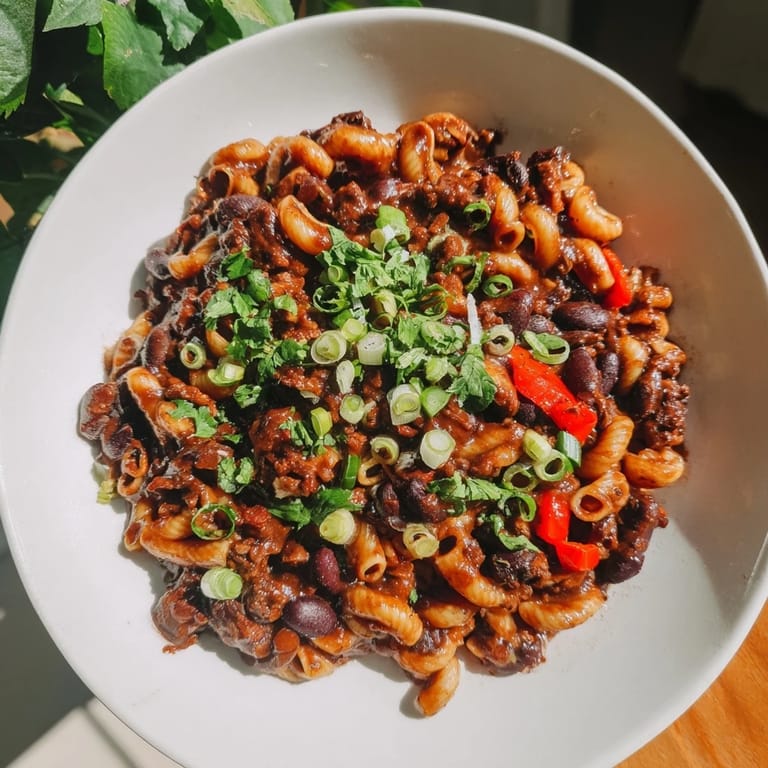
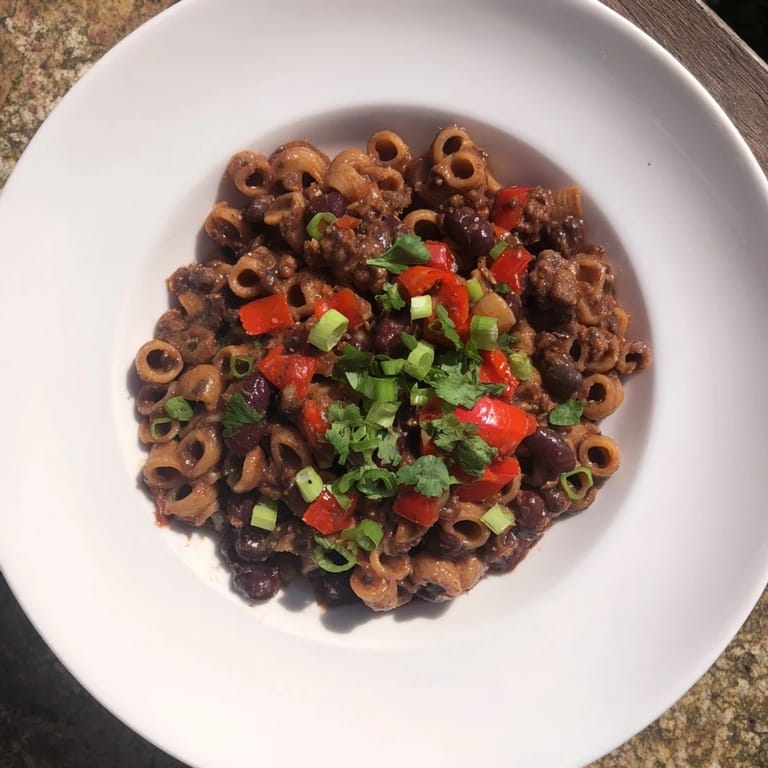
This is one of those dishes that changes depending on how you finish it. Fresh cilantro brightens it, green onions add a sharp note that cuts through the richness, and a dollop of sour cream or cashew cream makes it creamy without being heavy. I usually put everything on the table and let people build their own bowl.
- Cilantro and lime juice are a combination that feels almost necessary—the brightness balances the chocolate beautifully.
- If you add cheese, pick something aged and assertive like aged cheddar or cotija rather than mild varieties.
- The sour cream (or plant-based version) should go in after serving, so it stays cool and distinct rather than melting into warmth.
 Pin
Pin This recipe feels like having a conversation with someone who understands you—it's unexpected but somehow exactly what you needed. Make it once and taste what you've been missing, make it twice and it becomes yours.
Recipe Q&A
- → What pasta works best for this dish?
Small pasta shapes like ditalini or elbow macaroni hold up well, absorbing the flavors without becoming mushy.
- → Can I make this dish vegetarian?
Yes, substitute ground beef with plant-based mince or double the beans for added protein.
- → How does the dark chocolate affect the flavor?
Dark chocolate adds a subtle richness and depth, balancing the spiciness with gentle sweetness.
- → What spice adjustments can be made for heat?
Control the spice level by varying the amount of chili powder and jalapeño according to taste.
- → Can I prepare this dish gluten-free?
Yes, use gluten-free pasta alternatives to accommodate dietary needs without sacrificing texture.