 Pin
Pin There's something about the smell of chicken hitting hot oil that brings me straight back to my aunt's kitchen on a random Tuesday afternoon. She was teaching me how to make piccata, moving with this casual confidence I envied, and I remember thinking the whole dish seemed too elegant for how quickly it all came together. Thirty minutes from hungry to dinner, she said, stirring the sauce with one hand while I watched the chicken turn this perfect golden brown. Now it's my go-to when I want something that tastes like I spent hours cooking but actually feels effortless.
I made this for my sister when she was going through a rough patch, nothing fancy, just dinner at my place on a Thursday. She took one bite and got quiet in that way that meant something landed, and we ended up talking until midnight about nothing important at all. That's when I realized this dish isn't really about the capers or the lemon—it's about making someone feel cared for with minimal fuss.
Ingredients
- Boneless, skinless chicken breasts (2 large): Slicing them in half horizontally gives you thin cutlets that cook evenly and stay tender instead of drying out in the pan.
- All-purpose flour (½ cup): This creates a delicate golden crust that catches the sauce beautifully—use just enough to coat lightly, not a thick layer.
- Olive oil (2 tablespoons) and unsalted butter (1 tablespoon): Together they give you a higher smoke point than butter alone while keeping that rich flavor.
- Garlic (3 cloves, minced): Add it right after the chicken comes out so it blooms without burning, giving the sauce depth without harshness.
- Dry white wine (½ cup): This deglazes the pan and pulls up all those browned bits—that's where the real flavor lives, so don't skip that step.
- Fresh lemon juice (⅓ cup, about 2 lemons): Fresh is non-negotiable here; bottled juice tastes flat and metallic by comparison.
- Capers (¼ cup, drained and rinsed): These little briny pops are essential to piccata's identity—rinsing them keeps the sauce from getting too salty.
- Chicken broth (½ cup low-sodium): Low-sodium lets you control the salt level, which matters since capers and pasta water add their own seasoning.
- Unsalted butter (2 tablespoons, for finishing): Whisked in at the end, this creates a glossy, luxurious sauce that clings to every strand of pasta.
- Fresh parsley (2 tablespoons, finely chopped): It's the final brightness that pulls everything together—add it just before serving so it stays vibrant.
- Spaghetti or linguine (12 ounces): The shape doesn't matter as much as cooking it to actual al dente; overcooked pasta dissolves into the sauce instead of supporting it.
Tired of Takeout? 🥡
Get 10 meals you can make faster than delivery arrives. Seriously.
One email. No spam. Unsubscribe anytime.
Instructions
- Get your pasta going:
- Bring a large pot of salted water to a rolling boil—the water should taste like the sea. Cook your pasta according to the package but start checking a minute early, because al dente means it still has a slight bite when you bite into it. Reserve about half a cup of that starchy pasta water before you drain, it's liquid gold for silking out your sauce.
- Butterfly and season the chicken:
- Lay each breast flat on your cutting board and slice horizontally through the middle to create two thin cutlets. This only takes a steady hand and a sharp knife, and suddenly you've got four pieces that cook evenly instead of one thick breast that's dry on the outside and raw in the middle.
- Dredge with intention:
- Coat each cutlet lightly in flour on both sides, then shake it off over the bowl—you want a whisper-thin coating that'll turn golden and crispy, not a batter. Too much flour dulls the delicate chicken flavor.
- Sear the chicken until golden:
- Get your skillet hot with the oil and butter over medium-high heat, then listen for that sizzle when the chicken hits the pan. Cook for three to four minutes per side until the outside is that gorgeous amber-brown and a quick knife inserted in the thickest part comes out clear. Transfer to a plate and tent it loosely with foil to keep warm.
- Build the sauce:
- In that same skillet with all the browned bits stuck to the bottom, add your minced garlic and let it smell incredible for about thirty seconds. Pour in your wine and scrape with a wooden spoon to dissolve those caramelized bits—that's flavor. Add the lemon juice, capers, and broth, then let it bubble gently for two to three minutes until slightly reduced and the sharp edge of the wine mellows.
- Emulsify and return the chicken:
- Lower the heat and whisk in those final two tablespoons of butter until the sauce turns glossy and rich. Nestle the chicken back into the skillet and spoon the sauce over each piece so it starts absorbing all that flavor.
- Marry it all together:
- Add your drained pasta directly to the skillet and toss gently so every strand gets coated in that beautiful sauce. If it looks too thick, splash in some of that reserved pasta water a little at a time until you get a consistency that looks like it'll coat the back of a spoon.
- Plate and finish:
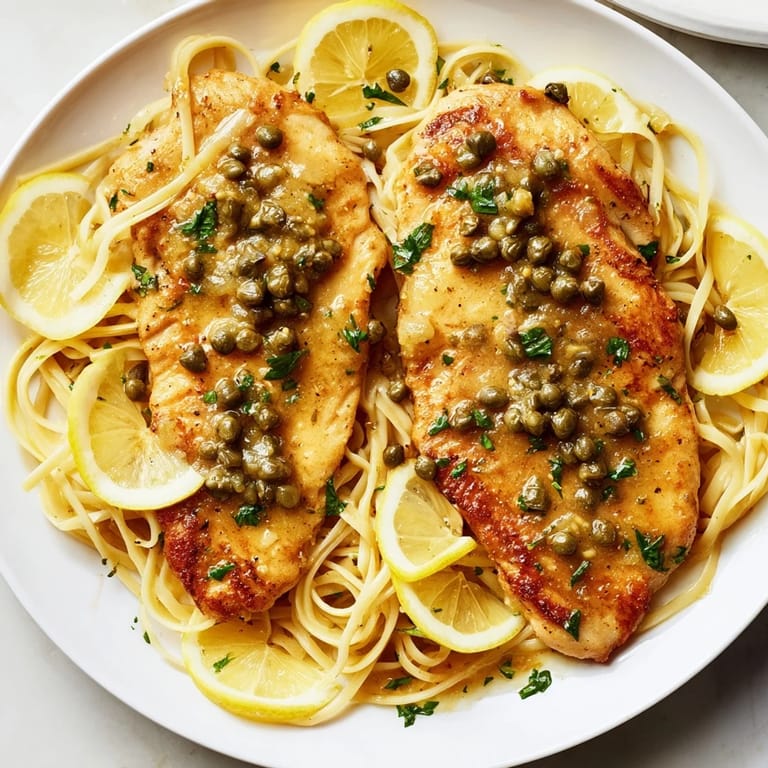
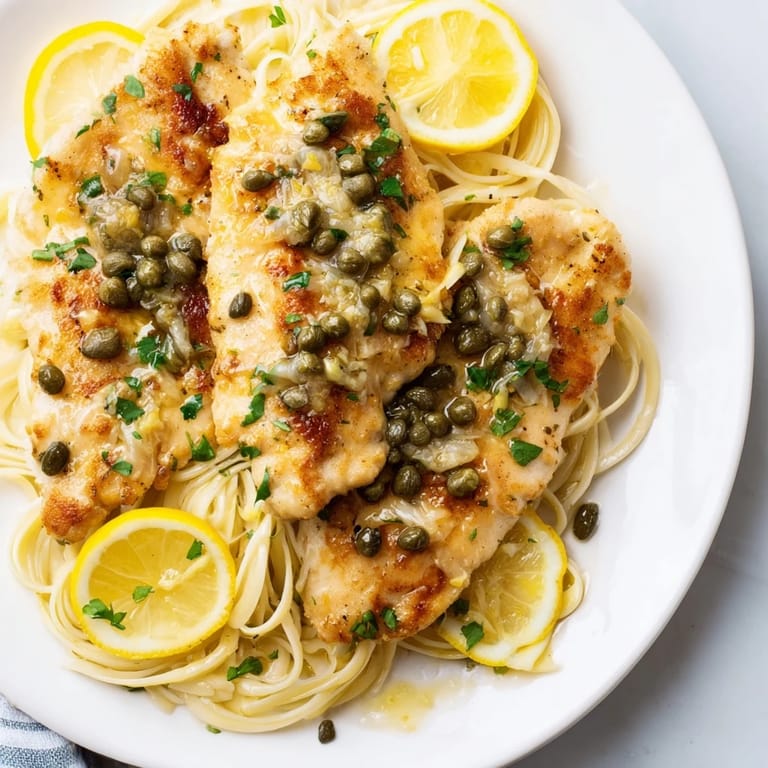
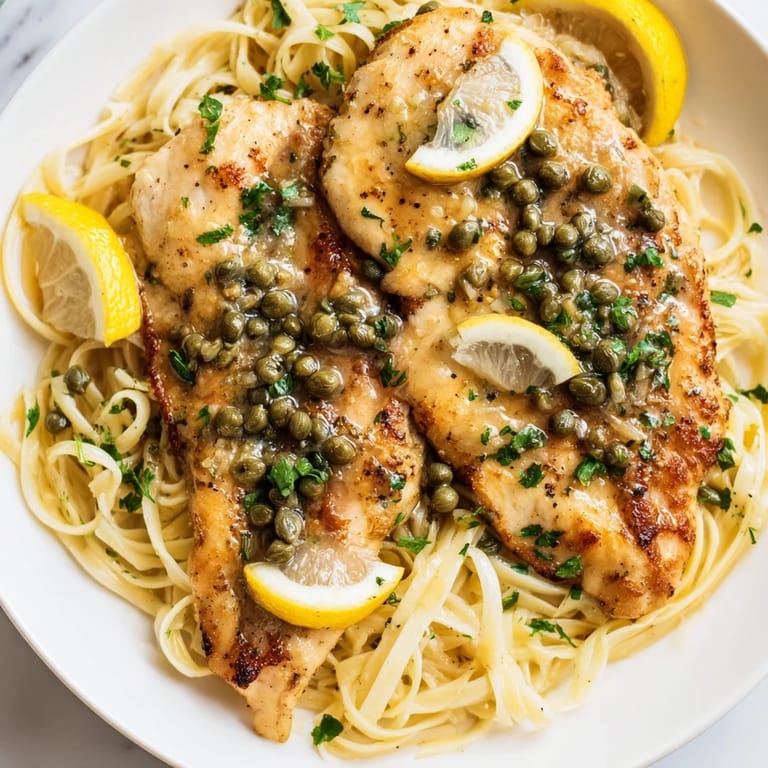
- Divide pasta among bowls with a piece of chicken on top, then spoon extra sauce over everything. A scatter of fresh parsley and a lemon slice makes it look like you actually tried, which you did, just quickly.
 Pin
Pin I watched my ten-year-old take a bite and ask for seconds without any negotiation, and I realized this is the kind of food that tastes fancy enough for grown-ups but simple enough that kids won't stage a protest. It's the kind of meal that bridges the gap between weeknight reality and feeling like you're eating somewhere nice.
Why This Deserves Your Time
Piccata isn't trend-chasing or complicated, it's just pure Italian practicality translated into something that tastes elegant. The beauty is in the restraint—lemon, capers, butter, and a little wine doing exactly what they're supposed to do without any fuss or competing flavors.
Making It Work for Your Kitchen
The only real variable is your skillet size and heat level. A skillet that's too crowded steams the chicken instead of searing it, and medium-high heat that's too high can burn your butter before the sauce develops. If you nail those two things, everything else follows naturally, and you start building confidence in the kitchen.
Variations and Swaps That Actually Work
Swap the chicken for thin veal cutlets or even thick white fish fillets and the method stays exactly the same. Angel hair pasta makes it feel lighter, while a heartier shape like pappardelle makes it feel more substantial. White wine and lemon are the backbone, but you can substitute chicken broth for the wine entirely if you prefer, and the dish still works beautifully.
- Broth-based version cooks a touch faster and skips the alcohol entirely if that matters for your table.
- Add a tablespoon of capers straight into the pasta water before draining to boost the briny flavor throughout.
- Fresh herbs like basil or thyme stirred in at the end layer in extra dimension without overwhelming the delicate balance.
 Pin
Pin This is the kind of recipe that teaches you more about cooking fundamentals than complicated techniques ever could—how to properly sear, how to deglaze, how simple ingredients can make each other shine. Once you've made it a few times, you'll start riffing on it naturally, and that's when you know you've really learned something.
Recipe Q&A
- → What type of pasta works best for this dish?
Spaghetti or linguine are ideal as they hold the light sauce well, but angel hair can be used for a more delicate texture.
- → Can white wine be substituted in the sauce?
Yes, low-sodium chicken broth can replace white wine without losing the sauce’s depth and flavor.
- → How can I ensure the chicken stays tender?
Slice the chicken breasts into thin cutlets and cook them over medium-high heat just until golden, avoiding overcooking for juicy results.
- → What garnishes complement this dish?
Fresh parsley and lemon slices add a fragrant, bright touch that enhances the citrus and herb flavors.
- → Is it possible to make this gluten-free?
Yes, using gluten-free flour for dredging and gluten-free pasta allows for a gluten-free version without compromising flavor.