 Pin
Pin I discovered this chickpea curry on a rainy Tuesday when my pantry felt disappointingly bare. Three cans and a forgotten coconut milk carton later, I'd stumbled onto something that tasted like warmth itself. The kitchen filled with that unmistakable blend of toasted cumin and ginger, and suddenly the gray afternoon didn't matter anymore. My partner wandered in halfway through cooking and asked what smelled like a restaurant, which felt like the highest compliment possible. Now it's become my go-to when I need comfort without fuss.
I made this for my sister during her first week of being plant-based, and I'll never forget her eyes lighting up when she tasted it. She kept asking what the 'secret' was, and honestly, it's just good spices and patience. That meal became proof that eating thoughtfully doesn't mean eating boringly. It's stayed in her rotation ever since, and she's made it for her own friends who now request it by name.
Ingredients
- Vegetable oil: Use whatever neutral oil you have—I've made this with coconut oil when I was out of vegetable oil, and it added a subtle sweetness that wasn't unwelcome.
- Onion: Don't skip the browning step; those five minutes transform the onion from sharp to honeyed, which is the foundation everything else sits on.
- Garlic and ginger: Fresh ginger makes a noticeable difference in brightness, but I've used jarred ginger in a pinch and the curry still sings.
- Ground cumin, coriander, turmeric, garam masala: Toast these together to wake them up; this minute of toasting matters more than you'd think.
- Chili powder and paprika: Adjust these based on who's eating—I learned the hard way that 'mild' means different things to different people.
- Chickpeas: Canned and rinsed is convenient, but if you use homemade or even slightly undercooked dried ones, the curry thickens differently and feels more luxurious.
- Coconut milk: Full-fat is genuinely better here; the lean version leaves the sauce feeling thin and apologetic.
- Diced tomatoes: I always use canned because fresh tomatoes can be too watery and throw off the balance.
- Vegetable broth or water: Broth adds depth, but water works if you trust the other flavors, which I usually do.
- Baby spinach: Optional, but it wilts down so quickly that it's almost invisible, adding nutrition without fuss.
- Lime juice: This is non-negotiable; it brightens everything and prevents the curry from tasting dull.
Tired of Takeout? 🥡
Get 10 meals you can make faster than delivery arrives. Seriously.
One email. No spam. Unsubscribe anytime.
Instructions
- Warm your oil and soften the onion:
- Heat the oil over medium heat until it shimmers slightly, then add your diced onion. Let it sit for a moment before stirring, which lets it catch some color and develop sweetness. After four to five minutes, it should look golden and smell like the start of something good.
- Build fragrance with garlic and ginger:
- Add your minced garlic and grated ginger, stirring constantly for about a minute until the raw edge disappears and the kitchen fills with that distinctive, appetizing aroma. Don't let it burn; you're looking for toasted and fragrant, not dark and bitter.
- Toast your spices into life:
- Sprinkle in all your ground spices—cumin, coriander, turmeric, garam masala, chili powder, paprika, salt, and pepper. Keep stirring for exactly one minute, which seems short but releases so much flavor. You'll notice the color deepen and the smell become almost intoxicating.
- Combine everything into the pot:
- Pour in your drained chickpeas, canned tomatoes with their juices, coconut milk, and broth, stirring well so nothing sticks to the bottom. The mixture will look loose and saucy, which is exactly right.
- Simmer gently with a lid on:
- Bring it to a gentle bubble, then cover and reduce heat so it simmers quietly for fifteen minutes, stirring every few minutes. The flavors meld during this quiet time, and the coconut milk incorporates fully into the sauce.
- Add spinach and finish:
- Remove the lid, add your spinach if using, and let it wilt for two to three minutes while you stir occasionally. The spinach disappears into the sauce, adding color and nutrition without changing the taste.
- Brighten with lime and taste:
- Stir in your lime juice and take a spoonful to taste, adjusting salt or spice as needed. This moment of tasting and adjusting is where your version becomes yours, not just a recipe.
- Serve with something to soak it up:
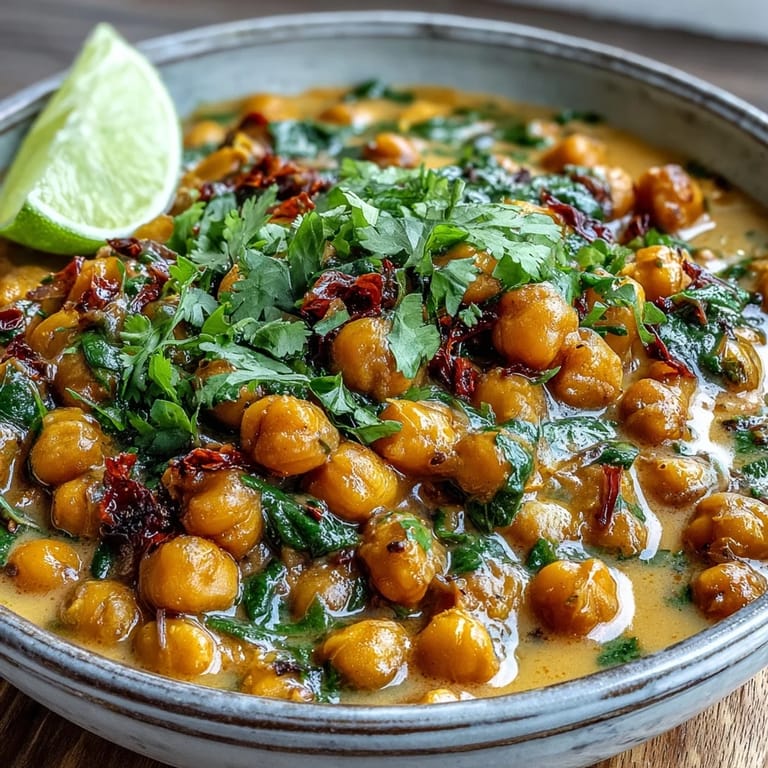
- Ladle it into bowls over rice or alongside naan, scatter cilantro on top, and set out lime wedges for anyone who wants extra brightness. The curry looks simple but tastes like you've been cooking for hours.
 Pin
Pin There's a moment in cooking this curry when the spinach wilts into the sauce and the whole pot seems to come alive with color and fragrance. That's when I know everyone eating it is going to feel cared for, even if they don't realize it yet. Good food is sometimes just attention given shape, and this curry is exactly that.
Making It Your Own
This curry is forgiving in the way that makes cooking feel less intimidating and more fun. I've added sweet potato when I had it, swapped bell peppers for spinach, even tossed in cashews one night when I found them in the freezer. Each version tastes slightly different but equally good, which means you're not ruining anything by experimenting. The spice ratio is a suggestion, not a law, and adjusting it to your own heat tolerance means you'll actually want to make this regularly.
When to Serve This
I make this on nights when I'm tired but want something that feels nourishing and special. It's equally good as a weeknight dinner for two or scaled up when friends come over and you want them to think you have your life together. The fact that it's plant-based means nobody has to feel like they're eating a 'lighter' version of something; it stands completely on its own. The leftovers reheat beautifully and somehow taste even better the next day, which has earned this curry permanent residence in my cooking rotation.
The Details That Matter
The difference between a good curry and a forgettable one often comes down to small details nobody talks about. Rinsing your canned chickpeas removes the starchy liquid that can make the sauce gummy, using full-fat coconut milk instead of light means the sauce clings to everything, and letting those spices toast for exactly one minute instead of thirty seconds changes the depth entirely. These aren't complicated things, just deliberate ones that show in every spoonful.
- Taste as you go; your salt needs may differ depending on your broth and how long the curry simmers.
- If you prefer a thicker curry, uncover it for the last five minutes and let some liquid evaporate.
- Make a double batch and freeze half in containers for mornings when cooking feels impossible but eating well still matters.
 Pin
Pin This curry has become the thing I make when I want to feel like I'm taking care of people, including myself. It's proof that plant-based cooking can be deeply satisfying and that forty minutes can feel like an investment rather than a burden.
Recipe Q&A
- → How can I make this curry thicker?
Simmer uncovered for the last 5-10 minutes to reduce the liquid. You can also mash some chickpeas against the side of the pan to naturally thicken the sauce, or add a tablespoon of tomato paste during cooking.
- → What vegetables work well in this curry?
Diced sweet potato, bell peppers, cauliflower florets, or green beans all complement the flavors beautifully. Add hearty vegetables like sweet potato or cauliflower when you add the chickpeas so they have time to soften.
- → Can I use dried chickpeas instead of canned?
Absolutely. Soak 1 cup dried chickpeas overnight, then cook them until tender before adding to the curry. You'll need about 3 cups cooked chickpeas to equal two 400g cans.
- → How long does this keep in the refrigerator?
Store in an airtight container for up to 4-5 days. The flavors actually deepen and improve after a day or two. Reheat gently on the stovetop, adding a splash of water or broth if needed.
- → Is this curry freezer-friendly?
Yes, it freezes beautifully for up to 3 months. Cool completely before transferring to freezer-safe containers. Thaw overnight in the refrigerator and reheat on the stovetop.
- → What's the best way to adjust the spice level?
Start with half the called-for chili powder, taste after simmering, and add more gradually. For milder heat, omit the chili powder entirely and rely on paprika for color and subtle warmth.