 Pin
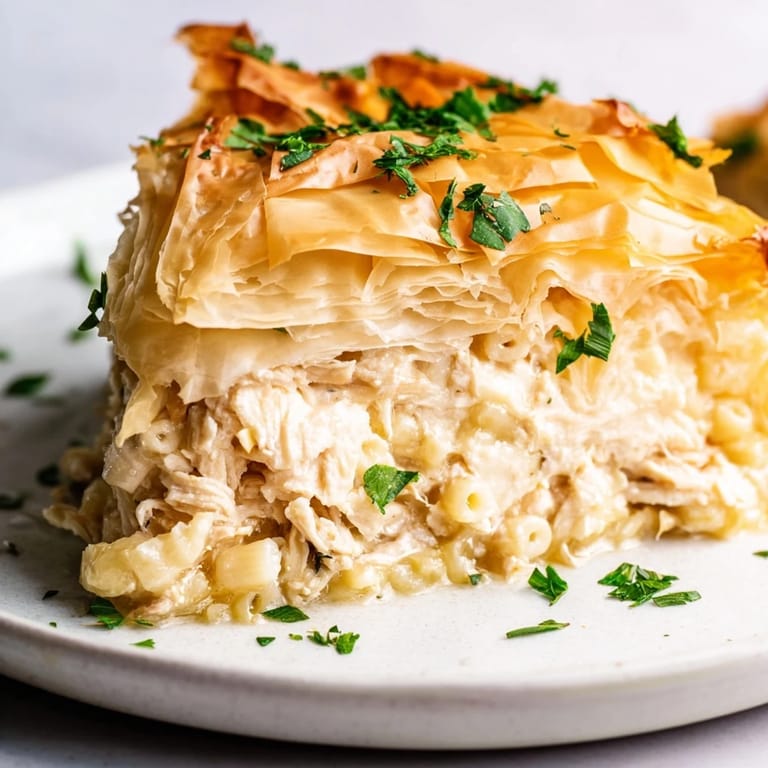
Pin The first time I made this, I was scrolling through my phone at midnight, half-asleep, when a video of phyllo dough being scrunched into this gorgeous, crinkly cake popped up. I showed it to my partner the next morning, and we both stared at it like, why hasn't anyone made a savory version of this yet? By that afternoon, I had chicken thawing on the counter and was already imagining layers of crispy phyllo hiding a creamy pasta filling underneath. It felt like the kind of dish that would look like you spent all day in the kitchen, when really, it's just a beautiful stack of clever shortcuts.
I made this for a dinner party last spring when someone canceled at the last minute and I suddenly had six people coming instead of eight. I was nervous the portions would look skimpy, but when I pulled it out of the oven and cut into it, the thing was so tall and substantial that nobody noticed. My friend Sarah asked for the recipe right there at the table, which felt like the highest compliment possible.
Ingredients
- Cooked shredded chicken breast (2 cups): Use a rotisserie chicken if you're short on time—it's honestly better because it has more flavor from roasting, and nobody will judge you for taking that shortcut.
- Cooked ditalini pasta (1 cup): Those tiny tube shapes trap sauce and custard beautifully, but regular small pasta works if that's what you have on hand.
- Ricotta, mozzarella, and Parmesan cheeses: This trio gives you creaminess, melting power, and salty depth—each one does something different, so don't skip any.
- Fresh parsley (2 tablespoons chopped): Stir some into the filling and save the rest for garnish; it's the only thing that keeps this dish from feeling heavy.
- Garlic powder, oregano, salt, and pepper: Season your filling generously—the phyllo layers will mute everything slightly, so don't be shy.
- Phyllo dough (16 sheets): Keep it covered with a damp towel while you work or it'll dry out and shatter on you, which I learned the hard way the first time.
- Melted butter (½ cup): This is what gives phyllo its personality, so use real butter and don't get stingy.
- Custard (eggs, milk, cream, salt, pepper): This soaks down through the layers and transforms the whole thing into something between a savory bread pudding and a baked pasta—it's the secret weapon.
Tired of Takeout? 🥡
Get 10 meals you can make faster than delivery arrives. Seriously.
One email. No spam. Unsubscribe anytime.
Instructions
- Start with heat and a clean stage:
- Preheat your oven to 375°F and grease a 9x13-inch baking dish. This seems obvious, but I've definitely rushed this step and regretted it when everything stuck.
- Build your filling with personality:
- Toss the shredded chicken, cooked pasta, all three cheeses, parsley, and seasonings together in a big bowl until it feels intentional, not just stirred together. Taste it—your filling is basically the entire dish, so make sure you actually like how it tastes on its own.
- Wrangle the phyllo into submission:
- Unroll your phyllo sheets and drape a damp kitchen towel over them immediately. Work one sheet at a time, brush it lightly with melted butter, then scrunch it gently accordion-style with your hands like you're gathering a delicate fabric. This is meditative, not stressful, even though it might feel fiddly at first.
- Lay down your first foundation:
- Place each scrunched phyllo sheet into the baking dish side by side, overlapping slightly, until you've covered the bottom with about 8 sheets. They'll look chaotic and beautiful, which is exactly right.
- Fill the middle:
- Spoon your chicken and pasta mixture evenly across the phyllo base, spreading it gently so you don't tear anything. This is where all that flavor you built earlier gets locked in.
- Top with crinkle:
- Repeat the buttering and scrunching with your remaining 8 sheets, layering them on top just like you did on the bottom. Brush the very top with any butter that's left, which is what gives you that golden, shatteringly crisp exterior.
- Pour the magic over everything:
- Whisk your eggs, milk, cream, salt, and pepper together until it's smooth, then pour it evenly across the top. Watch it soak down through the layers—that's the whole dish coming together right in front of you.
- Bake until golden and fragrant:
- Into the oven for 35 to 40 minutes, until the top is deep golden brown and smells like butter and cheese have just decided to become friends. You'll know it's done when the custard is set but still has a tiny bit of jiggle in the center when you gently shake the dish.
- Rest, then serve:
- Let it cool for 10 minutes—this is when everything sets and becomes sliceable. Serve it warm with extra parsley scattered on top if you're feeling fancy, which you absolutely should be.
 Pin
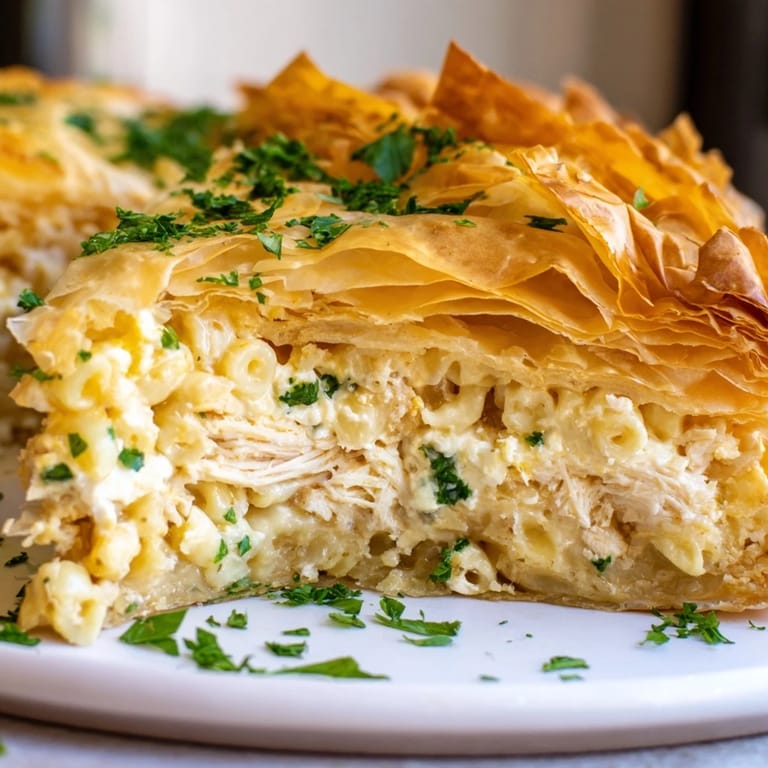
Pin There's something about watching someone cut into this dish for the first time that never gets old. The way their fork breaks through those crispy, golden-brown layers and finds the warm, creamy filling waiting underneath—it always gets a reaction. That moment when they taste it and realize it's savory, not sweet, and it all somehow makes perfect sense, is genuinely one of my favorite things about cooking this.
Why This Dish Works So Well
This is fusion cooking that actually makes sense instead of feeling forced. Phyllo dough is naturally fancy and dramatic, but it's also incredibly forgiving—it doesn't care if your layers are perfect, it just wants butter and heat to turn golden. The custard is borrowed from savory bread puddings, the cheese filling comes straight from Italian baking, and the idea to stuff it with pasta and chicken is just the kind of thing that happens when you're not afraid to play with your food. Everything here is something you already know how to do; it's just arranged in a way that makes people think you're way more skilled than you actually are.
Making It Your Own
This recipe is a skeleton waiting for you to add personality. Some people will add sautéed mushrooms or wilted spinach to the filling, which makes it taste like autumn. Others will add a pinch of crushed red pepper for heat, which makes it feel exciting instead of comforting. I've had versions with roasted garlic, versions with fresh basil stirred in at the last second, even one with sun-dried tomatoes folded through. The point is that your filling is yours to adjust, as long as you keep the custard the same because that's the only thing that has to be precise.
Serving and Pairing Ideas
Serve this warm, not hot, when the layers have set but the interior is still gentle. A crisp white wine like Sauvignon Blanc is your friend here because all the cheese and butter need something bright to cut through. A simple green salad on the side makes the meal feel complete without overcomplicating things, and honestly, this dish is substantial enough that you don't need much else.
- If you're making this ahead, assemble everything except the custard, cover it, and refrigerate—just add an extra 10 minutes to your bake time.
- Leftovers reheat beautifully in a 325°F oven for about 15 minutes, and they're almost better the next day when everything has had time to settle together.
- This scales up easily if you need to feed more people—just use a bigger dish and add proportionally more custard so everything soaks through evenly.
 Pin
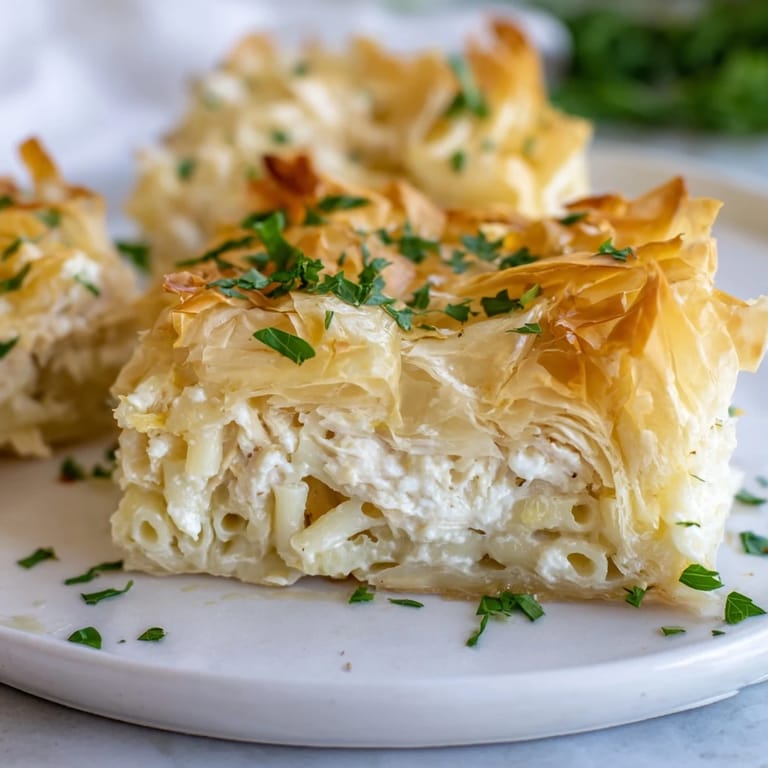
Pin This dish surprised me by becoming the thing I make when I want to impress people without stressing myself out. It's the kind of food that makes you look like you've got everything figured out, when really you're just following instructions and letting butter and time do the work.
Recipe Q&A
- → How should the phyllo dough be handled to prevent tearing?
Keep phyllo covered with a damp towel while working and handle gently to maintain flexibility and avoid tearing.
- → Can I prepare the filling ahead of time?
Yes, the chicken and pasta mixture can be made a day in advance and refrigerated to enhance flavors before layering.
- → What type of pasta works best in this dish?
Small shapes like ditalini pasta hold the filling well and blend seamlessly within the layers.
- → Is it possible to add vegetables to this dish?
Adding sautéed mushrooms or spinach to the filling is recommended for extra flavor and texture variety.
- → How can I ensure the custard soaks evenly through the layers?
Pour the custard slowly and evenly over the assembled layers and allow it to settle slightly before baking.