 Pin
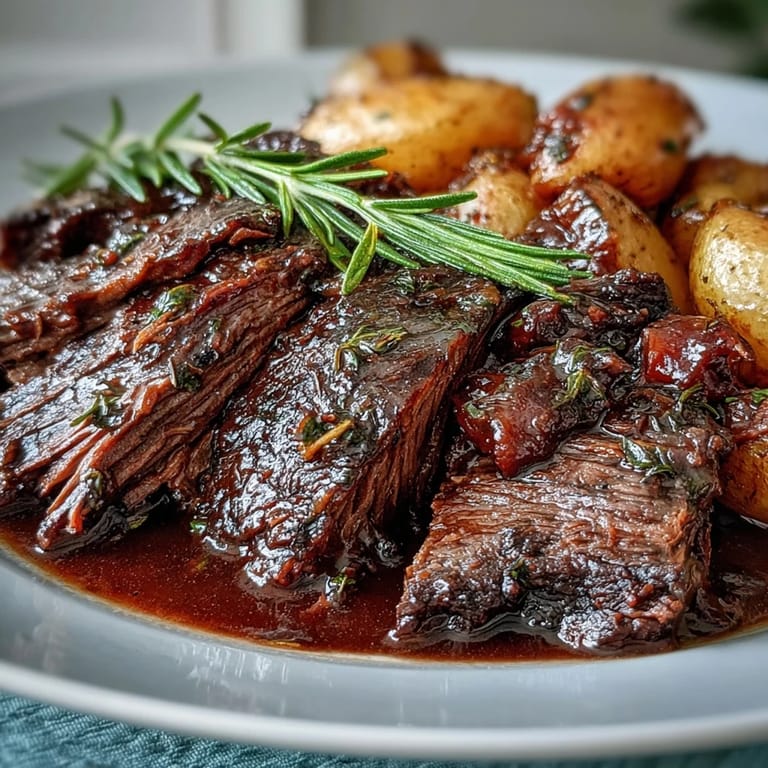
Pin The winter my husband and I bought our first fixer-upper, the furnace died on the coldest February night in recorded history. We huddled under blankets with a space heater, but the only thing that actually made us forget the creeping chill was that pot roast bubbling away on the stove. Something about the way rosemary and red wine filled every inch of our tiny kitchen made the house feel like home anyway.
My sister called me that afternoon to complain about her own cooking disasters. She ended up staying for dinner and scraping her plate clean, then asked if she could take the extra serving home for her lunch the next day. Now she requests this whenever the weather turns even slightly chilly.
Ingredients
- Beef chuck roast: Look for marbling throughout those 3 to 3.5 pounds because that internal fat is what keeps the meat meltingly tender after hours of cooking.
- Kosher salt and black pepper: Generous seasoning here is the foundation of flavor, so do not be shy.
- All-purpose flour: This creates that beautiful crust when searing and helps thicken the cooking liquid into gravy later.
- Olive oil and butter: The combination gives you a high smoke point for searing plus that nutty richness only butter provides.
- Yellow onion, garlic, carrots, celery: These aromatics build the savory base, and the vegetables become sweet and spoonable after braising.
- Baby potatoes: Small waxy potatoes hold their shape beautifully while soaking up all that flavorful liquid.
- Tomato paste: Brown this in the pot to unlock caramelized notes that deepen the entire sauce.
- Dry red wine: Choose something you would actually drink because it reduces down into the gravy.
- Beef broth: Low-sodium lets you control the seasoning, and homemade stock makes this next-level.
- Worcestershire sauce: This adds that subtle umami punch people notice but cannot quite identify.
- Fresh rosemary and thyme: Woody herbs stand up to long cooking better than delicate leafy herbs.
- Bay leaves: Throw these in for their quiet earthy contribution to the background flavor.
- Cornstarch slurry: Optional for thicker gravy at the end if you prefer that consistency.
Tired of Takeout? 🥡
Get 10 meals you can make faster than delivery arrives. Seriously.
One email. No spam. Unsubscribe anytime.
Instructions
- Preheat and prep the meat:
- Set your oven to 300 degrees Fahrenheit, then pat the beef completely dry with paper towels and season it all over with the salt and pepper.
- Give it a light flour coat:
- Dust the roast with flour, shaking off any excess so you just have a thin layer for that golden sear.
- Sear until deeply browned:
- Heat 2 tablespoons of oil with the butter in your heavy pot over medium-high heat, then cook the roast for about 5 minutes per side until it has a dark crust, even getting the edges.
- Build the flavor base:
- Set the beef aside on a plate, reduce the heat to medium, and cook the onions for a few minutes until softened before adding the garlic for just under a minute until fragrant.
- Bloom the tomato paste:
- Stir in the tomato paste and let it cook for a couple of minutes until it darkens slightly, which intensifies the flavor.
- Deglaze with wine:
- Pour in the red wine and scrape up all those browned bits from the bottom of the pot, letting it simmer for a few minutes to reduce.
- Add the braising liquid:
- Stir in the beef broth with the Worcestershire sauce, then add the rosemary, thyme, and bay leaves.
- Start the gentle braise:
- Return the beef to the pot along with any juices, making sure the liquid comes about halfway up the meat, then bring it to a simmer.
- Cover and cook low and slow:
- Cover the pot tightly and either keep it on low heat or transfer to the oven for an hour and a half.
- Add the vegetables:
- Flip the roast over, then nestle the carrots, celery, and potatoes into the liquid around the meat.
- Finish the braise:
- Recover and cook for another hour and a half to 2 hours until the beef yields easily to a fork and the vegetables are tender.
- Rest the meat:
- Transfer the roast and vegetables to a platter and cover loosely with foil while you skim the excess fat from the cooking liquid.
- Thicken the gravy:
- For a thicker sauce, bring the liquid to a simmer and stir in the cornstarch mixture, cooking for a few minutes until it coats the back of a spoon.
- Carve and serve:
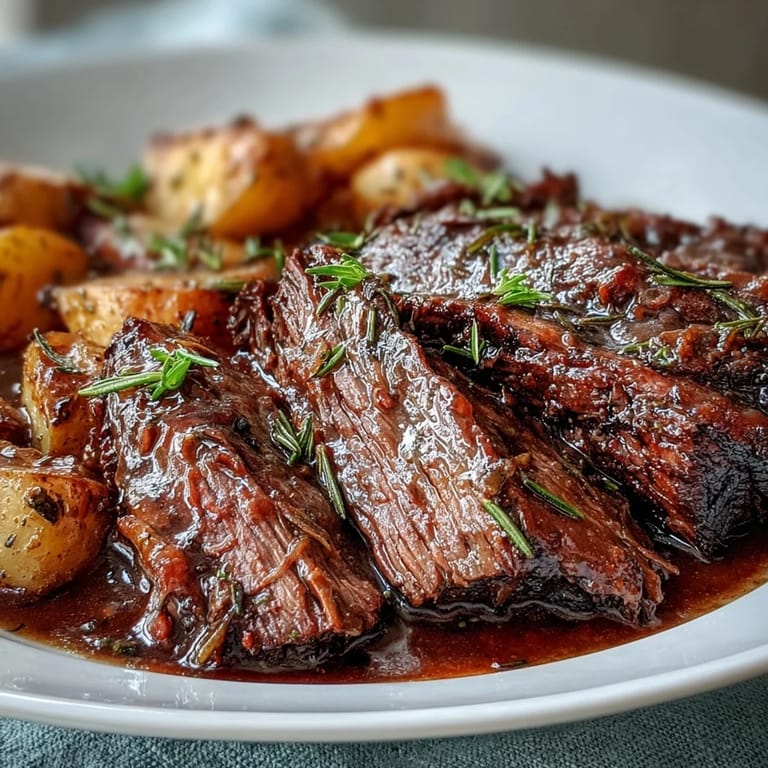
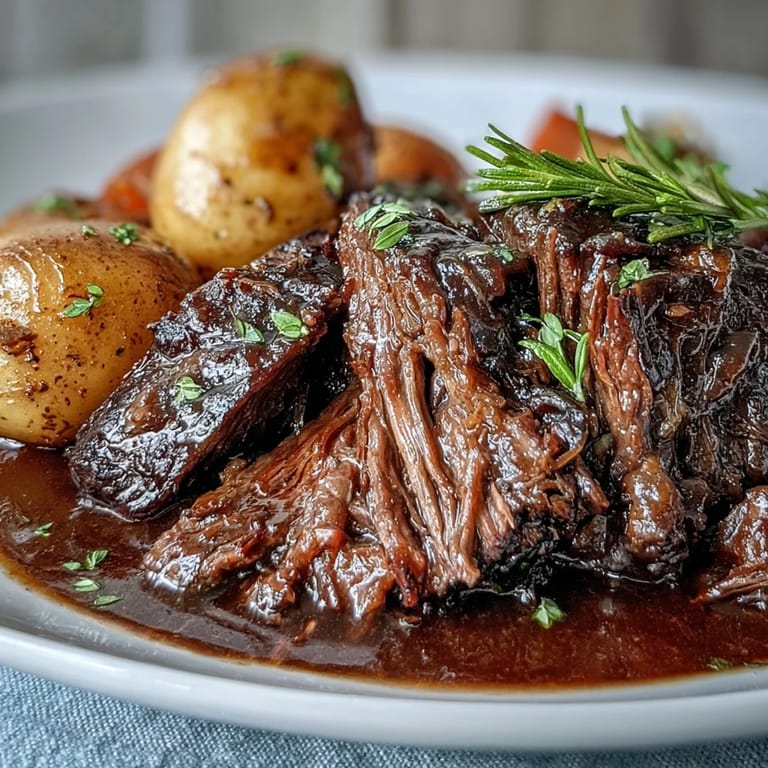
- Discard the herb stems and bay leaves, then shred or slice the beef against the grain and arrange everything together with plenty of that rich gravy spooned over the top.
 Pin
Pin This recipe became my go-to for bringing dinner to new parents and sick neighbors because it travels beautifully and feels like such a hug in a bowl. Every time I make it now, I think of all the different kitchens and tables it has graced over the years.
Making It Your Way
One snowy Sunday I ran out of red wine and used extra beef broth instead, and honestly, nobody noticed the difference. The depth comes more from proper browning than the wine itself, so do not let that stop you.
The Slow Cooker Shortcut
After you sear everything on the stove, transfer it all to your slow cooker and let it work on low for 8 to 10 hours. Add the vegetables during the last few hours if you want them to hold their shape better.
Serving Ideas
Buttered egg noodles are the classic pairing, but crusty bread for sopping up that gravy might be even better. Mashed potatoes are never a bad decision here either.
- Make extra gravy intentionally because everyone will want more.
- This freezes exceptionally well for those nights when cooking feels impossible.
- The sandwich potential here is seriously underrated.
 Pin
Pin There is something profoundly satisfying about a dish that rewards patience so generously. Hope this brings warmth to your kitchen table too.
Recipe Q&A
- → What is the best cut of beef to use for this preparation?
A well-marbled beef chuck roast or blade roast is ideal. These cuts have enough fat and connective tissue to break down during the long braising process, resulting in incredibly tender and flavorful meat.
- → Can I make this dish if I prefer not to use red wine?
Absolutely. If you wish to avoid alcohol, simply substitute the red wine with an equal amount of additional low-sodium beef broth. The dish will still be rich and savory.
- → What's the best way to ensure the gravy is thick and flavorful?
To thicken the gravy, after removing the cooked beef and vegetables, bring the braising liquid to a simmer. A cornstarch slurry (cornstarch mixed with cold water) can be stirred in and cooked for a few minutes until the desired consistency is reached. Always skim excess fat before thickening.
- → Can this comfort meal be prepared in a slow cooker?
Yes, it can. After searing the beef and sautéing the aromatics in a pan, transfer everything to your slow cooker. Cook on low for 8-10 hours or on high for 5-6 hours. Add the vegetables about halfway through the cooking time to prevent them from becoming too mushy.
- → How should I store and reheat any remaining portions?
Leftovers should be stored in an airtight container in the refrigerator for up to 3-4 days. For best results, reheat gently on the stovetop over low heat, or in the oven, adding a splash of broth if the gravy has thickened too much.
- → What are some good side dishes to serve alongside this hearty meal?
This dish is wonderful served with crusty bread for soaking up the gravy. Other excellent accompaniments include buttered noodles, creamy mashed potatoes, or a simple green salad to balance the richness.