 Pin
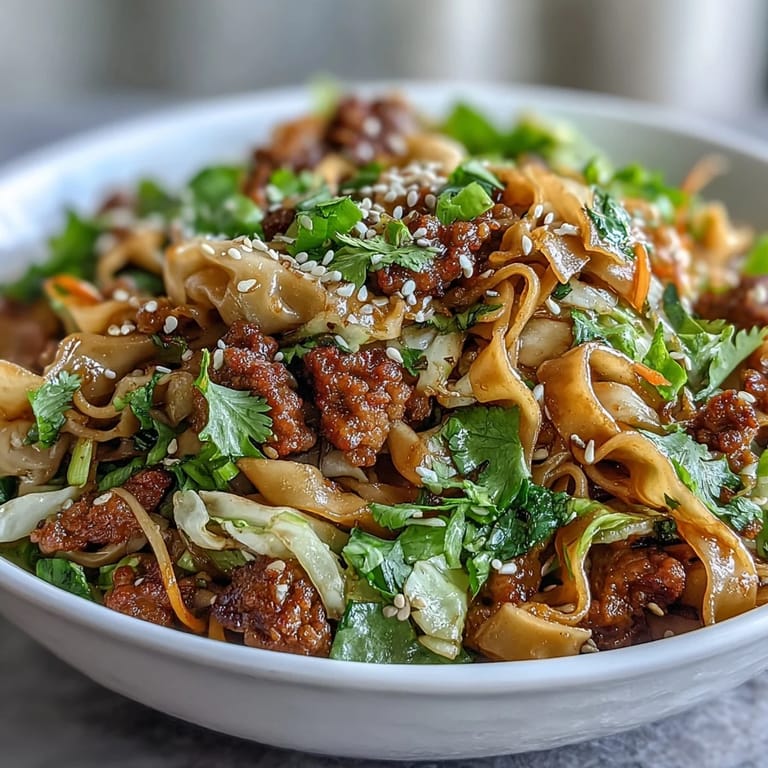
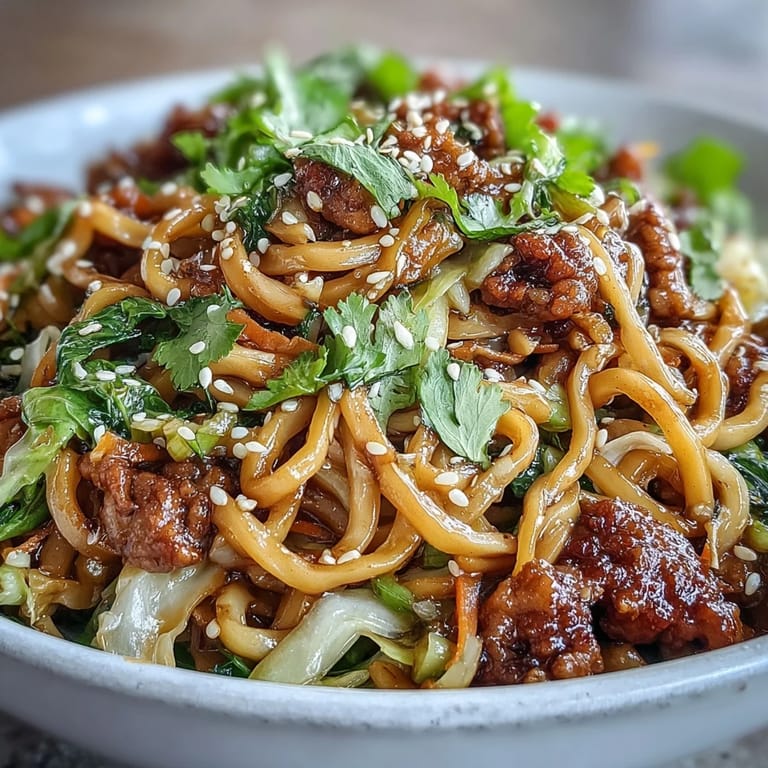
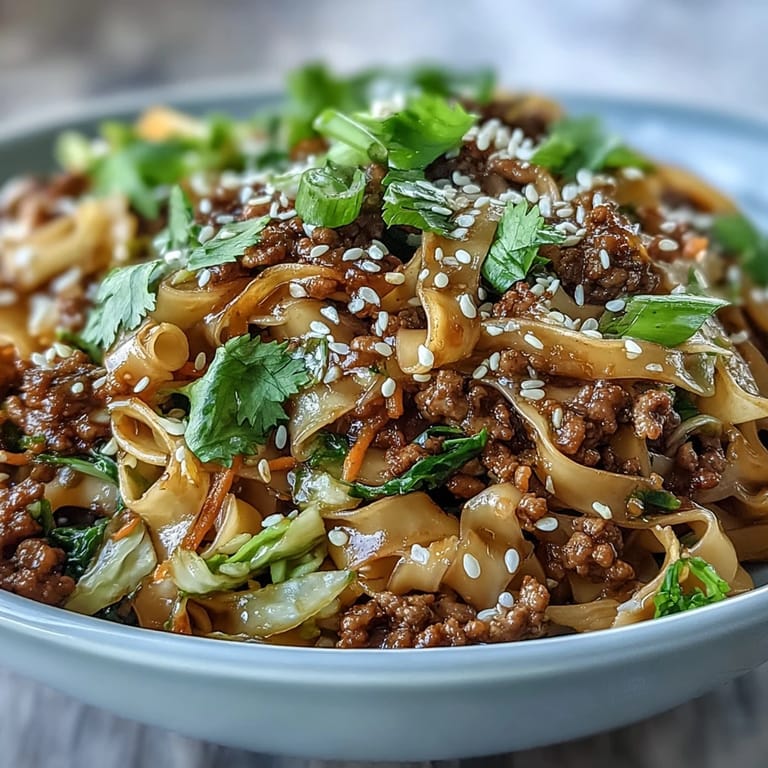
Pin The aroma of ginger hitting hot oil still pulls me back to my aunt's tiny kitchen, where she'd stir-fry whatever vegetables were in the crisper and call it dinner. This noodle bowl captures that same spirit—taking the flavors everyone loves about potstickers and transforming them into something you can actually pull off on a Tuesday night. No pleating. No folding. Just a big, glorious bowl of noodles covered in that savory, slightly sweet sauce that makes you want to lick the plate.
Last winter my friend claimed she hated potstickers until I realized she'd only had the frozen, rubbery kind from a box. When I made this for her, she literally said 'so THIS is what people like' and proceeded to eat three servings. Now she texts me every time she makes it, usually with some variation like 'I added extra mushrooms' or 'I may have put too many chili flakes.'
Ingredients
- Rice noodles or lo mein noodles: Rice noodles keep it gluten-free and soak up sauce beautifully, but wheat noodles have that satisfying chew—either works, just don't overcook them or they'll turn to mush in the bowl.
- Ground pork or chicken: Pork has that classic dumpling flavor but ground chicken is lighter and equally delicious.
- Soy sauce, toasted sesame oil, cornstarch, white pepper, sugar, and salt: This mixture transforms plain ground meat into something that tastes suspiciously like dumpling filling.
- Garlic and ginger: The backbone of the whole operation—mince them small so they disappear into the sauce.
- Shredded cabbage and carrots: They add sweetness and crunch while stretching the meat further.
- Mushrooms and bean sprouts: Optional but recommended if you want more texture and earthy depth.
- Cilantro, sesame seeds, and lime wedges: These aren't optional—they're the difference between 'good' and 'I need this in my life forever.'
- Potsticker sauce base: Soy sauce, rice vinegar, oyster sauce, chili-garlic sauce, sesame oil, brown sugar, and broth whisked into something you'll want to put on everything.
Tired of Takeout? 🥡
Get 10 meals you can make faster than delivery arrives. Seriously.
One email. No spam. Unsubscribe anytime.
Instructions
- Cook the noodles just right:
- Boil them according to the package but err on the side of underdone—rinse with cold water and toss with a little oil so they don't clump together while you work on everything else.
- Season the meat like a dumpling filling:
- Whisk soy sauce, sesame oil, cornstarch, pepper, sugar, and salt in a small bowl, then tumble it over the ground meat and mix until it feels slightly sticky—this texture means the seasoning grabbed on and won't cook away.
- Whisk together the sauce:
- Combine all the sauce ingredients until the sugar dissolves, then take a tiny sip—it should taste salty-sweet-tangy with a gentle hum of heat from the chili-garlic sauce.
- Sear the meat until it crunches:
- Let it form a crust in the hot pan before breaking it up—those crispy edges are what make this taste like a proper fried dumpling, not just ground meat in sauce.
- Build flavor in layers:
- Add garlic, ginger, and the white parts of the green onions to the rendered fat, then stir in the vegetables so they soften but still have bite.
- Bring it all together:
- Pour in that sauce and let it bubble up for a minute before adding the noodles—toss everything gently so the noodles drink up the sauce without breaking apart.
- Finish with a squeeze of fresh lime, a shower of green onions, cilantro, and sesame seeds, then serve immediately with extra chili-garlic sauce on the table.
 Pin
Pin 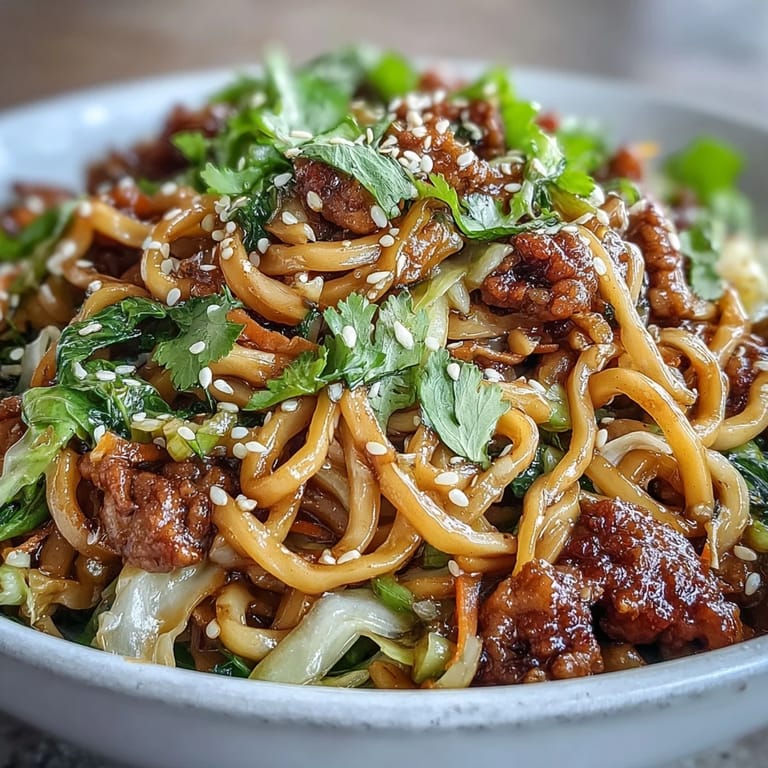 Pin
Pin My partner asked for thirds the first time I made this, then paused mid-bowl to ask if we could have it every week. High praise from someone who usually says 'it's fine' about dinner.
Making It Your Own
Swap ground turkey or beef for the pork, or use plant-based crumbles for a vegetarian version. I've made this with whatever vegetables were languishing in the fridge—bok choy, sliced bell peppers, even spinach in a pinch. The sauce works with almost anything.
The Noodle Situation
Rice noodles are my go-to for a lighter bowl, but sometimes only chewy wheat noodles will do—lo mein noodles hold up beautifully and feel more indulgent. Either way, don't skip the oil toss after draining or you'll be prying apart a noodle brick later.
Sauce Tweaks
Too salty? Add more brown sugar or honey. Need more heat? Double the chili-garlic sauce or add a pinch of red pepper flakes. Like it tangy? Extra rice vinegar brightens the whole bowl. Taste as you go—this is your dinner, not a test.
- Drop a soft-boiled or fried egg on top for richness
- Sprinkle crushed peanuts or cashews for crunch
- Extra lime wedges on the table are never a bad idea
 Pin
Pin 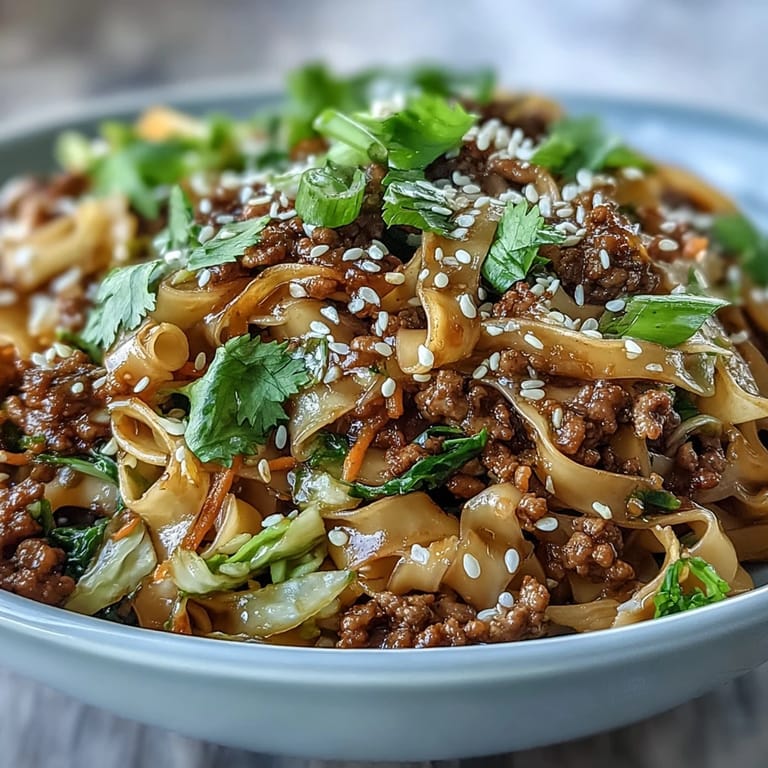 Pin
Pin This is the kind of dinner that makes you feel like you ordered takeout but actually cooked something wholesome in your own kitchen.
Recipe Q&A
- → Can I use different types of noodles for this dish?
Absolutely! While rice noodles or lo mein are suggested, you can easily substitute with ramen noodles, udon, or even spaghetti if you're in a pinch. Just ensure you cook them according to package directions until al dente.
- → What are some good meat alternatives if I don't eat pork?
Ground chicken or turkey are excellent lean substitutes. For a plant-based option, consider using crumbled firm tofu, tempeh, or a meat-free ground alternative. Adjust cooking time as needed to ensure proper browning and seasoning.
- → How can I customize the vegetables in my bowl?
This dish is very versatile! Feel free to add or swap vegetables based on what you have. Bell peppers, snap peas, bok choy, spinach, or broccoli florets would all be delicious additions. Just adjust cooking times so they remain slightly crisp.
- → Is it possible to make these noodle bowls gluten-free?
Yes, it's straightforward to make this dish gluten-free. Simply ensure you use certified gluten-free rice noodles, and substitute regular soy sauce with tamari. Also, check that your oyster sauce (or hoisin) is a gluten-free variety.
- → Can I adjust the spice level of the sauce?
Certainly! The chili-garlic sauce or sambal oelek is where most of the heat comes from. You can increase or decrease the amount to suit your preference. For extra kick, a dash of sriracha or red pepper flakes can be added at the end.
- → How should I store and reheat any leftovers?
Leftovers can be stored in an airtight container in the refrigerator for up to 3 days. To reheat, gently warm in a skillet or microwave, adding a splash of water or broth if the noodles seem dry, to help loosen them up.