 Pin
Pin One afternoon, I found myself craving something freshly crisp but still comforting, and remembered a bag of orzo in the cupboard. The kitchen was alive with the sizzle of olive oil and the tang of grated Parmesan floating in the air as I started to improvise. It wasn’t a grand plan—just a curious experiment with what I had on hand. By the time the cakes were golden and sizzling in the skillet, even my neighbor popped in to investigate the aroma sneaking through the hallway. It turns out, orzo makes quite the transformation when paired with cheese and herbs.
Last summer, I made these orzo cakes for friends on the small balcony while the city buzzed below. We laughed over who made the neatest-shaped cake and dropped more than a few crumbs onto the floor, but every plate ended up spotless. There's something about frying together that turns dinner into a small party, even if all you have is a skillet and some music on low.
Ingredients
- Orzo pasta: This tiny pasta cooks up quickly and forms the tender heart of every cake—give it a good boil in salted water for flavor right from the start.
- Grated Parmesan cheese: Essential for that crave-worthy golden crust and a salty, nutty depth—grate it yourself if you can for the best melt and flavor.
- Ricotta cheese: It brings softness to the center, so the cakes stay creamy inside instead of dry.
- Green onions: Add a mellow freshness that cuts through the richness, plus a gentle bite in every forkful.
- Fresh parsley: Don’t skip this—chopped parsley gives brightness and brings all the savory notes together.
- Garlic: Just one clove, but it perfumes the whole mixture—don’t be tempted to overdo it.
- Eggs: The trusty binder—these keep everything holding together as the cakes fry up.
- Panko breadcrumbs: Their crunch can’t be matched by regular breadcrumbs, and they create the perfect crispy finish; use a bit extra for the coating if you want more crunch.
- All-purpose flour: Just enough to help with binding and the perfect light texture.
- Olive oil: For frying—choose something mild and good quality, since you’ll taste it immediately.
- Freshly ground black pepper: Adds gentle heat and wakes up the cheese and herbs—grind right before you use it.
- Salt (for boiling water): Seasoning at this stage means the orzo will be flavorful through and through.
Tired of Takeout? 🥡
Get 10 meals you can make faster than delivery arrives. Seriously.
One email. No spam. Unsubscribe anytime.
Instructions
- Boil the orzo:
- Fill a saucepan with water, toss in salt, and boil the orzo until it’s just tender—drain it, and let it cool off a bit so you can handle it easily.
- Blend the mixture:
- In a large bowl, combine the orzo, ricotta, Parmesan, green onions, parsley, garlic, eggs, panko, flour, and pepper—stir until it all comes together in a sticky mass.
- Shape the cakes:
- Scoop out the mixture and pat into eight small cakes; if your hands get sticky, dust them with more panko.
- Dredge with crunch:
- Press each cake into a plate of extra panko mixed with Parmesan, giving both sides a snowy coating for extra crispness.
- Fry until golden:
- Heat olive oil in a non-stick skillet and lay in the cakes, listening for a satisfying sizzle—cook them in batches, 3–4 minutes per side, until each is crusty and deep gold.
- Drain and serve:
- Let the cakes rest on a towel-lined plate and shower with parsley and more Parmesan; they’re best when just warm and the cheese is still oozy.
 Pin
Pin The first time I served these at a weekend lunch, everyone paused after the first bite, forks mid-air, to marvel at the crunchy edges and creamy middles. It was only then I realized how a humble bowl of pasta could become a star on its own.
Dips and Pairings That Shine
A dollop of lemony yogurt or a generous swirl of marinara brings out the Italian flavors in each bite, and turns the cakes into a true centerpiece. I’ve even served them atop crisp lettuce with a squeeze of lemon for an impromptu salad lunch—it’s the sort of move that feels both easy and special.
Swaps and Add-Ins You Should Try
If you’re ready for a change, finely chopped spinach or a handful of sun-dried tomatoes add color and deeper flavor. Sometimes I sneak in a pinch of chili flakes for warmth or use basil instead of parsley according to what’s hanging out in the fridge.
Kitchen Moments and Serving Tricks
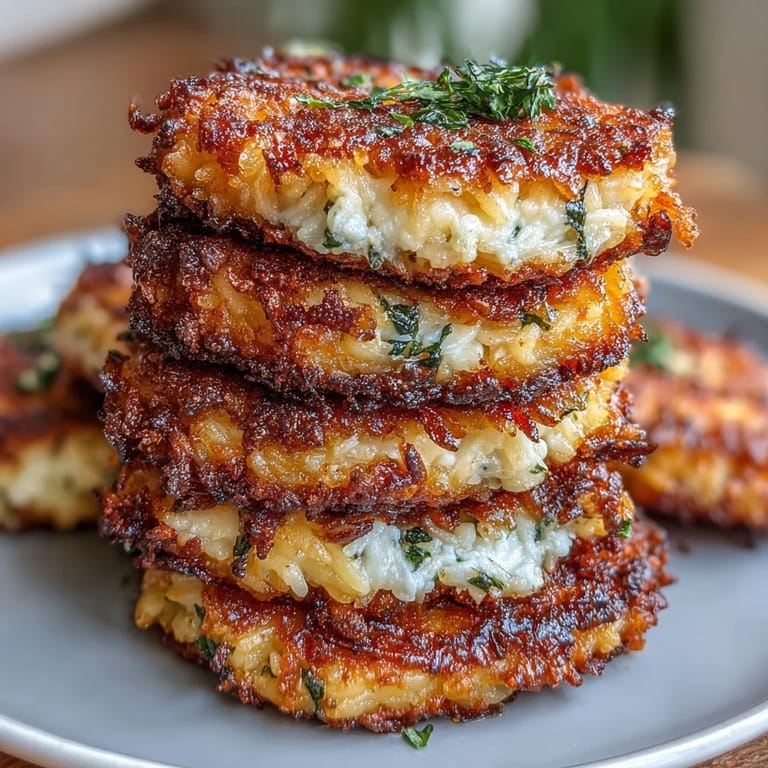
One of my favorite moments is pressing the cakes gently into the Parmesan-panko mixture—the ridges pick up every bit, guaranteeing a shattery crust. Try not to crowd the pan; giving each cake room means you get that perfect, even crisp on all sides. They’re just as irresistible cooled slightly, so they’re perfect for a picnic too.
- Shape ahead and keep chilled until ready to fry.
- Serve alongside a fresh arugula salad for contrast.
- Don’t skip the final dusting of Parmesan—it’s magic.
 Pin
Pin These Parmesan Crusted Orzo Cakes have become one of my go-to ways to transform pantry staples into a dish worth gathering around. Fry a batch, pour something to sip, and wait for the smiles after that first, golden bite.
Recipe Q&A
- → How do I keep the orzo cakes from falling apart while frying?
Make sure the mixture is sticky enough by adding a bit more panko or using extra egg. Shape firmly and coat well before frying.
- → Can I prepare orzo cakes in advance?
Yes, you can shape and chill them ahead of time. Fry just before serving for maximum crunch and freshness.
- → What dipping sauces go well with these cakes?
Try classic marinara, a lemony yogurt sauce, or a light garlic aioli to complement the Italian flavors.
- → Are there variations for the filling?
You can mix in chopped spinach, sun-dried tomatoes, or roasted peppers for extra color and taste.
- → Is it possible to bake instead of fry?
Yes, arrange the cakes on a parchment-lined tray, brush with oil, and bake at 400°F until golden and crispy.