 Pin
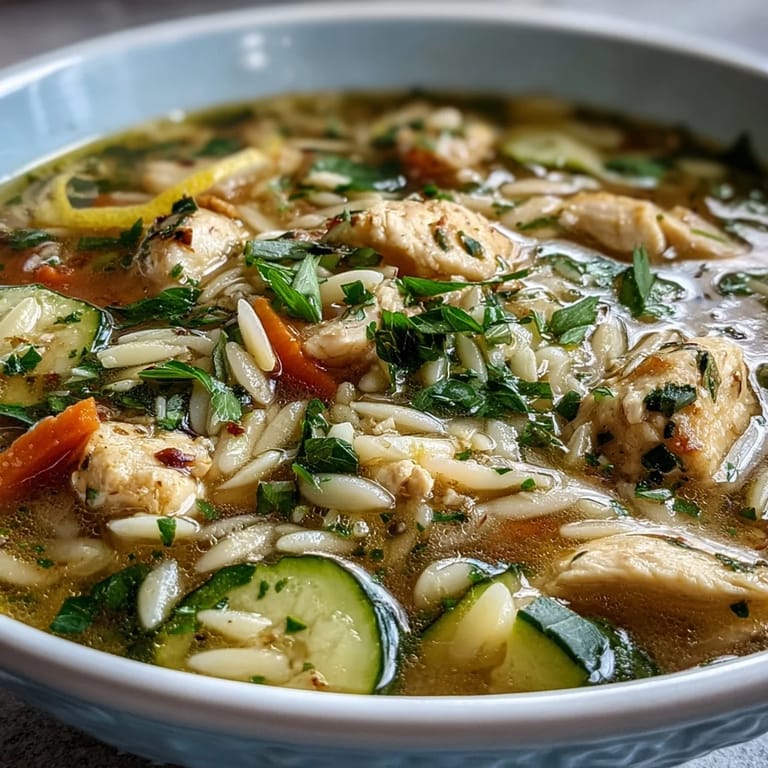
Pin There's something about the smell of lemon zest hitting hot oil that makes a kitchen feel instantly alive. I discovered this soup on a gray afternoon when I had chicken thawing on the counter and an abundance of zucchini from the farmers market sitting in my crisper drawer. What started as an impulse to use up ingredients became a weeknight staple that somehow tastes both light and deeply satisfying, like the kitchen gods were rewarding me for keeping it simple.
I made this for my neighbor who'd just gotten home from the hospital, and watching her face light up when she tasted that first spoonful told me everything—comfort doesn't need to be heavy, and sometimes the simplest gestures mean the most. She asked for the recipe before she'd even finished the bowl, and that's when I knew I'd stumbled onto something special.
Ingredients
- Boneless, skinless chicken breasts: Dicing them small means they cook faster and distribute throughout the broth so every spoonful feels generous.
- Zucchini: Medium sized works best—anything huge tends to be watery and won't have that tender-but-still-structured bite you want.
- Carrot, celery, and onion: This is your holy trinity of flavor, the foundation that makes everything taste intentional and layered.
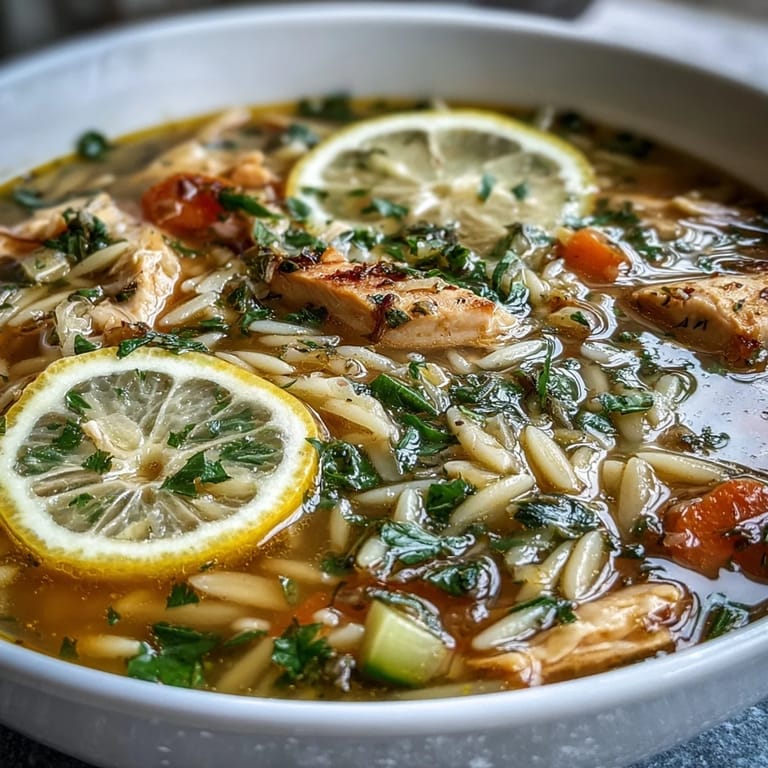
- Fresh lemon: Both juice and zest matter here; the zest brings brightness that juice alone cannot deliver, so don't skip it.
- Orzo pasta: Those tiny rice-shaped noodles soak up broth and create pockets of comfort in every spoonful.
- Low-sodium chicken broth: Quality broth makes a noticeable difference, so taste yours first and adjust seasoning accordingly.
- Olive oil: Use what you'd actually cook with, not the expensive finishing oil.
- Dried oregano and thyme: Together they create that Mediterranean whisper without overwhelming the delicate chicken and lemon.
- Fresh parsley: Added at the end, it brightens everything and makes the soup feel fresh rather than stewed.
Tired of Takeout? 🥡
Get 10 meals you can make faster than delivery arrives. Seriously.
One email. No spam. Unsubscribe anytime.
Instructions
- Build your aromatic base:
- Heat olive oil in your pot and let the onion, carrot, and celery get soft and golden for a few minutes. This isn't rushing—this is where flavor begins, so be patient and let them release their sweetness into the hot oil.
- Wake up the garlic:
- When you add the minced garlic, you'll immediately smell why you're doing this; that fragrance is your signal to keep moving forward.
- Sear the chicken gently:
- Add your diced chicken and let it turn opaque on all sides without aggressive browning—you're looking for just enough color to seal in tenderness, about three to four minutes of gentle stirring.
- Introduce the broth:
- Pour in your chicken broth and let everything come to a gentle boil, which signals the chicken is starting to surrender its flavors into the liquid.
- Add pasta and zucchini:
- Drop in the orzo and diced zucchini, then lower the heat and let everything simmer together for ten to twelve minutes, stirring occasionally so the pasta doesn't stick to the bottom.
- Finish with brightness:
- Stir in lemon juice and zest along with half the fresh parsley, then taste everything—this is your moment to adjust salt, pepper, or lemon to match your mood.
- Serve with intention:
- Ladle into bowls, scatter remaining parsley over top, and if you're feeling fancy, add a lemon slice to each bowl.
 Pin
Pin There was an evening when my teenager, who usually turns his nose up at anything labeled healthy, asked for seconds and then thirds of this soup. I realized in that moment that feeding people well doesn't require complexity—it requires paying attention to what makes food taste alive, what makes it worth lifting a spoon toward your mouth.
When You Want to Make It Your Own
This soup is endlessly forgiving, and once you understand the basic structure, you can play with what's in your kitchen. I've added spinach at the last minute, swapped the orzo for small pasta shapes, even used shredded rotisserie chicken when time was against me. The lemon and herbs are non-negotiable—they're what give this soup its identity—but everything else is flexible.
The Cream Question
Sometimes I stir in a couple tablespoons of Greek yogurt or cream at the end, which softens the edges and makes it feel almost luxurious, though honestly the broth-based version is just as satisfying and lets the lemon sing louder. Both versions work; it depends on whether you're looking for brightness or comfort on any given day.
Making It Stretch and Store
This soup keeps beautifully in the refrigerator for three or four days, and actually tastes better the next day when all those flavors have gotten cozy with each other. When you reheat it, taste again and add a squeeze of fresh lemon juice if it's lost its brightness, because that's the first thing to fade over time.
- Store the soup and any leftover fresh parsley separately so the parsley doesn't wilt into the liquid.
- If you're making it ahead, leave out the lemon juice and add it fresh when you reheat, which keeps everything tasting alive.
- Freezes well for up to two months if you keep it in an airtight container with a little headspace.
 Pin
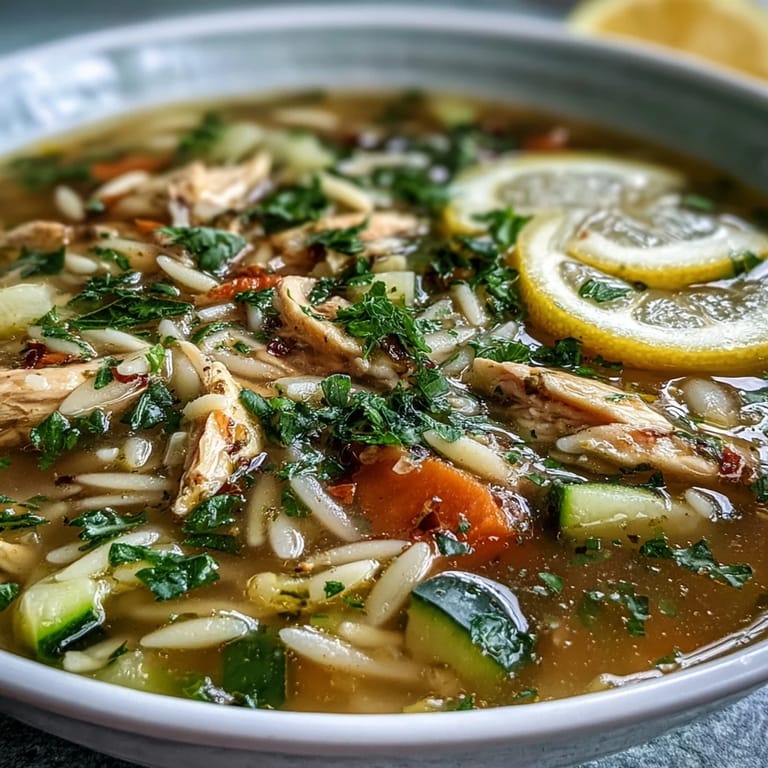
Pin This soup has become one of those dishes I reach for when I want to feel like I'm taking care of myself and the people around me without any fuss. Make it once and you'll understand why.
Recipe Q&A
- → Can I use a different pasta instead of orzo?
Yes, small-shaped pasta like acini di pepe or small shells work well and can substitute orzo without impacting the texture significantly.
- → How do I keep the chicken tender and juicy?
Cooking chicken gently with the broth and avoiding high heat helps maintain tenderness, ensuring it stays juicy throughout the simmering process.
- → What is the purpose of lemon zest and juice in this dish?
Lemon zest adds aromatic brightness while the juice provides a fresh, tangy balance that lifts the overall flavor without overpowering the other ingredients.
- → Can I prepare this dish in advance?
Yes, the flavors develop further after resting overnight in the fridge. Just reheat gently before serving to maintain texture and freshness.
- → Are there suggested garnishes to enhance the dish?
Fresh chopped parsley is recommended for garnish, adding color and a subtle herbaceous note that complements the main ingredients.
- → Is it possible to make this dairy-free?
Yes, omitting optional cream or yogurt keeps the dish dairy-free while still maintaining rich flavors through herbs and citrus.