 Pin
Pin My neighbor texted me a photo of her new kitchen at midnight, practically vibrating with excitement about finally having space to entertain. I showed up the next evening with ingredients scattered across my own countertop, determined to create something that would make her first gathering feel effortless and impressive. That's when I realized a charcuterie board wasn't just about piling things onto wood, it was about telling a story through flavors, textures, and colors that somehow made everyone feel welcome without me spending hours in the kitchen.
I made this board for the first time at an actual housewarming, watching my usually anxious host relax the moment she saw it arranged on her grandmother's old dining table. People naturally gathered around it, conversations flowed easier, and someone even asked for the hummus recipe while honey was still dripping from their cracker. That's when I understood that a good charcuterie board does more than feed people, it creates those unscripted moments where strangers become friends.
Ingredients
- Prosciutto: Buy it sliced fresh from the deli counter if possible because pre-packaged tends to stick together and tear when you try to separate it.
- Salami: Choose a variety that speaks to you, whether that's spicy, smoked, or mild, since this is where you inject personal flavor into the board.
- Chorizo slices: Spanish chorizo keeps better than fresh chorizo and adds a pop of color and smokiness without extra cooking.
- Brie cheese, sliced: Let it sit out for ten minutes before serving so the interior becomes soft and spreadable rather than cold and firm.
- Aged cheddar, cubed: The sharpness balances the richness of softer cheeses and gives your palate something to rest on between bites.
- Goat cheese, crumbled: Tangy and unexpected, it pairs beautifully with the fig jam and dried apricots.
- Baguette, sliced: Toast it lightly if you're making the board more than an hour ahead so it doesn't go soggy from humidity.
- Assorted crackers: Mix textures here, from thin and crispy to seeded and hearty, so people have options for different cheeses.
- Breadsticks: These are the unsung heroes because they're sturdy enough to hold hummus without breaking, unlike delicate crackers.
- Seedless grapes: They're refreshing and act as little palate cleansers between rich bites of cheese and meat.
- Cherry tomatoes: Their acidity cuts through the fattiness and their burst of juice feels generous on the tongue.
- Cucumber slices: These keep the board feeling light and provide a cooling crunch that people gravitate toward.
- Baby carrots: Raw and naturally sweet, they're the bridge between vegetable skeptics and the people who came for the meat.
- Mixed olives: Choose ones with pits still in them because people slow down and savor them rather than mindlessly eating them by the handful.
- Marcona almonds: Buttery and slightly sweet, they're more forgiving than regular almonds if someone's not usually an almond person.
- Dried apricots: Their chewiness and natural sweetness create unexpected flavor combinations when paired with aged cheddar.
- Fig jam: A little goes a long way and it transforms simple crackers into something that feels intentional and composed.
- Honey: Drizzle it over the brie or serve it separately so people can make their own sweet-savory combinations.
- Plain Greek yogurt: Full-fat versions taste creamier and more indulgent than the low-fat varieties.
- Fresh dill: If you can only find dried dill, use half the amount because the flavor concentrates.
- Chives: Their mild onion flavor adds complexity without being aggressive or overpowering.
- Lemon juice: Always use fresh because bottled lemon juice tastes slightly plastic-y and will make itself known in the dip.
- Garlic clove: One small clove is plenty because raw garlic gets louder as it sits, and you don't want to overwhelm someone with dip breath.
- Chickpeas: Rinsing them thoroughly removes the starchy liquid that makes hummus grainy instead of silky.
- Roasted red pepper: Jarred ones are perfectly fine and honestly taste better than most homemade versions I've made.
- Tahini: Stir it well before measuring because the oil separates and settled tahini is thick and concentrated.
- Olive oil: Use something you'd actually drink because it's a noticeable ingredient and carries the flavor.
Tired of Takeout? 🥡
Get 10 meals you can make faster than delivery arrives. Seriously.
One email. No spam. Unsubscribe anytime.
Instructions
- Mix the herbed Greek yogurt dip:
- Combine yogurt, dill, chives, lemon juice, minced garlic, salt, and pepper in a bowl and stir until the herbs are evenly distributed. Refrigerate it while you work on everything else so the flavors can meld and the dip gets pleasantly chilled.
- Blend the roasted red pepper hummus:
- Add chickpeas, roasted pepper, tahini, garlic, olive oil, and lemon juice to a food processor and blend until smooth and creamy, adding water a tablespoon at a time if needed. Taste it and adjust seasoning because this is where you fix any flavor imbalances before it hits the board.
- Arrange the meats and cheeses:
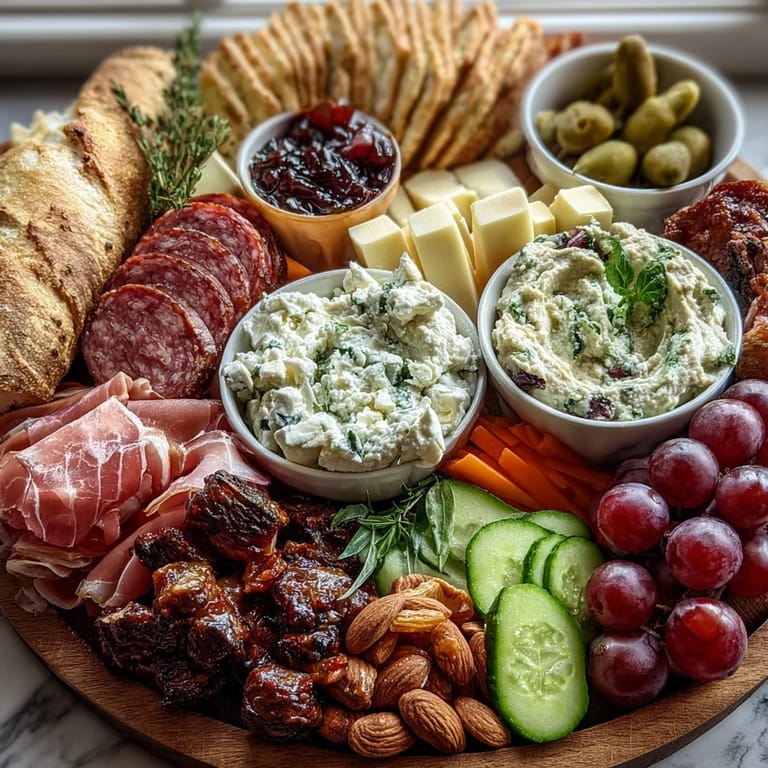
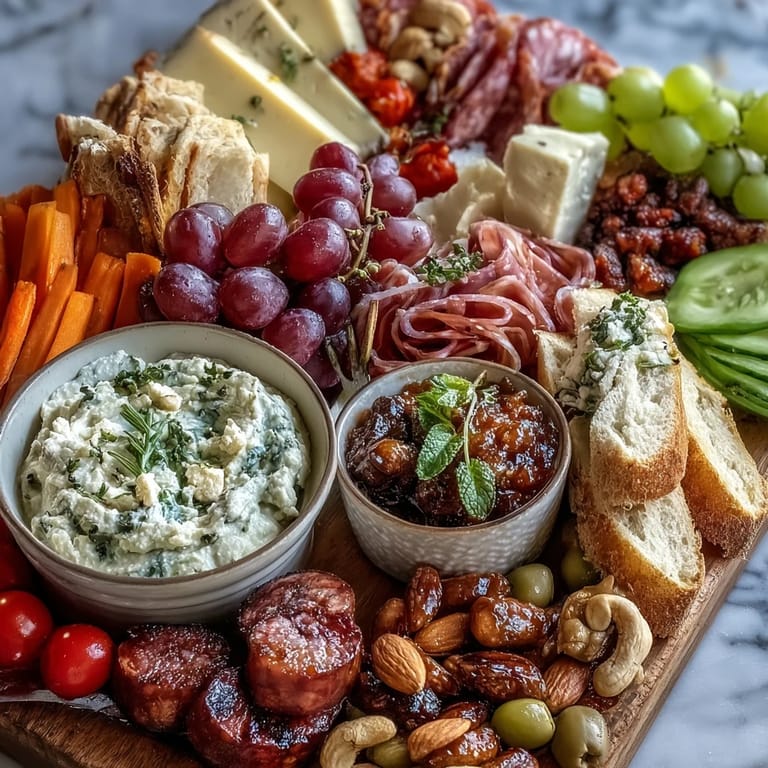
- Place them on your board with intention, leaving small breathing room between each item so people can see what they're choosing. This isn't about coverage, it's about visual clarity and making selection easy.
- Group the breads and crackers:
- Cluster them in areas around the board rather than scattering them everywhere, which makes the board look chaotic instead of curated. I like to lean some pieces up against the cheese or meats to create height and visual interest.
- Fill spaces with fresh and dried items:
- Scatter grapes, tomatoes, cucumbers, carrots, olives, almonds, and apricots into the gaps, thinking about color combinations as you go. This is where the board becomes visually stunning rather than just functional.
- Add the condiments:
- Pour fig jam and honey into small bowls and nestle them onto the board where they won't get lost. Position them near crackers or cheese since that's where people will naturally reach for them.
- Position the dips:
- Place bowls of both dips on the board, ideally with small spoons in each one to encourage people to try them. Leave some bread and crackers nearby so the dips feel integrated into the spread rather than like an afterthought.
- Garnish and serve:
- Scatter fresh herbs like dill or parsley over the board if you want to add a pop of green, then step back and admire your work. Serve immediately while the bread is still crisp and everything tastes fresh.
 Pin
Pin My sister brought her new boyfriend to a gathering and he spent the entire evening beside the charcuterie board, not in an awkward way, but like he was genuinely exploring it as if it were a museum exhibit. By the time everyone left, he'd discovered his favorite cheese, the hummus had made him feel included even though he was vegetarian, and my sister caught me watching him explain the fig-and-cheddar combination to someone else like he'd invented it. That's the magic of a board done right.
The Art of Board Building
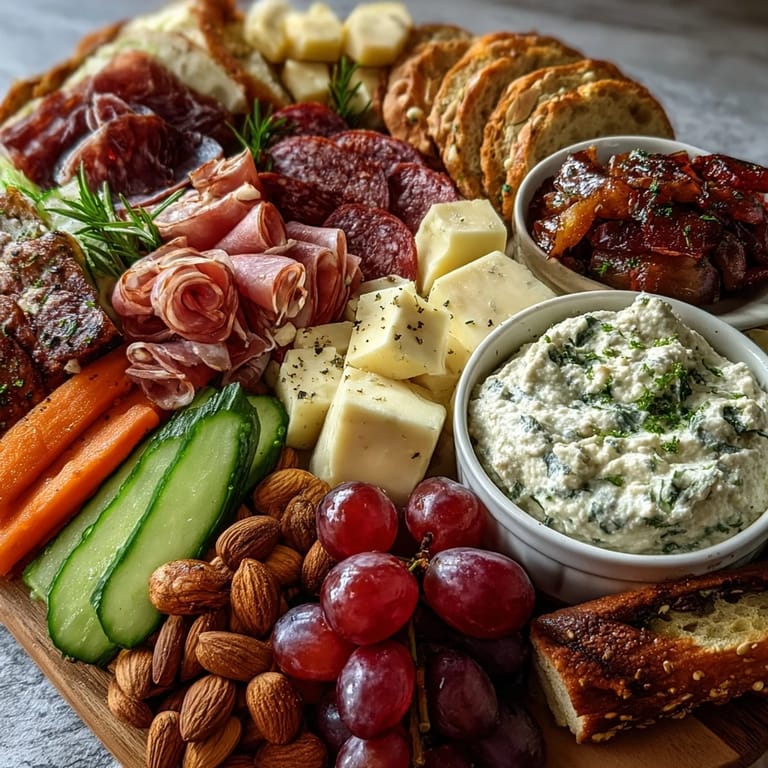
There's a rhythm to assembling a charcuterie board that nobody teaches you but everyone eventually learns. You start with the anchors, the items that take up space and define the board's personality. Then you build around them, filling gaps with smaller bites and adjusting until something clicks and suddenly what looked chaotic becomes intentional.
Temperature and Timing Secrets
The temperature of everything on that board matters more than you'd think. Warm brie tastes luxurious and spreadable while cold brie tastes dense and stubborn. Warm bread is inviting while cold bread feels like an afterthought. I learned to pull the cheese out of the fridge about fifteen minutes before people arrive, which gives it time to soften without becoming unsafe to eat.
Making It Your Own
The beauty of a charcuterie board is that it's endlessly adaptable based on your guests, your budget, and what excites you. I've made vegetarian versions that were just as impressive, swapped in spicy options for people who like heat, and once even made a dessert board with chocolate, nuts, and candied fruit when everyone was tired of savory. The template stays the same but the story you tell with it changes completely.
- Swap any meat for something else you love, whether that's smoked fish, nuts, or just skip it entirely if your crowd prefers vegetarian options.
- Use whatever cheeses make you happy since your genuine enthusiasm for them shows on the board and makes people curious to try them.
- Add items specific to your region or culture because food boards are perfect for sharing pieces of where you come from.
 Pin
Pin A charcuterie board isn't really about the ingredients, it's about creating a moment where people feel welcomed and can take their time discovering flavors together. Make it with that intention and watch what happens.
Recipe Q&A
- → What types of meats work best for this board?
Cured meats such as prosciutto, salami, and chorizo bring a rich, savory element and pair well with cheeses and fresh produce.
- → How can I make the dips ahead of time?
Prepare the herbed Greek yogurt dip and roasted red pepper hummus a few hours in advance and refrigerate. This allows flavors to meld and makes assembly easier.
- → Can I substitute ingredients for dietary needs?
Yes, swap meats for vegetarian options like marinated artichokes or use gluten-free breads and crackers to accommodate dietary restrictions.
- → What is the best way to present the board?
Arrange meats and cheeses spaced attractively on a large board, then add breads, crackers, fruits, nuts, and dips around them for visual appeal and easy access.
- → Which beverages pair well with this spread?
Crisp white wines or sparkling water complement the diverse flavors and keep the palate refreshed.